
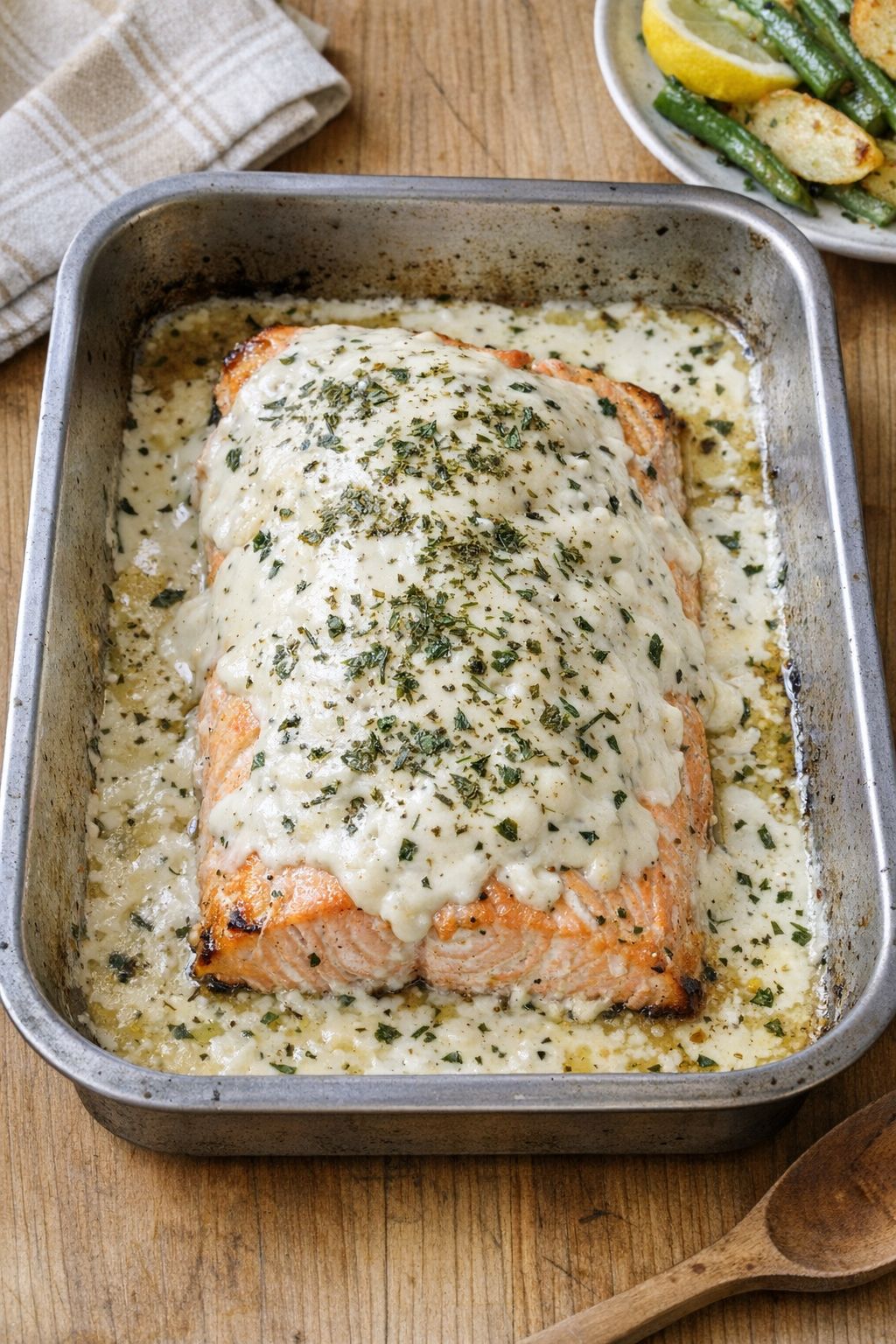
There is something mighty satisfying about taking a simple frozen salmon roast straight from the freezer to the oven and turning it into a supper that tastes like you fussed all afternoon. This kind of practical cooking feels right at home in a Midwestern kitchen, where keeping a few dependable staples on hand has always been part of feeding family well. With just five ingredients, this oven baked center-cut salmon comes out tender and rich, with a creamy topping that keeps the fish moist and makes the whole pan smell wonderful.
Serve this salmon with buttered egg noodles, mashed potatoes, rice, or a pan of roasted vegetables if you want to catch every bit of the creamy sauce. A crisp green salad, steamed green beans, or simple asparagus make a nice fresh partner, and a wedge of lemon on the side brightens the plate beautifully. For a heartier table, warm dinner rolls are always welcome.
5-Ingredient Oven Baked Center-Cut Salmon
Servings: 4 to 6
Ingredients
1 frozen raw center-cut salmon roast, about 2 to 2 1/2 pounds
Directions
1. Preheat the oven to 375 degrees Fahrenheit. Place the frozen salmon roast in an oven-safe metal roasting pan.
2. In a small bowl, stir together the mayonnaise, Parmesan cheese, lemon juice, and dried dill until smooth and well blended.
3. Spread the creamy mixture evenly over the top of the frozen salmon roast, coating it from end to end.
4. Bake uncovered for 45 to 60 minutes, depending on thickness, until the salmon flakes easily with a fork and reaches a safe internal temperature of 145 degrees Fahrenheit in the thickest part.
5. Let the salmon rest for 5 minutes before serving, then spoon some of the creamy topping over each portion.
Variations & Tips
Add a little color: If you have it on hand, a light sprinkle of paprika or chopped parsley over the top right before serving gives the finished salmon a prettier look without changing the easy nature of the dish.
Use fresh dill: If you happen to have fresh dill in the kitchen, use about 1 tablespoon chopped in place of the dried dill for a brighter, garden-fresh flavor.
Watch the thickness: A thicker salmon roast may need the full hour, while a smaller one may be done sooner. Start checking near the 45-minute mark so the fish stays tender and does not overbake.
Make cleanup easier: A light coating of cooking spray or a piece of parchment in the roasting pan can help with cleanup, especially if a little sauce bubbles over the sides as it bakes.
Try a sharper finish: For folks who enjoy a tangier flavor, serve the salmon with extra lemon wedges at the table. That little squeeze at the end wakes up the richness of the creamy topping nicely.
