
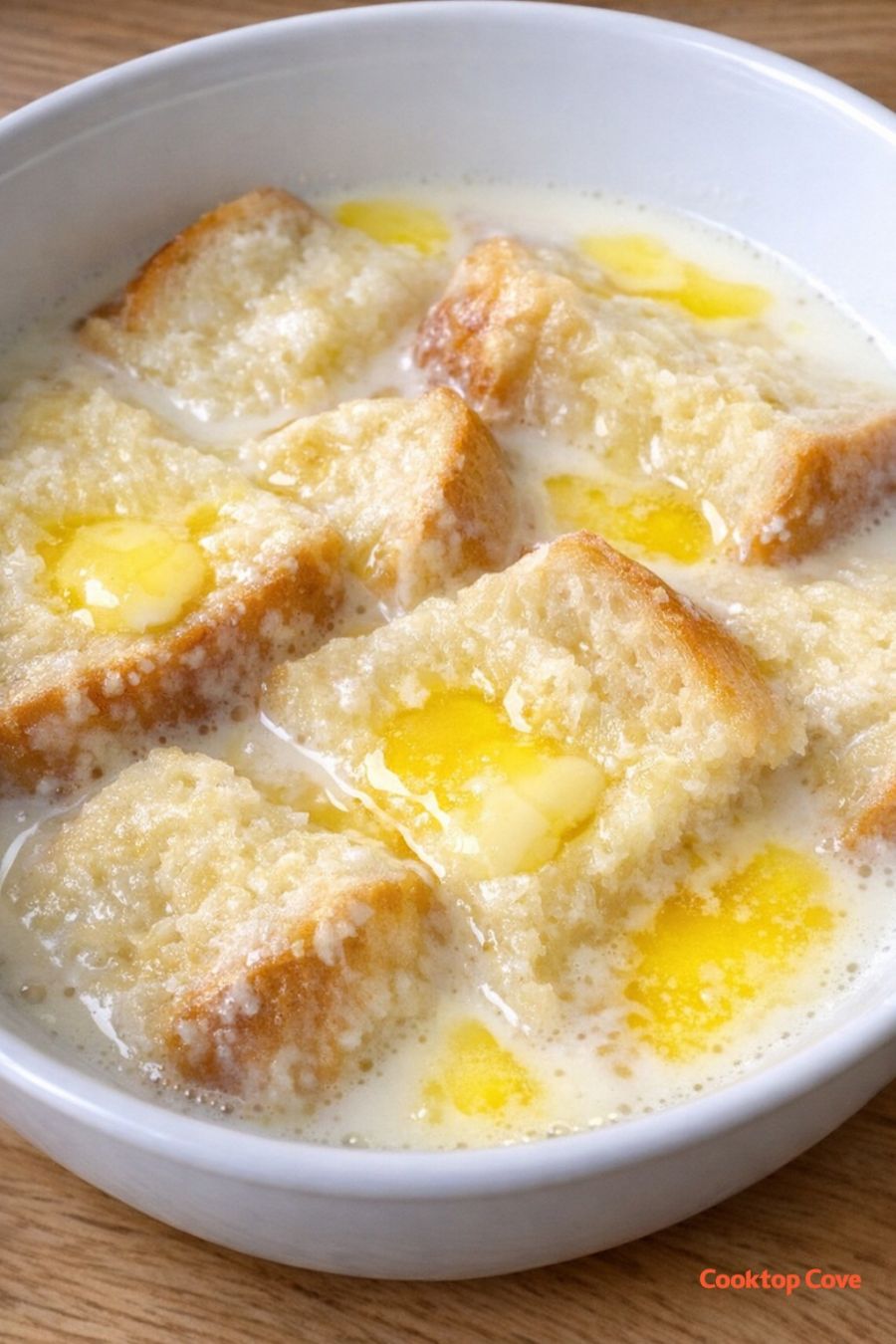
This 4-ingredient milk toast is the kind of breakfast that saw my great grandmother through the very hardest years on the farm. When money was tight and the winters were long, she could still put something warm, filling, and gentle on the table with nothing more than stale bread, a bit of milk, a pat or two of butter, and a pinch of sugar. The bread softens and swims in hot, creamy milk, with little pools of melted yellow butter on top—simple as can be, but so soothing it feels like a hug in a bowl. It’s a true Midwestern make-do recipe that stretches a dollar farther than you’d believe, and it’s still just the thing when you need comfort in a hurry.
Serve this milk toast in deep bowls while it’s still steaming, with a spoon for scooping up the softened bread and warm milk. A sliced banana, a few berries, or a small dish of applesauce on the side turns it into a more complete breakfast without adding much cost. A cup of hot coffee or black tea is traditional in our house, but a glass of orange juice or even just cold water works just fine. If you’re feeding a bigger family, you can set out a jar of jam so everyone can stir in a spoonful if they like a little fruit sweetness with their bowl.
4-Ingredient Milk Toast
Servings: 2
Ingredients
2 cups whole milk (or whatever milk you have on hand)
4 slices day-old or stale white sandwich bread (about 1/2 inch thick each)
2 tablespoons unsalted butter, cut into small pieces
2 to 3 teaspoons granulated sugar, plus more to taste
Directions
Cut or tear the bread into large bite-size pieces and set aside. Using day-old or slightly stale bread is ideal, because it holds its shape a bit better once it’s soaked in hot milk.
Pour the milk into a small saucepan. Add the sugar and stir to dissolve. Set the pan over medium-low heat and warm the milk slowly, stirring now and then, until it is steaming and tiny bubbles form around the edges. Do not let it come to a full boil, which can cause the milk to scorch or form a skin.
While the milk is heating, place the bread pieces into two deep, heatproof bowls, dividing them evenly. The bowls should be big enough to allow the bread to float and soak in the milk without spilling over.
When the milk is hot and lightly sweetened to your liking, taste a spoonful carefully and adjust with a little more sugar if needed. Stir well so the sugar dissolves completely.
Slowly ladle or pour the hot milk over the bread in each bowl, making sure every piece is moistened. The bread should be swimming in the milk, softening almost right away.
Dot the tops of each bowl with the butter pieces, letting them melt into glossy yellow pools over the warm bread and milk. Let the bowls sit for 1 to 2 minutes so the bread softens further and the butter finishes melting.
Serve immediately while still hot, giving each person a spoon. Encourage gentle stirring at the table so the melted butter and sweet milk mingle around the softened bread.
Variations & Tips
To make this even more frugal, use whatever bread you have—homemade loaves, store-brand sandwich bread, or the heels everyone avoids. Slightly stale bread works best, but you can lightly toast fresh bread to dry it out a bit before adding the milk. If you don’t have whole milk, any milk will do; 2%, 1%, or skim will be a little less rich, but the butter helps bring back some creaminess. If you need to stretch the milk, you can replace up to 1/2 cup with water and add an extra teaspoon of sugar for flavor. For a touch of warmth, sprinkle a little cinnamon or nutmeg over the top before serving, or add a small splash of vanilla to the hot milk. If you’re watching sugar, cut it back or leave it out entirely and let each person sweeten their own bowl at the table with sugar, honey, or maple syrup. A pinch of salt in the warming milk can deepen the flavor, especially if you’re using very plain bread. For a heartier version, you can float a few thin pats of salted butter instead of unsalted. Food safety tips: Warm the milk gently and avoid boiling, as scorched milk can taste bitter and may form unpleasant clumps. Keep an eye on the pan so it doesn’t bubble over or burn on the bottom. Once the hot milk is poured over the bread, serve right away; do not leave the prepared milk toast sitting at room temperature for more than 1 to 2 hours, as milk-based dishes can spoil quickly. If you have leftovers, cool them promptly, cover, and refrigerate, then rewarm gently on the stove or in the microwave with a splash of fresh milk, understanding that the texture will be much softer and more porridge-like.
