
This slow cooker 3-ingredient mermaid water fudge is my go-to colorful dessert for family beach trips and summer cookouts. My cousin actually started the tradition years ago—she’d show up with a pan of this bright, ocean-inspired fudge and it would disappear before dinner. It’s creamy, sweet, and looks like swirls of tropical water, but it’s made with just three pantry-friendly ingredients and almost no hands-on time. Perfect for busy weeks when you still want something fun and a little magical to share.
Serve this mermaid water fudge chilled and cut into small squares or rectangles—it's rich, so bite-sized pieces work best. I like to pack it in a cold container for beach days or pool parties alongside fresh fruit like pineapple and strawberries to balance the sweetness. It also looks great on a dessert board with simple vanilla cookies and salty snacks like pretzels for contrast. For a fun touch, pair it with sparkling water or lemonade in clear cups so the colors of the fudge really pop on the table.
Slow Cooker Mermaid Water Fudge
Servings: 16
Ingredients
3 cups high-quality white chocolate chips (about 18 oz / 510 g)
1 can (14 oz / 397 g) sweetened condensed milk
1 teaspoon each aqua blue and sea foam green oil-based candy coloring (or gel food coloring), divided
Directions
Line an 8x8-inch (or similar size) baking pan with aluminum foil, letting some foil hang over the edges to create handles. Lightly mist the foil with nonstick spray or rub with a tiny bit of neutral oil to help the fudge release cleanly.
Set a small to medium slow cooker to LOW. Add the white chocolate chips and the entire can of sweetened condensed milk to the slow cooker. Stir gently to combine into a thick mixture, making sure most of the chips are coated.
Cover the slow cooker and cook on LOW for 30 to 45 minutes, stirring every 10 to 15 minutes. The mixture is ready when the white chocolate chips are fully melted, the mixture is smooth and glossy, and no lumps remain. Do not overcook; if the sides start to brown, turn the slow cooker off and keep stirring until smooth.
Turn off the slow cooker and unplug it. Carefully remove the ceramic insert (if removable) from the heating base so it doesn’t keep cooking. Let the fudge mixture sit for 3 to 5 minutes to slightly cool and thicken; it should still be pourable but not piping hot.
Divide the melted fudge into three portions: leave about half of the mixture in the slow cooker insert or a large bowl (this will be your base color), and transfer the remaining half into two separate small heat-safe bowls.
Tint the base portion with a small amount of aqua blue candy or gel coloring, stirring until you get a bright ocean blue. In one of the smaller bowls, add more aqua blue coloring for a deeper blue shade. In the other small bowl, add the sea foam green coloring. Stir each bowl thoroughly until the colors are even and vibrant. Add color gradually—a little goes a long way.
Pour the lighter aqua blue base fudge into the prepared foil-lined pan and gently spread it into an even layer with a spatula. Work fairly quickly so the fudge doesn’t set before you swirl.
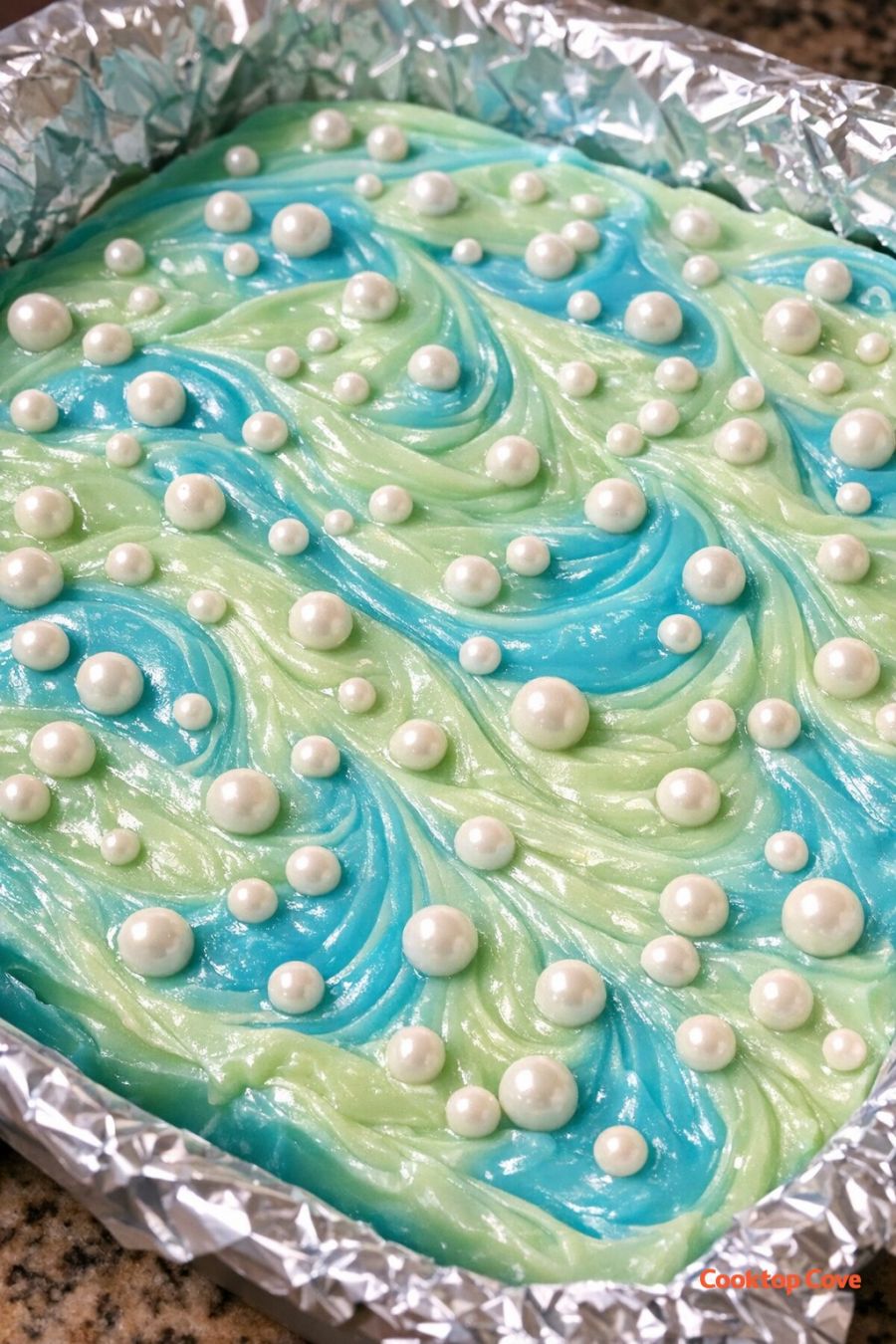
Spoon random dollops of the darker aqua blue and sea foam green fudge over the base, scattering them across the surface. Use a butter knife or skewer to gently drag through the colors in swooping motions to create soft, wavy swirls that look like ocean water. Avoid overmixing so the colors stay distinct and don’t turn muddy.
While the top is still glossy and soft, sprinkle white pearl candy sprinkles evenly over the surface to look like tiny pearls floating in the water. Lightly press them down with the back of a clean spoon so they set into the fudge without losing their shape.
Let the fudge cool at room temperature for about 1 hour, then transfer the pan to the refrigerator and chill for at least 2 to 3 hours, or until completely firm. For best texture and clean slices, chill longer if you have time.
Once set, lift the fudge out of the pan using the foil overhang. Peel the foil away from the sides and bottom. Use a sharp knife to cut into small squares or rectangles, wiping the knife clean between cuts for the neatest swirls on each piece.
Store the fudge in an airtight container in the refrigerator for up to 1 week. For beach trips or picnics, pack the pieces in a lidded container with a cold pack and keep them shaded so the fudge stays firm and the colors hold their glossy finish.
Variations & Tips
To keep this a true 3-ingredient recipe, the base is just white chocolate, sweetened condensed milk, and coloring, but you can tweak the look and flavor with small changes. For a slightly less sweet fudge, use a mix of white chocolate and vanilla baking chips (still keeping the total to 3 cups). If you prefer a softer, creamier texture, reduce the white chocolate chips to 2 1/2 cups while keeping the same amount of sweetened condensed milk. For different ocean vibes, swap the colors: use teal and light lavender for a sunset sea look, or just one shade of blue for a simpler version. If you only have standard gel food coloring (not oil-based), you can still use it in this recipe because the condensed milk adds enough moisture to help it blend, but add it sparingly and stir well to avoid streaking; avoid water-based liquid food coloring in large amounts, as it can cause the chocolate to seize. For a slightly more grown-up twist that still uses 3 ingredients, you can swap the green coloring for a drop or two of mint extract and a touch of green color in that portion, but be very light-handed—too much liquid can change the texture. Food safety tips: Always melt the chocolate on LOW and stir frequently to prevent scorching, which can give the fudge a burnt taste and grainy texture. Use clean, dry utensils and a completely dry slow cooker insert—any water can cause the chocolate to seize and clump. Cool the fudge at room temperature before refrigerating to avoid condensation forming on top, which can make the surface sticky and affect the sprinkles. For transporting to the beach or outdoor gatherings, keep the fudge chilled until you’re ready to serve and avoid leaving it in direct sun or heat for long periods, as it can soften and lose its shape.
