
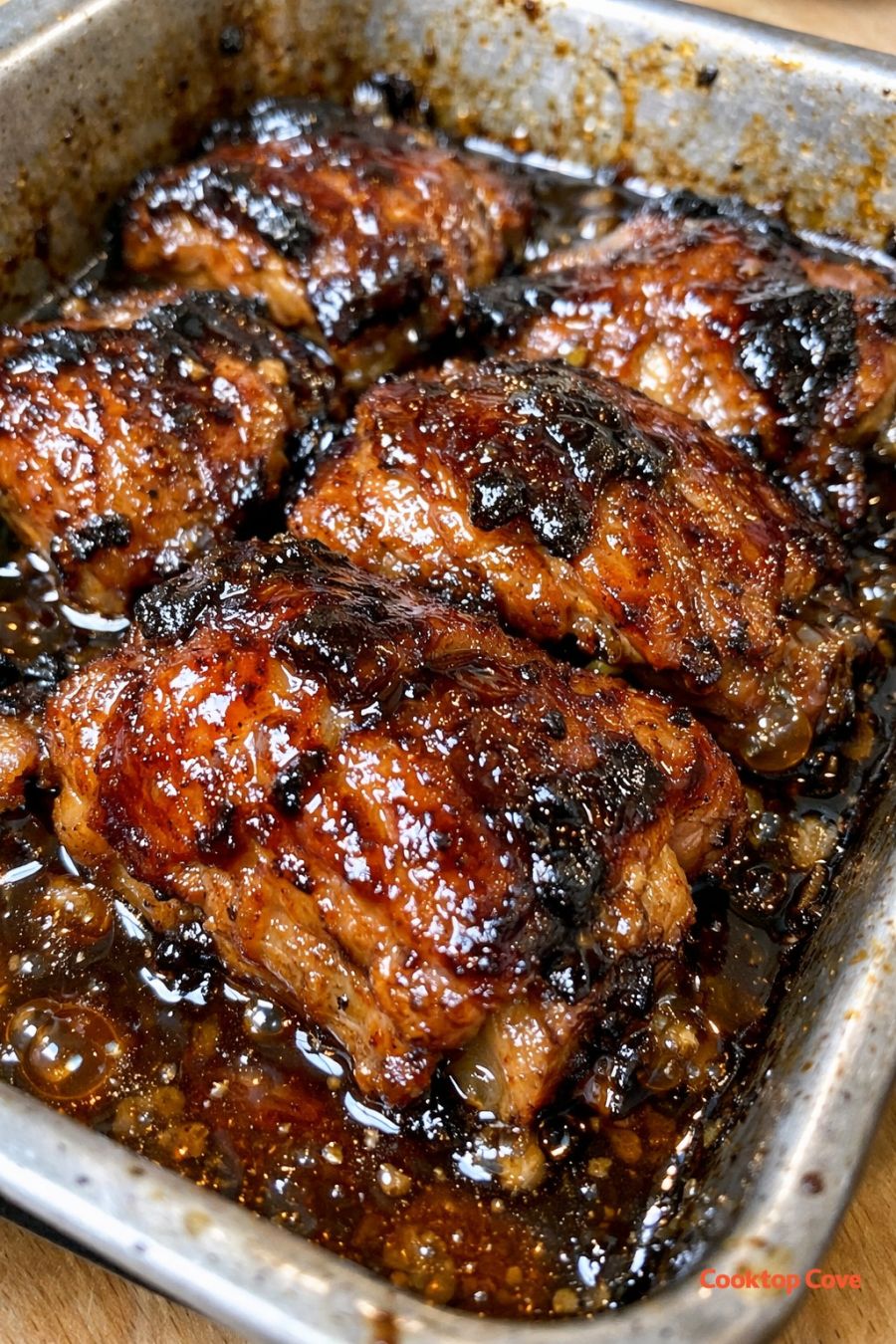
This is my long-weekend secret weapon: sticky-sweet oven glazed pork steaks that basically cook themselves while I’m off doing anything but hovering over the stove. It’s only 5 ingredients, all pantry-friendly, and everything happens in one metal baking pan so cleanup is minimal. The pork goes into a low oven and slowly turns into this deeply caramelized, almost unidentifiable-but-totally-succulent roasted protein, bathed in a dark amber glaze with little pools of rendered fat. I love it for holidays or busy Sundays when I want dinner handled hours ahead, but still want something that feels cozy and special.
I usually serve these glazed pork steaks with something that soaks up all that extra sauce: mashed potatoes, buttered egg noodles, or simple steamed rice all work really well. Add a sheet pan of roasted green beans, broccoli, or carrots that you can slide into the oven for the last 25–30 minutes, and you’ve got the whole meal done with almost no extra effort. A crisp green salad with a tangy vinaigrette helps balance the richness, and if you’re feeding a crowd, warm dinner rolls or crusty bread are perfect for swiping through the pan juices.
5-Ingredient Oven Glazed Pork Steaks
Servings: 4
Ingredients
2 to 2 1/2 pounds bone-in pork shoulder steaks (about 4 medium steaks)
1/2 cup soy sauce (low-sodium preferred)
1/2 cup packed brown sugar
1/4 cup ketchup
2 tablespoons apple cider vinegar
Directions
Preheat your oven to 300°F (150°C). Grab a metal baking pan or roasting pan that will hold the pork steaks in a single layer with a bit of space between them. Lightly grease the pan if it’s prone to sticking.
Pat the pork shoulder steaks dry with paper towels and lay them in the pan in a single layer. It’s fine if the edges touch, but avoid stacking so that the glaze can coat each piece and the fat can render properly.
In a medium bowl, whisk together the soy sauce, brown sugar, ketchup, and apple cider vinegar until the sugar is mostly dissolved and the mixture looks smooth and glossy.
Pour the glaze evenly over the pork steaks, turning them once with tongs to make sure both sides are coated. Arrange them back in a single layer with as much surface area exposed as possible. Spoon a little extra glaze over the tops.
Cover the pan tightly with foil. Bake at 300°F for 1 1/2 hours, undisturbed. This slow, covered time lets the pork relax and start to get tender while the sauce soaks in.
After 1 1/2 hours, carefully remove the pan from the oven and peel back the foil (watch the steam). Baste the tops of the pork steaks with the pan juices and glaze. Increase the oven temperature to 350°F (175°C).
Return the pan to the oven, uncovered, and bake for another 45 to 60 minutes, basting once or twice, until the pork is very tender, the fat has rendered, and the glaze has thickened into a dark amber, sticky sauce. The edges of the steaks should look caramelized and slightly charred in spots.
Check for doneness: the internal temperature of the pork should reach at least 145°F (63°C), but for shoulder steaks I aim closer to 185–195°F (85–90°C) so the meat is fall-apart tender. If needed, continue baking in 10–15 minute increments, basting occasionally.
Once done, let the pork rest in the pan for 10 minutes so the juices settle and the glaze thickens a bit more. Spoon the glossy sauce and rendered fat over the top right before serving for that glistening, just-out-of-the-oven look.
Serve the pork steaks straight from the metal baking pan, family-style, with plenty of sauce spooned over each portion and extra on the side for drizzling over your potatoes, rice, or noodles.
Variations & Tips
To switch up the flavor without adding more ingredients, you can play with the ratios in the glaze: use a bit more brown sugar for a sweeter, stickier finish, or bump up the apple cider vinegar for extra tang to cut through the richness. If you want a gentle smoky vibe, substitute part of the ketchup with your favorite barbecue sauce (still keeping the total liquid amount the same). Boneless country-style ribs or thick-cut pork chops can stand in for pork shoulder steaks; just start checking tenderness a bit earlier, around the 1 3/4 hour mark, as they may cook faster. For a slightly leaner option, use center-cut pork loin chops and reduce the covered cooking time by about 30 minutes, watching closely so they don’t dry out. If you like things spicy and have it on hand, a pinch of red pepper flakes or a drizzle of hot sauce mixed into the glaze adds a subtle kick without complicating the recipe too much. Food safety tips: Always thaw pork completely in the refrigerator, never on the counter. Keep raw pork and its juices away from ready-to-eat foods and wash your hands, cutting boards, and utensils with hot, soapy water after handling. Use a meat thermometer inserted into the thickest part of the steak to ensure it reaches at least 145°F (63°C); for this style of slow-roasted shoulder, cooking higher to 185–195°F (85–90°C) is safe and helps with tenderness. Refrigerate leftovers within 2 hours of cooking and reheat until steaming hot before eating.
