
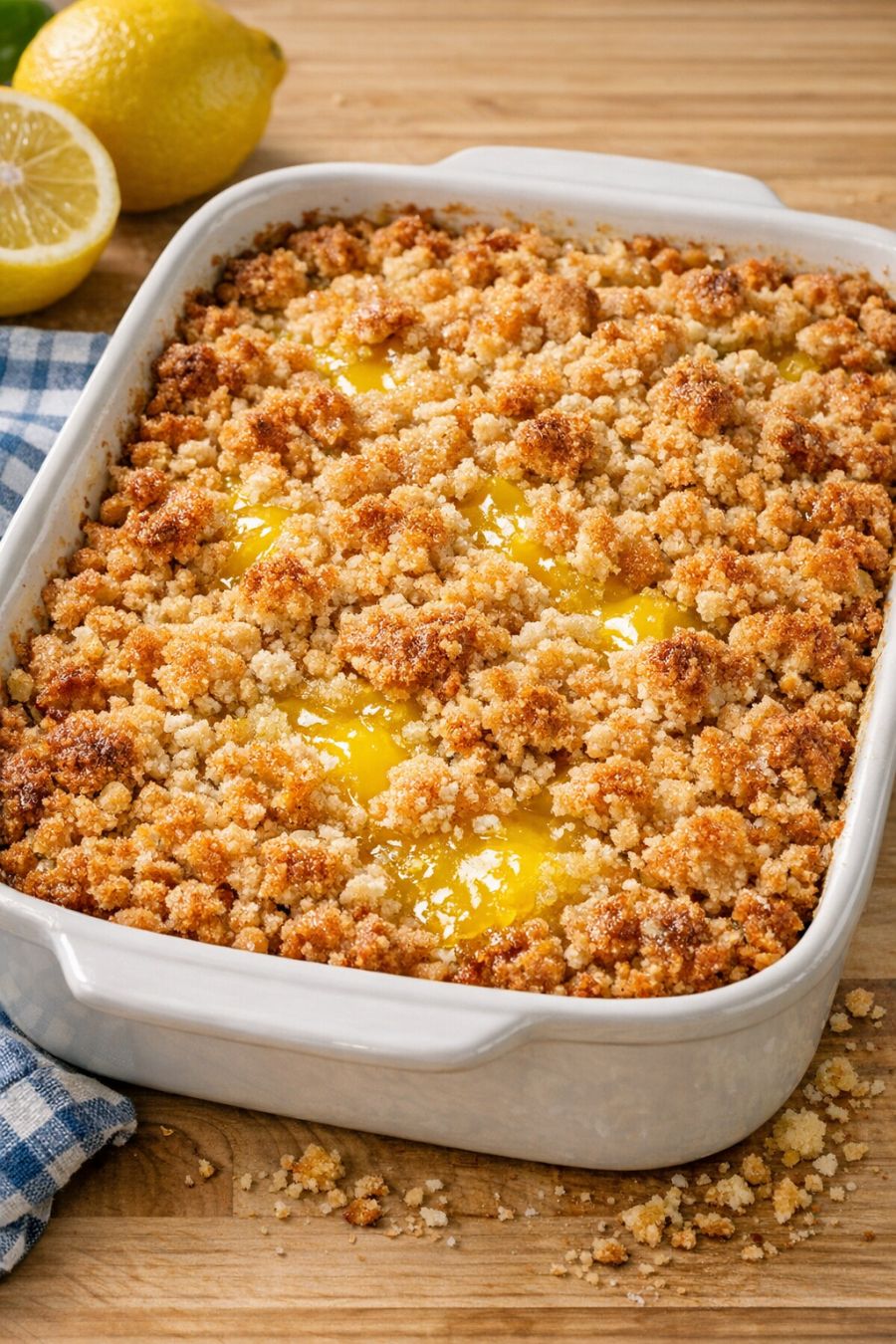
This oven-baked 4-ingredient Amish-style lemon sponge crunch is the kind of nostalgic, church-basement dessert that shows up at potlucks and disappears in minutes. It leans on store-bought shortcuts—jarred lemon curd and refrigerated cookie dough—then adds a simple crunchy topping so you get a soft, buttery base, bright lemon center, and a sweet, golden crumble on top. It’s an easy, practical way to capture the old-fashioned charm of Amish lemon sponge desserts without fussing with separating eggs or making custard from scratch.
Serve this lemon sponge crunch slightly warm or at room temperature so the cookie base has time to set and the lemon curd isn’t molten. I like to pair it with a small scoop of vanilla ice cream or a dollop of lightly sweetened whipped cream to balance the tangy lemon. Black coffee or hot tea makes a nice contrast, but it’s also lovely chilled with iced tea on a warm afternoon. For a more complete dessert spread, add a simple berry salad—blueberries and raspberries are especially good with the lemon.
4-Ingredient Amish Lemon Sponge Crunch
Servings: 8-10
Ingredients
1 (16–18 oz) roll refrigerated sugar cookie dough, chilled
1 cup jarred lemon curd, stirred until smooth
1 cup crushed buttery round crackers (such as Ritz), lightly packed
3 tablespoons unsalted butter, melted
Directions
Preheat your oven to 350°F (175°C). Lightly butter or spray a 9x13-inch glass casserole dish so the cookie base releases easily after baking.
Slice the chilled sugar cookie dough into thick rounds and lay them in a single layer in the bottom of the glass casserole dish. Use clean hands or the bottom of a measuring cup to press and spread the dough into an even layer that fully covers the bottom, sealing any gaps so the lemon curd doesn’t leak underneath.
Open the jarred lemon curd and give it a good stir to loosen it. Spoon the lemon curd over the raw cookie dough and, using a spoon or offset spatula, spread it evenly from edge to edge. This should look like a thin, glossy lemon blanket over the dough.
In a small bowl, combine the crushed buttery round crackers and melted butter. Stir until all the crumbs are evenly moistened and starting to clump slightly; this will form the crunchy topping.
Sprinkle the buttered cracker mixture evenly over the lemon curd layer, covering as much of the surface as possible. Gently pat the topping so it adheres to the curd without pressing down too hard.
Place the glass casserole dish on the center rack of the preheated oven. Bake for 25–30 minutes, or until the topping is golden and crisp and the edges of the cookie base are lightly browned. The lemon layer will bubble slightly around the sides.
Remove the dish from the oven and set it on a cooling rack. Allow the lemon sponge crunch to cool at least 30–45 minutes so the cookie base firms up and the lemon layer thickens enough to slice cleanly.
Once cooled to just warm or room temperature, slice into squares and serve directly from the glass casserole dish. Store any leftovers covered in the refrigerator for up to 3 days; rewarm individual pieces briefly in a low oven if you like a softer base.
Variations & Tips
For a nuttier crunch, replace half of the crushed buttery crackers with finely chopped pecans or walnuts; just keep the total volume to about 1 cup. If you prefer a slightly less sweet dessert, use a plain shortbread cookie dough instead of sugar cookie dough, or choose a tarter brand of lemon curd. To add a subtle spice note reminiscent of some Amish bakes, stir 1/4 teaspoon ground ginger into the cracker topping before adding the melted butter. You can also scale this down to an 8x8-inch glass dish by using half a roll of cookie dough, 1/2 cup lemon curd, 1/2 cup crushed crackers, and 1 1/2 tablespoons butter, and start checking for doneness around 20 minutes. Food safety tips: Always bake the cookie dough thoroughly until the edges are set and lightly browned; do not consume the dough raw. Use a heat-safe glass casserole dish and avoid placing it directly from the refrigerator into a hot oven to reduce the risk of thermal shock—let it sit at room temperature while you preheat the oven. Store leftovers covered in the refrigerator and discard if they develop an off smell, visible mold, or have been left at room temperature for more than 2 hours.
