
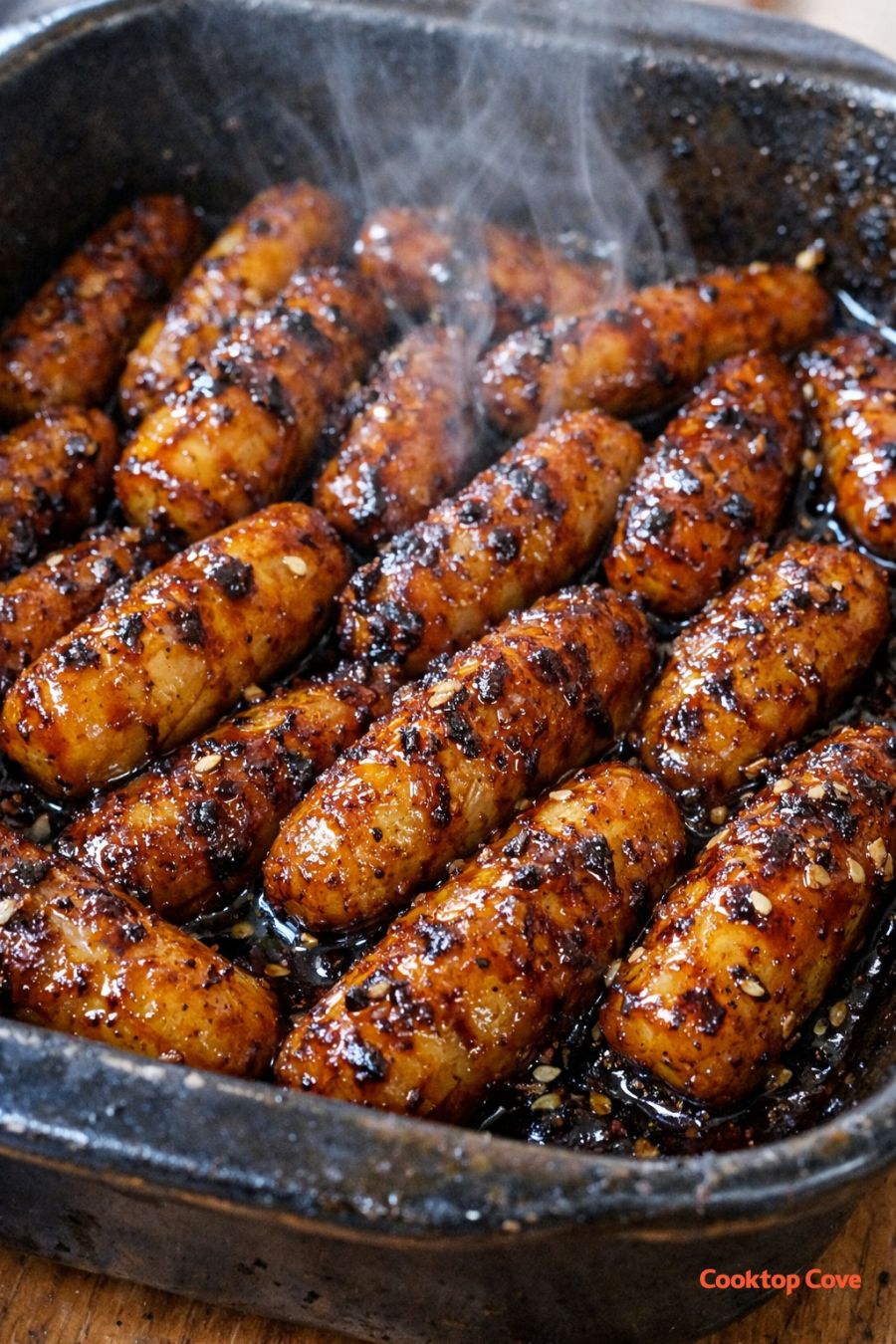
These 3-ingredient oven roasted bites are my weeknight answer to, “Can dinner please handle itself for a while?” They’re built around elongated, starchy shapes—think finger-length potato wedges—roasted until the edges caramelize and the centers go creamy. A simple umami-rich glaze does most of the heavy lifting, giving you that glossy, almost lacquered finish you see on restaurant-style roasted vegetables. While there’s no grand historical origin here, the technique borrows from both classic Midwestern sheet-pan practicality and the high-heat roasting methods you’ll find in French bistros and Japanese yakitori-style glazes. You can prep them hours ahead, slide the pan into the oven when you’re ready, and let the heat do the rest.
Serve these roasted bites straight from the baking dish while they’re still steaming and glossy. They’re excellent piled alongside grilled sausages or roast chicken, or as a hearty base for seared tofu or pan-fried halloumi. I like to offer something fresh and bright on the side—a simple green salad with a sharp vinaigrette or sliced cucumbers with lemon and salt—to cut through the richness of the glaze. A crisp white wine, a light beer, or sparkling water with citrus works well here, and if you’re turning this into a patio party spread, add a bowl of garlicky yogurt or sour cream for dipping.
3-Ingredient Oven-Roasted Starchy Bites
Servings: 4
Ingredients
2 pounds elongated starchy vegetables (such as russet potatoes or sweet potatoes), cut into 3-inch batons
3 tablespoons neutral oil (such as canola, grapeseed, or light olive oil)
1/4 cup thick umami-rich sauce (such as soy-based teriyaki, oyster sauce, or hoisin sauce)
Directions
Line a large, dark-colored baking dish or roasting pan with parchment paper for easier cleanup, or lightly oil the bottom. A dark ceramic baking dish will encourage deeper browning and caramelization.
Scrub the potatoes (or other starchy vegetables) well under cool running water. Pat them very dry with a clean kitchen towel; excess surface moisture will steam instead of roast and prevent caramelization.
Cut the potatoes into elongated, finger-like batons about 3 inches long and 1/2 inch thick. Try to keep the pieces uniform so they cook at the same rate.
In a large mixing bowl, toss the potato batons with the neutral oil until every piece is lightly coated. This thin, even film of fat helps conduct heat and promotes those crisp, caramelized edges.
Transfer the oiled potatoes to the baking dish, spreading them into a mostly single layer. A little overlap is fine, but crowding too much will lead to steaming instead of roasting.
Cover the baking dish tightly with foil and refrigerate for up to 4 hours if you want to get dinner handled ahead. When you’re about an hour from eating, take the dish out of the fridge while the oven heats so the chill comes off slightly.
Preheat your oven to 425°F (220°C) with a rack in the middle position. High heat is key for developing color and a glossy, caramelized surface.
Remove the foil, then slide the uncovered baking dish into the hot oven. Roast for 20 minutes without stirring to allow the bottoms to start browning and the centers to soften.
While the potatoes roast, pour your chosen umami-rich sauce into a small bowl. If it’s very thick, you can thin it with 1–2 teaspoons of water so it coats more easily, but keep it viscous enough to cling to the potatoes.
After the first 20 minutes, remove the baking dish from the oven and gently toss the potatoes with a spatula or tongs to expose new surfaces to the heat. Drizzle the sauce evenly over the hot potatoes, then toss again until every piece is glossy and coated.
Return the baking dish to the oven and continue roasting for another 15–20 minutes, stirring once halfway through. Watch for the edges to deepen in color and the sauce to reduce slightly, clinging to the potatoes in a shiny, caramelized layer. Total roasting time will be about 35–40 minutes, depending on your oven and the size of the pieces.
Check for doneness by piercing a piece with the tip of a knife; it should slide in easily, and the surface should look browned and slightly sticky from the reduced glaze. If needed, roast for an additional 5 minutes.
Remove the baking dish from the oven and let the potatoes sit for 3–5 minutes; the residual heat will finish softening the centers while the surface steam subsides. Serve the bites straight from the dark ceramic dish while still hot and glossy, with small tongs or a spoon for easy grabbing on the patio.
Variations & Tips
You can adapt this basic formula to whatever starchy, elongated shapes you have on hand. Try parsnips, carrots, or peeled wedges of delicata squash for a slightly sweeter profile; just keep the pieces similar in size for even cooking. For a more Mediterranean direction, swap the umami sauce for a thick balsamic glaze and add a few sprigs of fresh rosemary to the pan (this technically adds an ingredient, but you can treat the herb as optional garnish). If you prefer a smoky note, use a thick barbecue sauce as the glaze and finish with a sprinkle of smoked paprika right out of the oven. To lean into Japanese flavors, go with a teriyaki or soy–mirin blend and garnish with toasted sesame seeds and thinly sliced scallions at the table. For those watching sodium, choose a low-sodium sauce and thin it slightly with water and a teaspoon of honey to maintain body without relying solely on salt. Food safety tips: Always scrub root vegetables thoroughly to remove soil, which can harbor bacteria, and cut away any green or sprouted areas on potatoes, as they can contain solanine. Dry the vegetables well before roasting to reduce splattering and to promote browning. Use clean cutting boards and knives, especially if you’re prepping raw meat or poultry for the same meal—keep those items and their juices separate from the vegetables. Refrigerate leftovers within 2 hours of roasting and reheat thoroughly in a hot oven until steaming before serving again.
