
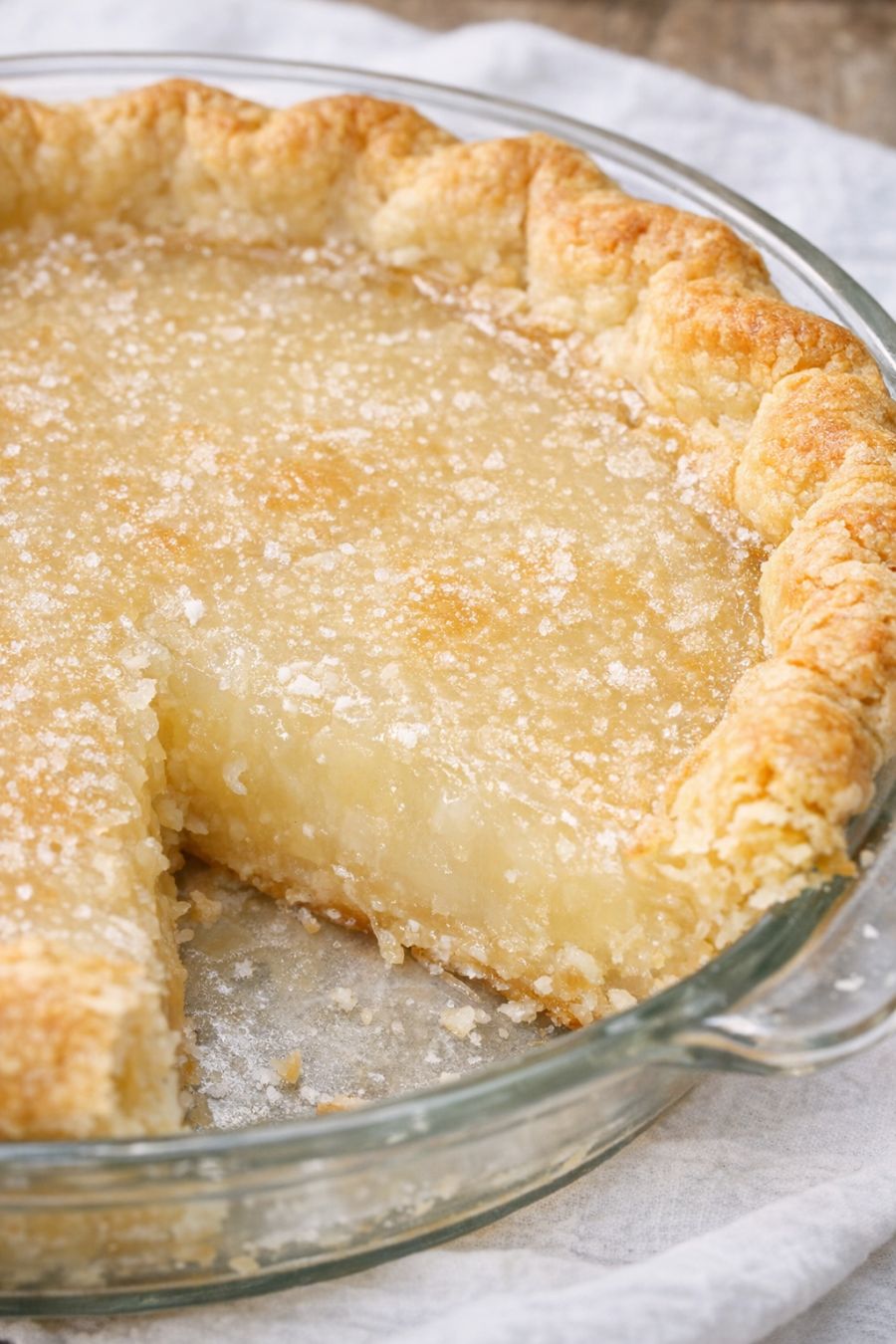
This southern 3-ingredient water pie is one of those Depression-era recipes that feels almost like a magic trick. My grandma made it when money was tight, stretching the pantry with what she had on hand: water, sugar, and a single store-bought pie crust. Somehow, those humble basics bake up into a silky, custard-like filling nestled in a golden, flaky crust. It’s the kind of dessert you can pull together on a Sunday with almost no planning, yet it still feels nostalgic and special—simple enough for busy weeks, comforting enough that kids start asking for it again and again.
Serve this pie slightly warm or at room temperature so the creamy, pudding-like center has time to set but still feels soft and comforting. A plain slice is true to its roots, but you can add a little powdered sugar dusted on top or a spoonful of whipped cream if you like. Coffee or hot tea balances the sweetness nicely, while a glass of cold milk is perfect for kids. It’s a gentle, not-too-heavy dessert that works after a classic Sunday dinner of roast chicken, meatloaf, or a pot of beans and cornbread.
Southern 3-Ingredient Water Pie
Servings: 8
Ingredients
1 (9-inch) unbaked pie crust, fitted in a glass pie plate
1 1/2 cups granulated sugar
2 cups room-temperature water
Directions
Preheat your oven to 400°F (200°C). Place a rack in the middle of the oven. Set a glass 9-inch pie plate with the unbaked pie crust on a baking sheet to catch any drips and make it easier to move.
If the crust is very soft from sitting out, chill the pie shell in the refrigerator for about 10 minutes while the oven heats. This helps the crust stay flaky and hold its shape.
In a medium bowl or large liquid measuring cup, whisk together the granulated sugar and room-temperature water until the sugar is mostly dissolved. The mixture will look thin; that’s exactly what you want.
Pour the sugar-water mixture gently into the unbaked pie crust. Fill carefully so you don’t splash over the edges. The liquid level should come close to the top of the crust but not overflow.
Carefully slide the baking sheet with the pie into the preheated oven. Bake at 400°F (200°C) for 20 minutes to help the crust start to set and the filling begin to thicken around the edges.
After 20 minutes, reduce the oven temperature to 350°F (175°C) without opening the door if possible, and continue baking for another 30–40 minutes. The edges of the crust should be deep golden and the filling should look mostly set with a slight wobble in the center, similar to a soft custard.
If the crust edges are browning too quickly before the filling is set, loosely cover just the rim with strips of foil or a pie shield and continue baking until done.
Remove the pie from the oven and place the glass pie plate on a cooling rack. The filling will appear a bit jiggly at first but will firm up as it cools. Cool at least 2 hours at room temperature before slicing so the center can finish setting into a creamy, custard-like texture.
Once cooled and set, slice the pie into 8 wedges using a sharp knife. For the cleanest slices, wipe the knife between cuts. Serve at room temperature or slightly warmed. Store any leftovers covered in the refrigerator and enjoy within 3 days.
Variations & Tips
Because this recipe is intentionally pared down to three ingredients, most of the magic comes from technique rather than add-ins. A few small tweaks can change the texture and flavor while still honoring the spirit of the original. For a slightly firmer, more sliceable filling, reduce the water to 1 3/4 cups; for a softer, more pudding-like center, use the full 2 cups and allow extra cooling time. If your crust tends to shrink, lightly prick the bottom of the unbaked crust with a fork and chill it well before filling. To lean into the old-fashioned feel without adding extra ingredients, serve the pie with black coffee or unsweetened tea to balance the sweetness. Food safety notes: Always bake the pie until the center is mostly set and the top no longer looks wet; underbaking can leave the center too loose to slice cleanly and may affect quality. Cool the pie on the counter only until it reaches room temperature, then cover and refrigerate if not serving within a couple of hours, since the high sugar content and moisture can encourage spoilage at warm room temperatures. Reheat individual slices gently in a low oven if you prefer them warm, and avoid reheating in the glass pie plate over direct stovetop heat to prevent thermal shock and cracking.
