
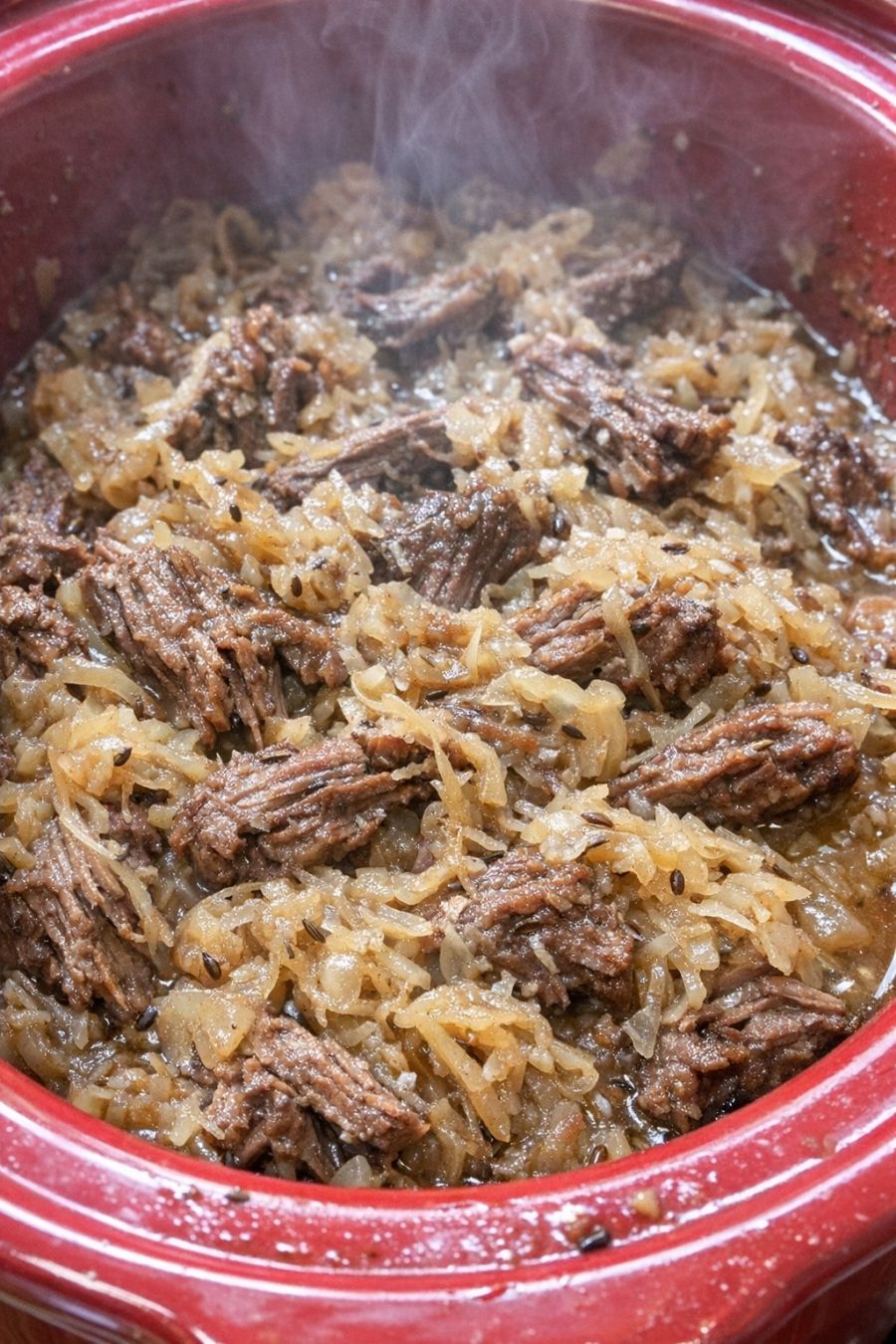
This slow cooker 3-ingredient hard times beef and sauerkraut is the kind of dish that saw a lot of families through lean years here in the Midwest. My great aunt used to take the toughest, cheapest hunk of beef she could find and turn it into days’ worth of meals with nothing more than a jar of tangy kraut and a little patience. The sauerkraut slowly tenderizes the meat while it cooks, and the juices mingle into a glossy, savory-sour gravy that clings to every shred of beef and strand of cabbage. It’s humble, filling, and deeply satisfying—the sort of pot you put on in the morning and let it quietly work its magic while you get on with the day.
Serve this beef and sauerkraut in big spoonfuls over mashed potatoes, buttered egg noodles, or plain boiled potatoes to soak up all the tangy juices. It’s also wonderful piled into a bowl with rye bread or crusty rolls on the side for dipping. On the second or third day, tuck the warmed leftovers into toasted buns with a slice of Swiss or cheddar for simple sandwiches, or serve it alongside green beans, peas, or a simple lettuce salad to freshen up the plate.
Slow Cooker Hard Times Beef and Sauerkraut
Servings: 6
Ingredients
2 1/2 to 3 pounds inexpensive beef roast (such as chuck, arm, or bottom round), trimmed of excess surface fat
32 ounces sauerkraut with juices (2 pounds, from jars or bags)
1 tablespoon caraway seeds
Directions
Lay the beef roast in the bottom of a 4- to 6-quart slow cooker. If the roast is very thick, you can cut it into 2 or 3 large chunks so it fits more evenly and cooks a bit faster.
Spread the sauerkraut and all of its juices evenly over and around the beef, tucking some down the sides so the meat is mostly nestled in the kraut. Sprinkle the caraway seeds over the top so they’re scattered through the sauerkraut.
Cover the slow cooker with the lid and cook on LOW for 8 to 10 hours, or on HIGH for 4 to 5 hours, until the beef is very tender and easily pulls apart with a fork. Do not lift the lid during the first few hours, as that will slow down the cooking.
Once the beef is tender, use two forks to pull it apart right in the slow cooker, shredding it into bite-sized pieces. Stir the shredded beef thoroughly into the sauerkraut so the meat, kraut, and cooking juices form a glossy, tangy mixture with caraway seeds visible throughout.
Taste the beef and sauerkraut. If it’s too tangy for your liking, you can stir in a small splash of water to soften the flavor, or leave it as is for that old-fashioned, bright kraut bite. Let the mixture sit on WARM for 10 to 15 minutes so the flavors meld even more before serving.
Serve the beef and sauerkraut hot straight from the slow cooker. Cool any leftovers promptly, transfer to shallow containers, and refrigerate; the flavor deepens over the next day or two and reheats beautifully on the stovetop or in the microwave.
Variations & Tips
If you’d like to stretch this even further, you can tuck a few peeled potatoes or thick-sliced carrots around the beef before adding the sauerkraut; they’ll soak up the juices and make the pot more filling without changing the basic character of the dish. For a richer flavor, brown the beef in a hot skillet before adding it to the slow cooker, though my great aunt usually skipped this step to save time and fuel. If you prefer a slightly milder kraut, you can briefly rinse the sauerkraut in cool water and drain before adding it, but keep at least some of the juice so the beef still tenderizes well. A teaspoon of black pepper or a small onion, sliced and tucked under the kraut, are classic farmhouse additions if you don’t mind going beyond three ingredients. For sandwiches, serve the reheated beef and sauerkraut on toasted buns with cheese or a swipe of mustard. Food safety tips: Always start with fresh, properly refrigerated beef and sauerkraut. Keep the slow cooker covered while cooking, and be sure the beef reaches fork-tender doneness after several hours on LOW or HIGH as directed. Do not leave the finished dish at room temperature for more than 2 hours; cool leftovers quickly in shallow containers and refrigerate within that time. Use refrigerated leftovers within 3 to 4 days, or freeze them for longer storage, reheating until piping hot before serving.
