
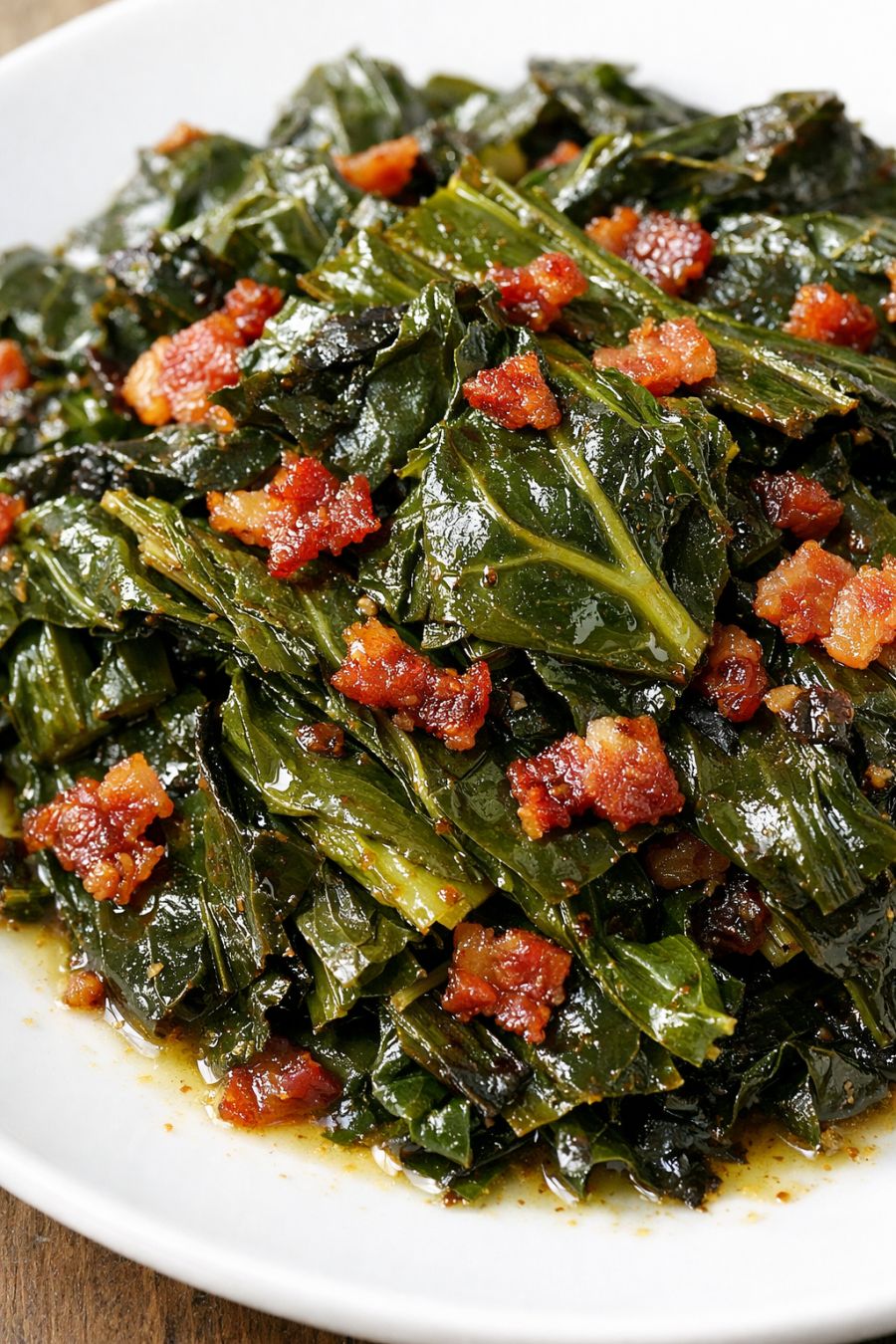
This is my low-carb, three-ingredient version of the silky bacon-dripping greens my nana used to make. She saved every drop of bacon grease in an old jar by the stove, and on busy weeknights she’d turn a bunch of sturdy collard greens into something that basically melted in your mouth. This recipe leans on that same idea: good bacon, its rendered drippings, and a big pile of greens, cooked low and slow until tender and glossy. It’s simple enough for a rushed weeknight but cozy enough to serve at Sunday dinner.
Serve these bacon dripping greens hot, right off the stove, with a little of the glossy fat spooned over the top. They’re perfect next to roasted chicken, grilled pork chops, or a simple steak, and they love sharing a plate with mashed cauliflower or a scoop of cheesy cauliflower rice to keep things low carb. For something more casual, pile them into a bowl with a fried or soft-boiled egg on top, or tuck them alongside a bunless burger. Leftovers reheat well and make a great bed for reheated sausage or pulled pork.
3-Ingredient Bacon Dripping Greens
Servings: 4
Ingredients
8 slices thick-cut bacon
2 pounds collard greens, tough stems removed and leaves sliced into ribbons
1/2 cup reserved bacon drippings (from cooking the bacon, plus any saved bacon grease from a jar)
Directions
Cut the bacon into small pieces (about 1/2-inch). Place the bacon in a large, wide skillet or Dutch oven over medium heat.
Cook the bacon, stirring occasionally, until the pieces are crisp and the fat has rendered out, 8–10 minutes. Use a slotted spoon to transfer the crispy bacon bits to a paper towel–lined plate, leaving the hot bacon drippings in the pan.
If you don’t have quite 1/2 cup of drippings in the pan, add saved bacon grease from your jar until you reach about 1/2 cup total. Warm the drippings over medium heat until fully melted and shimmering but not smoking.
Add the sliced collard greens to the pan in batches, tossing gently in the hot bacon drippings as they wilt. Continue adding greens until they all fit in the pan, stirring so every leaf gets coated and begins to glisten.
Once all the greens are in, reduce the heat to low. Cover the pan with a lid, leaving it slightly ajar so a bit of steam can escape. Cook, stirring every 5–10 minutes, until the collards are very tender, silky, and deep green with some lightly charred edges, about 35–45 minutes. If the pan looks dry at any point, add a tablespoon or two more saved bacon grease or a splash of water to keep things moist.
Taste a piece of collard green to make sure it’s as soft and silky as you like. When the greens are done, stir most of the crispy bacon bits back into the pan, reserving a few for garnish. Toss well so the bacon is evenly distributed.
Transfer the bacon dripping greens to a warm serving plate, spooning some of the glossy rendered fat over the top so they shine. Scatter the remaining crispy bacon bits over the greens and serve immediately while hot and tender.
Variations & Tips
If you like a little heat, sprinkle in a pinch of red pepper flakes while the greens are cooking in the bacon drippings. For a smoky twist, use smoked bacon and let the greens cook just a bit longer to deepen the flavor. If you prefer a slight tang to cut the richness, finish the greens with a teaspoon or two of apple cider vinegar (this technically adds a fourth ingredient but doesn’t change the core 3-ingredient base). You can swap collards for other sturdy greens like kale or mustard greens; just keep in mind that more delicate greens will cook faster, so start checking for doneness earlier. For meal prep, cook a big batch on Sunday and portion into containers; they reheat well in a skillet over low heat or in the microwave, and they’re great under eggs or leftover protein for quick low-carb lunches. Food safety tips: always store bacon drippings in a clean, covered container in the fridge, not on the counter, and discard if it smells off or looks moldy. Cook bacon thoroughly until crisp, and keep cooked greens refrigerated within two hours of cooking; eat leftovers within 3–4 days, reheating until steaming hot before serving.
