
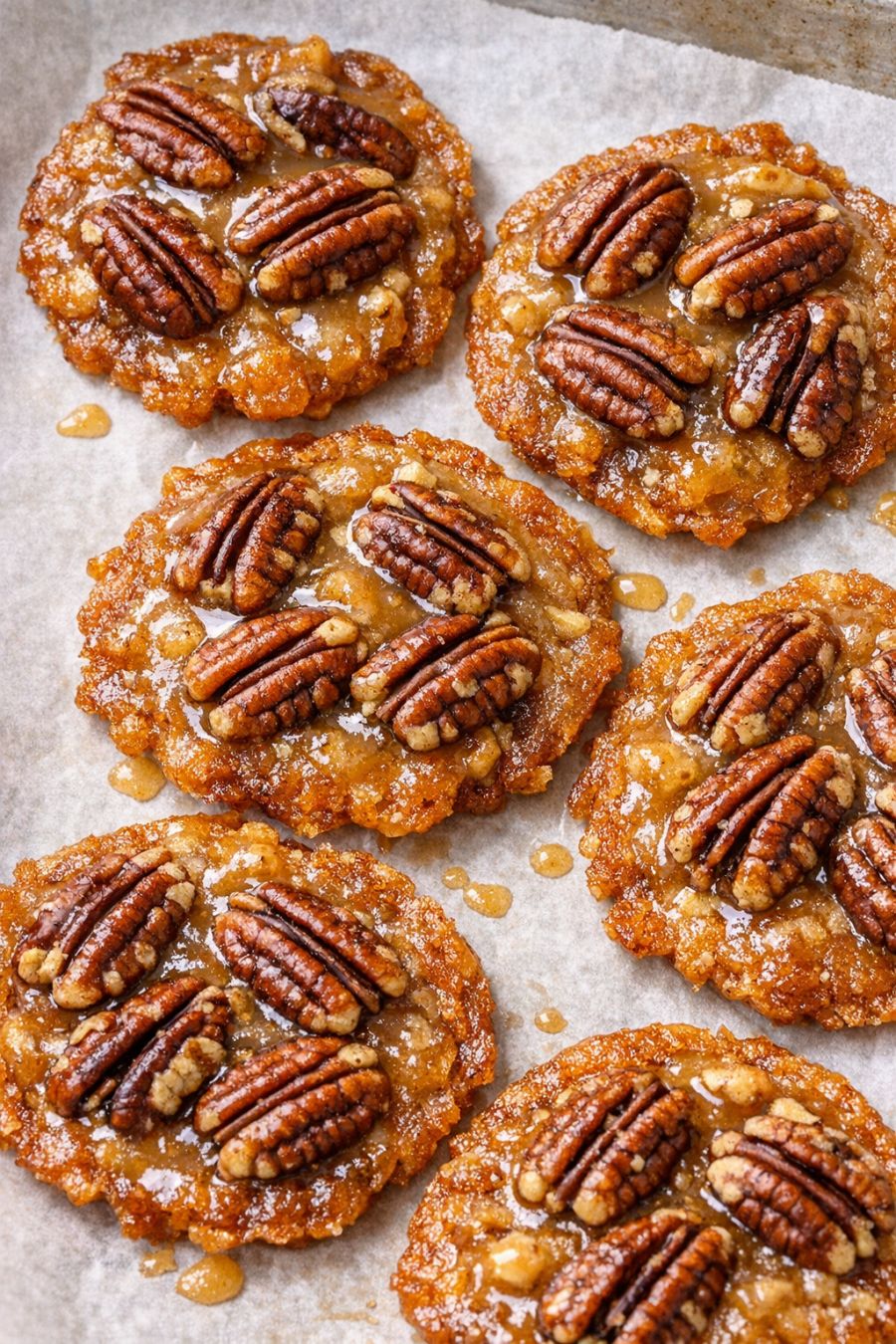
These southern 3-ingredient pecan pralines are exactly the kind of thing a mom would tuck into a tin and hide in the back of the pantry, convinced no one knows her stash exists. Classic pralines come from the American South, especially Louisiana, where French praline traditions met local sugar and pecans. This version keeps the spirit of those candy-shop pralines but simplifies things down to just three pantry staples and a straightforward stovetop method. You get golden, caramelized rounds studded with pecans—crisp at the edges, glossy and just a bit chewy in the center—without needing a candy thermometer or specialty ingredients.
Serve these pralines as a sweet finish after a casual dinner—coffee, black tea, or chicory coffee are all natural pairings that cut through the sweetness. They’re lovely crumbled over vanilla ice cream or yogurt, or served alongside fresh fruit like orange segments or berries for contrast. On a holiday dessert table, tuck them into a small bowl or line them up on a parchment-lined tray so people can see the caramel sheen and toasted pecans. They also pack well in tins or jars for gifting, layered between sheets of parchment to keep them from sticking.
Southern 3-Ingredient Pecan Pralines
Servings: 18–24 pralines, depending on size
Ingredients
2 cups granulated sugar
1 cup heavy cream
2 cups pecan halves (lightly toasted if desired)
Directions
Line a large baking sheet with parchment paper and set it near the stove. Have a heatproof spoon and a small bowl of cold water nearby for testing the candy.
In a medium, heavy-bottomed saucepan (3-quart is ideal), combine the granulated sugar and heavy cream. Stir gently just until the sugar is evenly moistened and the mixture looks like thick cream.
Place the saucepan over medium heat. Cook, stirring frequently at first to help the sugar dissolve, until the mixture comes to a steady simmer. Once simmering, reduce stirring to only occasional, gentle swirls of the pan to prevent crystals from forming on the sides.
Continue cooking the mixture at a steady simmer to low boil, adjusting the heat as needed, until it thickens and turns a deep golden caramel color, 8–12 minutes. The bubbles will become slower and heavier, and the mixture will lightly coat the back of a spoon.
To test without a thermometer, carefully drop a small spoonful of the hot mixture into the bowl of cold water. When it forms a soft but shapable ball that holds together when pressed between your fingers, it’s ready. If it dissolves or feels too loose, keep cooking for another 1–2 minutes and test again.
Once the caramel has reached the soft-ball stage and is a rich golden brown, immediately remove the pan from the heat. Working quickly, stir in the pecan halves until they are evenly coated and glossy. The mixture will thicken as you stir.
Using a tablespoon or small cookie scoop, drop heaping spoonfuls of the hot pecan mixture onto the parchment-lined baking sheet, spacing them slightly apart. Aim to get several pecan halves in each round, nudging them into place with your spoon if needed for even distribution.
Let the pralines cool completely at room temperature, 30–45 minutes, until they are firm to the touch with crisp edges and slightly glossy centers. They will continue to set as they cool.
Once fully cooled and set, carefully peel the pralines from the parchment. Store in an airtight tin or container at room temperature, layered between pieces of parchment to prevent sticking. They’re best within 5–7 days, though they rarely last that long in a house that knows where the tin is hidden.
Variations & Tips
For a deeper flavor, toast the pecan halves in a 350°F (175°C) oven for 6–8 minutes before starting the recipe; let them cool slightly before stirring into the hot caramel. If you like a hint of salt, sprinkle a tiny pinch of flaky sea salt over the pralines immediately after spooning them onto the parchment—this keeps the recipe itself at three ingredients while adding a finishing touch. You can also play with texture: use a mix of pecan halves and coarse chopped pecans for rounds that hold together more tightly while still showing off a few pretty halves on top. For a slightly softer, chewier praline, remove the caramel from the heat a bit earlier, when the test ball in cold water is very soft but still holds its shape; for a crisper praline, cook just a minute longer, but avoid taking it to a dark brown, which can taste bitter. If you prefer smaller, bite-size candies, make teaspoon-sized rounds and reduce the cooling time. Food safety and handling tips: The sugar mixture becomes extremely hot—work carefully, use a stable, heavy-bottomed pan, and keep children and pets away from the stove while cooking and spooning the pralines. Never touch or taste the caramel directly from the pot; always use the cold-water test. Allow pralines to cool completely before transferring to containers to prevent condensation, which can make them sticky. Store at room temperature in a dry place; do not refrigerate, as moisture can cause the sugar to weep. Discard any pralines that develop off smells, visible mold, or an unusually sticky, syrupy surface after storage.
