
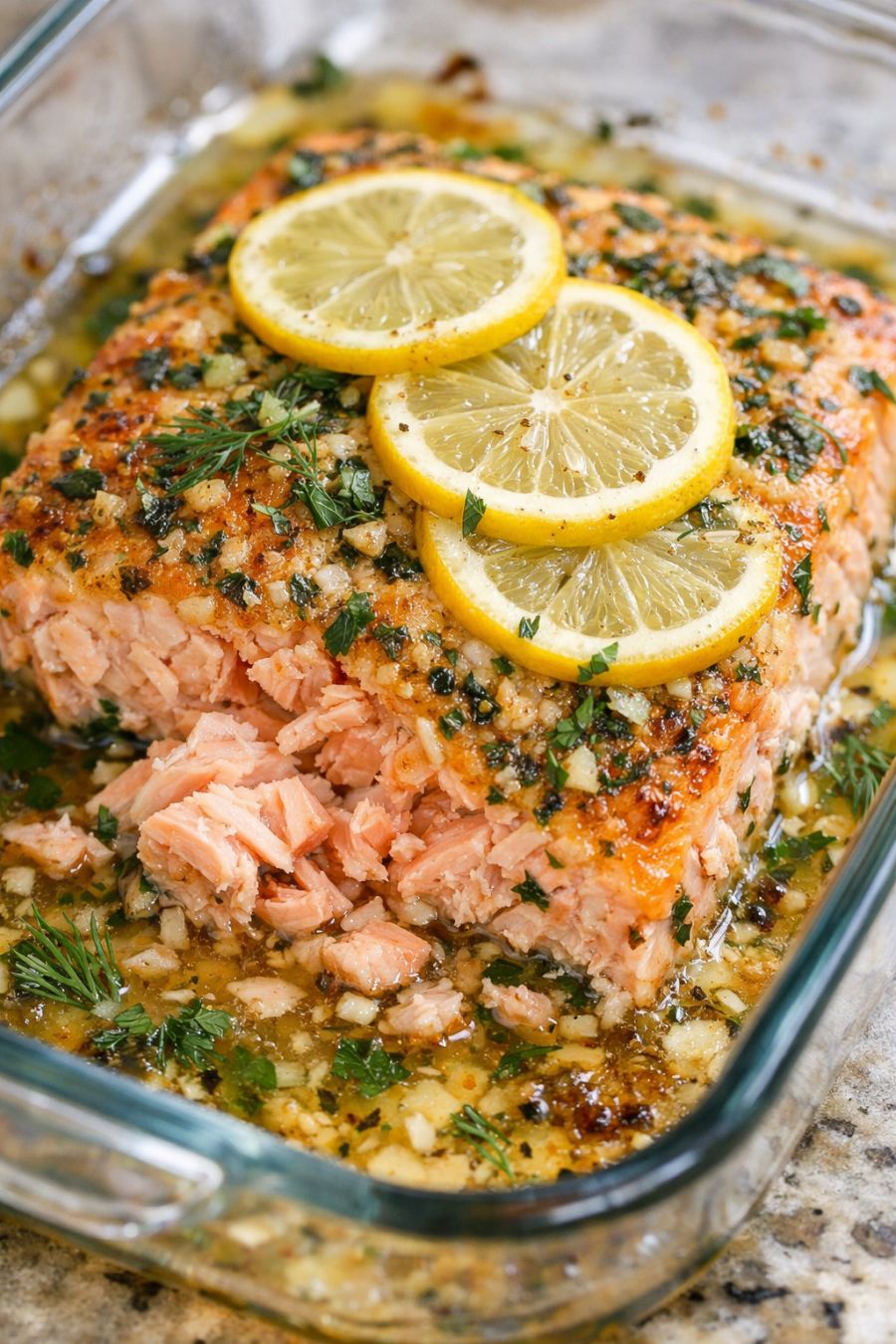
This lemon herb baked salmon is exactly the kind of fish my aunt swore by: flaky, buttery, and so tender it practically melts the moment it hits your tongue. It’s a very simple, home-style preparation that leans on classic European flavors—lemon, fresh herbs, and good butter—rather than heavy breading or sauces. With only five main ingredients and a quick bake, it’s perfect for busy weeknights, low-carb eating, or whenever you want a restaurant-quality fish dinner without fuss.
Serve this salmon straight from the glass baking dish with the buttery pan juices spooned over the top. It pairs beautifully with simple low-carb sides: roasted asparagus, sautéed green beans, or a crisp mixed green salad with a light vinaigrette. Cauliflower mash or roasted broccoli make a satisfying stand-in for potatoes if you’re watching carbs. A chilled dry white wine—like Sauvignon Blanc or a lightly oaked Chardonnay—works nicely, or sparkling water with a lemon wedge if you prefer non-alcoholic.
Lemon Herb Baked Salmon
Servings: 4
Ingredients
1 1/2 to 2 pounds salmon fillet, skin-on, pin bones removed
4 tablespoons unsalted butter, melted (plus a little extra for greasing the dish)
1 large lemon, thinly sliced (plus 1 tablespoon fresh lemon juice from the ends)
2 tablespoons chopped fresh dill (plus extra fronds for garnish)
1 teaspoon kosher salt
1/2 teaspoon freshly ground black pepper
Directions
Preheat your oven to 400°F (200°C). Lightly grease a glass baking dish with a small amount of butter so the salmon doesn’t stick.
Pat the salmon fillet dry with paper towels. Place it in the glass baking dish, skin side down, and tuck any thin tail end under so the fillet is a more even thickness for even cooking.
Season the top of the salmon evenly with the kosher salt and black pepper. Drizzle the tablespoon of fresh lemon juice over the fillet so it soaks into the seasoning.
In a small bowl, stir the melted butter with the chopped fresh dill. Spoon or brush this buttery herb mixture all over the top of the salmon, letting some run down into the sides of the dish so it bastes the fish as it bakes.
Lay the thin lemon slices over the surface of the salmon, overlapping them slightly to create a loose shingled pattern. This helps keep the top moist while it develops a light golden, almost crisped edge where the butter meets the heat.
Bake in the preheated oven for 12 to 16 minutes, depending on the thickness of your fillet. Begin checking at 12 minutes: the salmon should be just opaque in the center and flake easily with a fork, with the top lightly golden and the butter around it bubbling.
For an extra golden, slightly crisper top, move the dish to the upper third of the oven and broil on high for 1 to 2 minutes at the end of baking. Watch closely so the herbs and lemon do not burn; you want a gentle, toasty color on the surface.
Remove the salmon from the oven and let it rest for 3 to 5 minutes. This brief rest lets the juices settle so the fish stays moist and silky. Scatter a few extra dill fronds over the top for freshness, then spoon some of the buttery pan juices over each portion as you serve. The salmon should flake easily and feel almost custardy in the center—just the way my aunt liked it.
Variations & Tips
For a slightly different flavor profile while staying low-carb, you can swap half of the dill for chopped fresh parsley or chives, or add 1/2 teaspoon of dried Italian seasoning to the melted butter if you don’t have fresh herbs on hand. If you enjoy garlic, stir 1 small finely minced clove into the melted butter before brushing it on the fish; it will toast gently and perfume the whole dish. For a richer, even more buttery finish, add an extra tablespoon of butter to the pan halfway through baking so the juices in the dish become a more generous sauce. If you prefer a little spice, sprinkle a pinch of red pepper flakes over the salmon along with the salt and pepper. To make cleanup easier, you can line the glass baking dish with parchment, though you may lose a touch of browning on the very bottom. For food safety, always start with properly chilled salmon and keep it refrigerated until you’re ready to cook. If using previously frozen fish, thaw it overnight in the refrigerator—never at room temperature. Bake the salmon until it reaches an internal temperature of 125–130°F (52–54°C) for moist, medium doneness; if you prefer it more well-done, you can go up to 140°F (60°C), but take care not to overcook or it will dry out. Discard any leftovers that have been at room temperature for more than 2 hours, and store cooled leftovers in the refrigerator for up to 2 days, reheating gently at a low oven temperature to keep the texture tender.
