
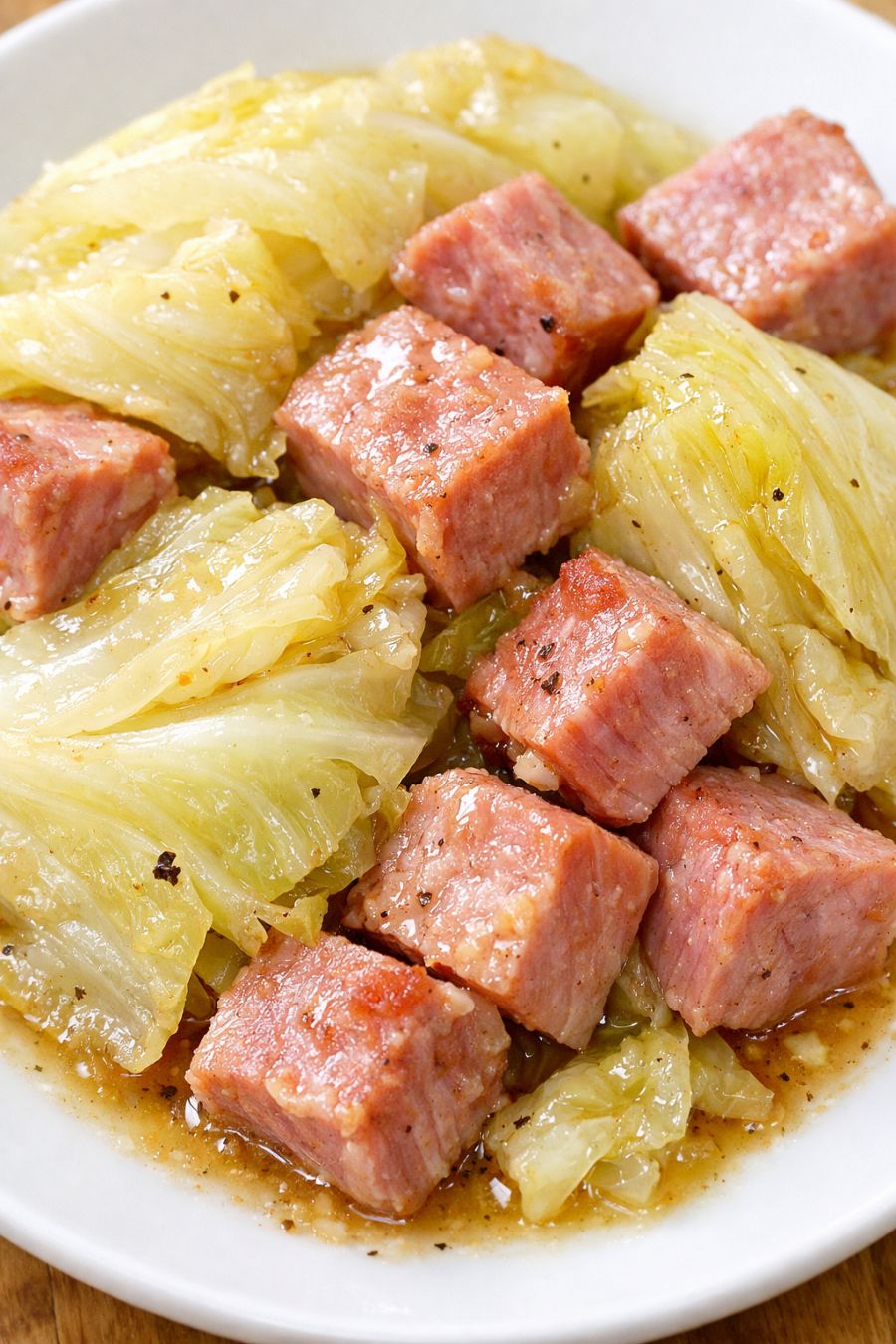
This low carb 3-ingredient Amish cabbage and ham skillet is exactly the kind of hearty comfort food my grandpa used to make on weeknights when I was growing up in the Midwest. It’s simple, filling, and comes together in one pan with just cabbage, ham, and butter. The recipe is inspired by old-fashioned Amish-style cooking: humble ingredients, slow sautéed until the cabbage turns tender and translucent and the ham gets coated in rich, glistening pan juices. It’s the kind of meal you can throw together after work with almost no prep, but it still feels like a cozy, sit-down dinner.
Serve this cabbage and ham hot, right out of the skillet, spooned onto warm plates so you catch all the buttery pan juices. To keep things low carb, pair it with a simple green salad, roasted green beans, or steamed broccoli. If you’re cooking for family members who aren’t watching carbs, it’s great with a slice of crusty bread or over a scoop of mashed cauliflower or mashed potatoes to soak up the juices. A little grainy mustard or a spoonful of sauerkraut on the side also works really well with the salty ham and sweet cabbage.
Low Carb 3-Ingredient Amish Cabbage and Ham
Servings: 4
Ingredients
1 medium head green cabbage (about 2 to 2 1/2 pounds), cored and cut into thick wedges
1 pound thick-cut cooked ham, cut into chunky bite-size pieces
4 tablespoons unsalted butter
Directions
Prep the cabbage by removing any tough or damaged outer leaves. Cut the cabbage into quarters through the core, then cut each quarter into 2–3 thick wedges, keeping a bit of the core attached so the wedges hold together.
Cut the ham into thick, chunky cubes or rectangles, about 1-inch pieces. Pat dry with a paper towel if it’s very moist; this helps it brown a bit better in the pan.
In a large, deep skillet or wide Dutch oven, melt the butter over medium heat until it foams and just begins to smell nutty but not browned.
Add the ham pieces to the skillet in an even layer. Cook, stirring occasionally, for 4–5 minutes until the edges start to sizzle and get a little golden and the butter turns lightly tinted from the ham juices.
Arrange the cabbage wedges in the skillet around and over the ham, fitting them in snugly. Spoon some of the hot butter and ham drippings over the top of the cabbage wedges.
Cover the skillet with a lid. Reduce the heat to medium-low and let the cabbage and ham cook undisturbed for about 10 minutes, allowing the cabbage to steam and soften in the buttery juices.
Remove the lid and carefully turn the cabbage wedges with tongs, basting again with the pan juices so both sides get coated. If the pan looks very dry, add 1–2 tablespoons of water to loosen the browned bits and create more juices.
Continue cooking uncovered for another 10–15 minutes, turning the wedges once or twice, until the cabbage is very tender, translucent at the edges, and lightly browned in spots, and the ham is heated through and coated in rich, glistening pan juices.
Taste a piece of cabbage and ham; if needed, you can add a small pinch of salt and a few grinds of black pepper, but many hams are salty enough that you may not need any extra seasoning.
Serve the cabbage wedges and ham hot on warm plates, spooning plenty of the buttery pan juices over the top so the tender translucent cabbage and pink ham chunks are nicely coated.
Variations & Tips
You can keep the spirit of this 3-ingredient skillet while adjusting it slightly to fit your kitchen and preferences. If you don’t have a full head of cabbage, you can use pre-shredded coleslaw mix and sauté it the same way; just note that it will cook faster and won’t have those big, pretty wedges. For a smokier flavor, use smoked ham or thick-cut leftover ham from a holiday roast. If you only have salted butter, reduce or skip any added salt at the end. To make it dairy-free, swap the butter for a neutral oil plus a tablespoon of olive oil for flavor, though the classic buttery richness will be different. For extra low-carb bulk, you can toss in a handful of sliced mushrooms or a few radish halves in the last 10 minutes of cooking, but that will take it beyond the strict 3-ingredient idea. Food safety tips: Always start with fully cooked ham from a reliable source and keep it refrigerated until you’re ready to cook. Reheat leftovers to at least 165°F (74°C) before eating. Let hot leftovers cool slightly, then store them in an airtight container in the refrigerator and use within 3–4 days. If the cabbage or ham ever smells off or has an unusual color or texture, discard it rather than risk eating it.
