
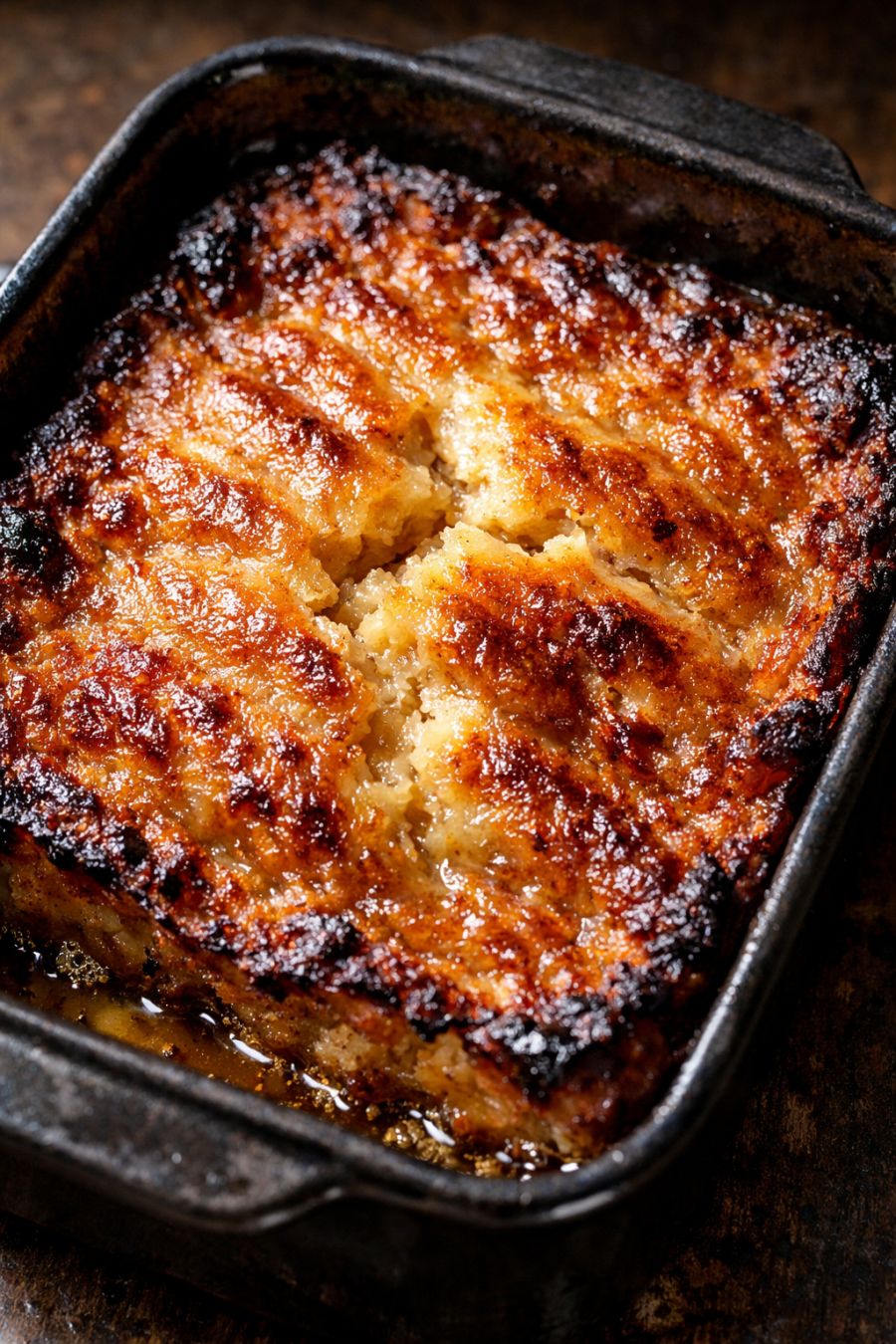
This is my bare-bones, end-of-the-week, under-twenty-dollars-left-in-the-budget bake: a 3-ingredient, oven-browned, starchy comfort dish that eats like a hug. It’s inspired by Depression-era cooking, when home cooks stretched cheap staples—potatoes, fat, and salt—into something filling and deeply satisfying. Here, thinly sliced potatoes are layered with plenty of fat and salt, then roasted until the edges caramelize, the center puffs slightly, and the whole thing turns into a bronzed, crackled slab of comfort. It’s simple, pantry-friendly, and designed for nights when you need real food without spending real money.
Serve this hot, straight from the baking dish, cut into thick squares or wedges. It’s substantial enough to be the centerpiece with a pile of simply dressed greens or any odds-and-ends vegetables you have—steamed carrots, frozen peas, or sautéed cabbage all work. If you’ve got a couple of eggs, a fried or soft-poached egg on top turns it into a full meal. Leftovers reheat well in a skillet until crisp, and they’re excellent alongside roasted sausages, a can of beans, or even just a spoonful of tangy yogurt or sour cream if your budget allows.
3-Ingredient Bronzed Potato Comfort Bake
Servings: 4
Ingredients
2 1/2 pounds russet or other starchy potatoes, scrubbed (peeling optional)
1/3 cup neutral oil or rendered fat (such as vegetable oil, bacon fat, or schmaltz), plus a little extra for the dish
1 1/2 teaspoons kosher salt (or 3/4 teaspoon fine table salt), plus more to taste
Directions
Preheat your oven to 400°F (200°C). Place a rack in the center of the oven. Lightly grease a medium dark ceramic or glass baking dish (about 8x8 inches or similar) with a bit of the oil or fat, making sure to coat the corners and sides so nothing sticks.
Prepare the potatoes: Scrub the potatoes well and dry them with a towel. You can peel them if you prefer a smoother look, but leaving the skins on keeps it rustic and saves both time and waste. Using a sharp knife, mandoline, or food processor slicing blade, cut the potatoes into very thin slices, about 1/8 inch thick or thinner. Try to keep the slices roughly the same thickness so they cook evenly.
Season the potatoes: In a large bowl, toss the potato slices with the 1/3 cup of oil or rendered fat and the salt until every slice has a light, glossy coating. If you’re using a solid fat like bacon grease or schmaltz, melt it gently first so it flows easily, then pour it over the potatoes. Take a moment to separate any slices that are stuck together so the fat and salt can reach everything.
Layer into the baking dish: Arrange the potatoes in the prepared dish in overlapping layers, like loose shingles on a roof. You don’t have to be fussy, but aim for a mostly even thickness across the pan so it cooks at the same rate. Press the potatoes down lightly with your hands or the back of a spatula to compact them just a bit; this helps them bake into a cohesive, sliceable mass. Scrape any remaining fat and salt from the bowl over the top.
Bake until tender and bronzed: Place the dish in the preheated oven and bake for about 45–55 minutes. Partway through (around the 25–30 minute mark), carefully rotate the dish so it browns evenly. You’re looking for deeply caramelized, crisped edges, a slightly puffed center with a few hairline cracks, and potatoes that are completely tender when pierced with a knife in the middle. If the top is browning too quickly before the potatoes are tender, loosely tent with a piece of foil and continue baking until done.
Rest briefly, then serve: When the potatoes are bronzed and bubbling, remove the dish from the oven. You should see glossy rendered fat pooling slightly in the corners—that’s what gives you that rich, almost confit-like texture at the edges. Let the bake rest for 10–15 minutes; this allows the starches to set so you can cut cleaner slices and keeps you from burning your mouth. Taste a corner and sprinkle on a pinch more salt if needed. Cut into squares or wedges and serve warm.
Store leftovers safely: Cool any leftovers until just warm, then cover the dish or transfer pieces to an airtight container and refrigerate within 2 hours of baking. Reheat slices in a hot skillet with a tiny bit of oil or in a 375°F (190°C) oven until heated through and re-crisped at the edges, about 10–15 minutes. Eat refrigerated leftovers within 3–4 days.
Variations & Tips
This recipe is intentionally stripped down to three ingredients, but it’s flexible if your pantry allows. For more flavor without changing the base concept, you can add a small onion, thinly sliced and layered with the potatoes, or a clove of garlic finely grated into the fat before tossing—just note these would technically push it past three ingredients. If you have black pepper, paprika, or dried herbs, a light sprinkle over the top before baking adds warmth and color. For extra richness, drizzle a tablespoon or two of milk or any drippable dairy over the top in the last 10 minutes of baking, or scatter a small handful of grated cheese if your budget stretches that far. You can swap in other starchy roots—like thinly sliced sweet potatoes or a mix of white potatoes and parsnips—but they may brown a bit faster, so keep an eye on them and tent with foil if they darken too quickly. For a crisper bottom, preheat the greased baking dish in the oven for 5–10 minutes before adding the potatoes; they’ll sizzle as they hit the hot surface. Food safety notes: Always cool leftovers to room temperature but refrigerate within 2 hours to keep them out of the bacterial “danger zone.” If you’ve used animal fats like bacon grease or schmaltz, handle them as you would any cooked meat product—store the finished dish chilled and reheat thoroughly until steaming hot before serving. Discard any leftovers that smell off, appear slimy, or have been left at room temperature for more than 2 hours, as starchy, moist foods can support bacterial growth if not stored properly.
