
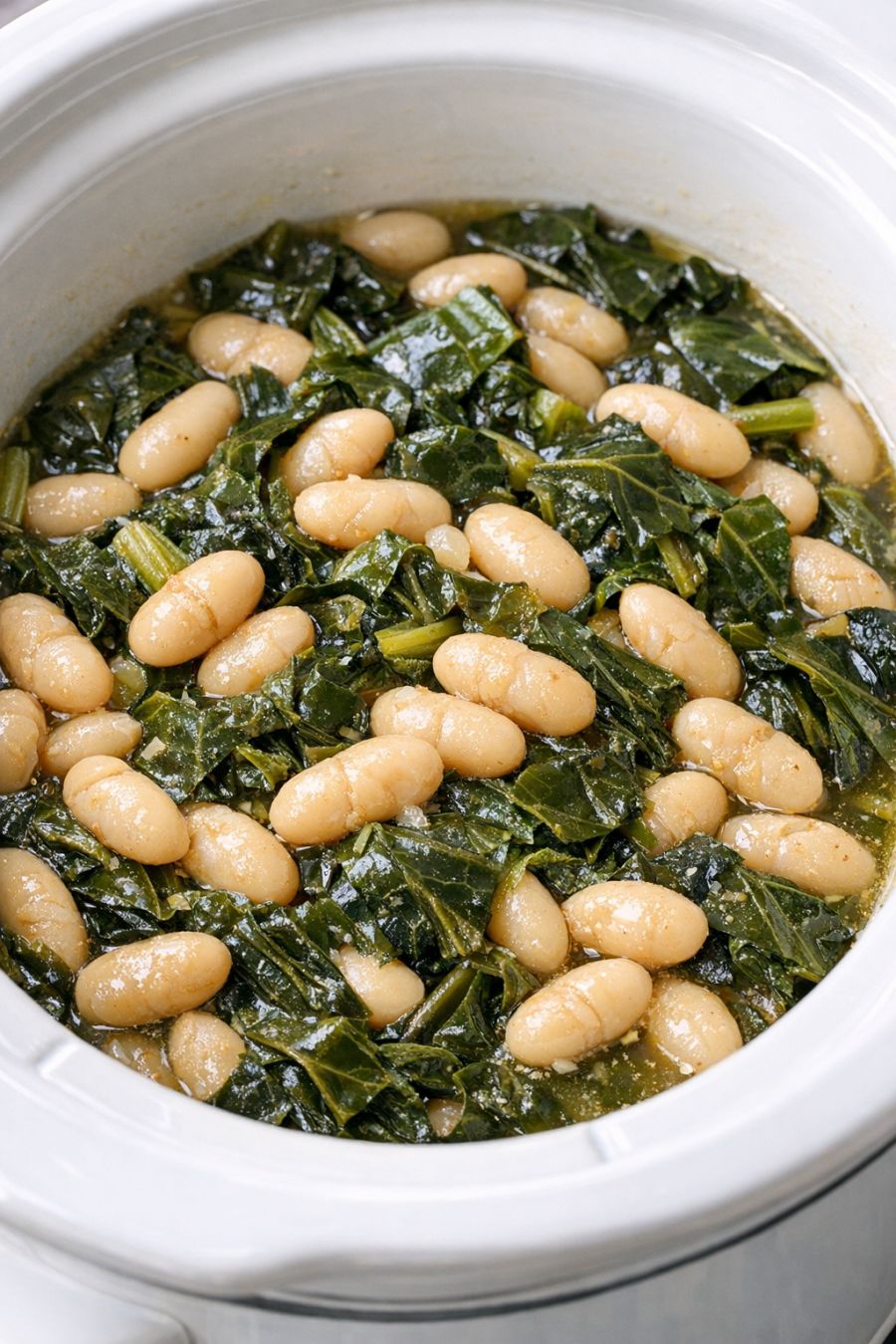
Every spring, right about the time the fields started to green up but before anything fancy was ready, my mother had a little trick to keep us full without spending much: a big slow cooker of beans and greens. She’d bring home a bundle of sturdy collard greens from a neighbor’s garden and stretch a couple of cans of white beans into a full, comforting meal with nothing more than a good vegetable broth. The beans turn plump and creamy, the collards melt into tender ribbons, and the light, savory pot liquor tastes like it simmered on the back of a farmhouse stove all day. This is a simple, three-ingredient pot that feels like spring, but it’ll feed you well any time of year on just a few dollars.
Serve these beans and greens in wide bowls, making sure to ladle plenty of the broth over the top. They’re lovely with a thick slice of buttered cornbread, a heel of crusty bread for soaking up the pot liquor, or spooned over a scoop of cooked rice or barley. For a heartier plate, add a simple green salad or sliced fresh tomatoes in summer. Leftovers make a fine lunch on their own, or you can mash some of the beans onto toast and spoon the greens and broth over the top for a rustic open-faced sandwich.
Slow Cooker 3-Ingredient Beans and Greens
Servings: 4
Ingredients
2 (15-ounce) cans cannellini beans, drained and rinsed
1 large bunch collard greens (about 1 pound), tough stems removed and leaves sliced into thin ribbons
4 cups low-sodium vegetable broth
Directions
Rinse the collard greens well under cool running water to remove any grit. Shake off excess water. Lay several leaves on top of each other, roll into a tight bundle, and slice across the roll to make thin ribbons. Discard any thick, woody stems.
Drain and rinse the cannellini beans in a colander until the water runs mostly clear. This helps keep the broth light and clean-tasting.
Place the sliced collard greens into the bottom of a 4- to 6-quart slow cooker. Scatter the cannellini beans evenly over the greens.
Pour the vegetable broth over the beans and greens. Gently press down with the back of a spoon to make sure everything is mostly submerged. The greens will wilt down as they cook.
Cover the slow cooker with the lid. Cook on LOW for 6 to 8 hours, or on HIGH for 3 to 4 hours, until the collard greens are very tender and the beans are plump and creamy. The broth should be flavorful and lightly thickened from the starch of the beans.
Once cooked, taste the broth and, if desired in your own kitchen, season to your liking just before serving. Stir gently to mix the beans and greens without breaking them up too much.
Ladle the beans, greens, and plenty of the savory broth into bowls and serve hot.
Variations & Tips
To keep the spirit of this three-ingredient, budget-friendly pot, any changes should be small and practical. You can swap cannellini beans for other mild white beans like great northern or navy beans, keeping the quantity the same so the texture stays creamy. If collard greens are hard to find, use an equal amount of sturdy greens such as kale or mustard greens; more delicate greens like spinach will cook much faster and can become too soft, so add those only in the last hour of cooking if you choose to use them. For a deeper, smokier flavor that still respects the short ingredient list, you may cook the pot as written and then, at serving time in your own kitchen, add a little of your favorite seasoning or a spoonful of something tangy to your individual bowl. If you prefer to use dried beans instead of canned, be sure to soak and fully cook them before adding to the slow cooker with the greens and broth; dried beans need more time and careful handling to reach a safe, tender texture, and undercooked beans can cause stomach upset. Always rinse greens thoroughly to remove dirt and any possible grit, and discard tough, woody stems that will not soften during cooking. Cool leftovers promptly, within 2 hours of cooking, and refrigerate in shallow containers; they will keep safely for up to 4 days. Reheat only what you plan to eat, bringing it to a gentle simmer on the stove or until steaming hot in the microwave, and avoid leaving the slow cooker on the “warm” setting for long periods with leftovers, as that can hold food in a temperature range that is less safe over time.
