
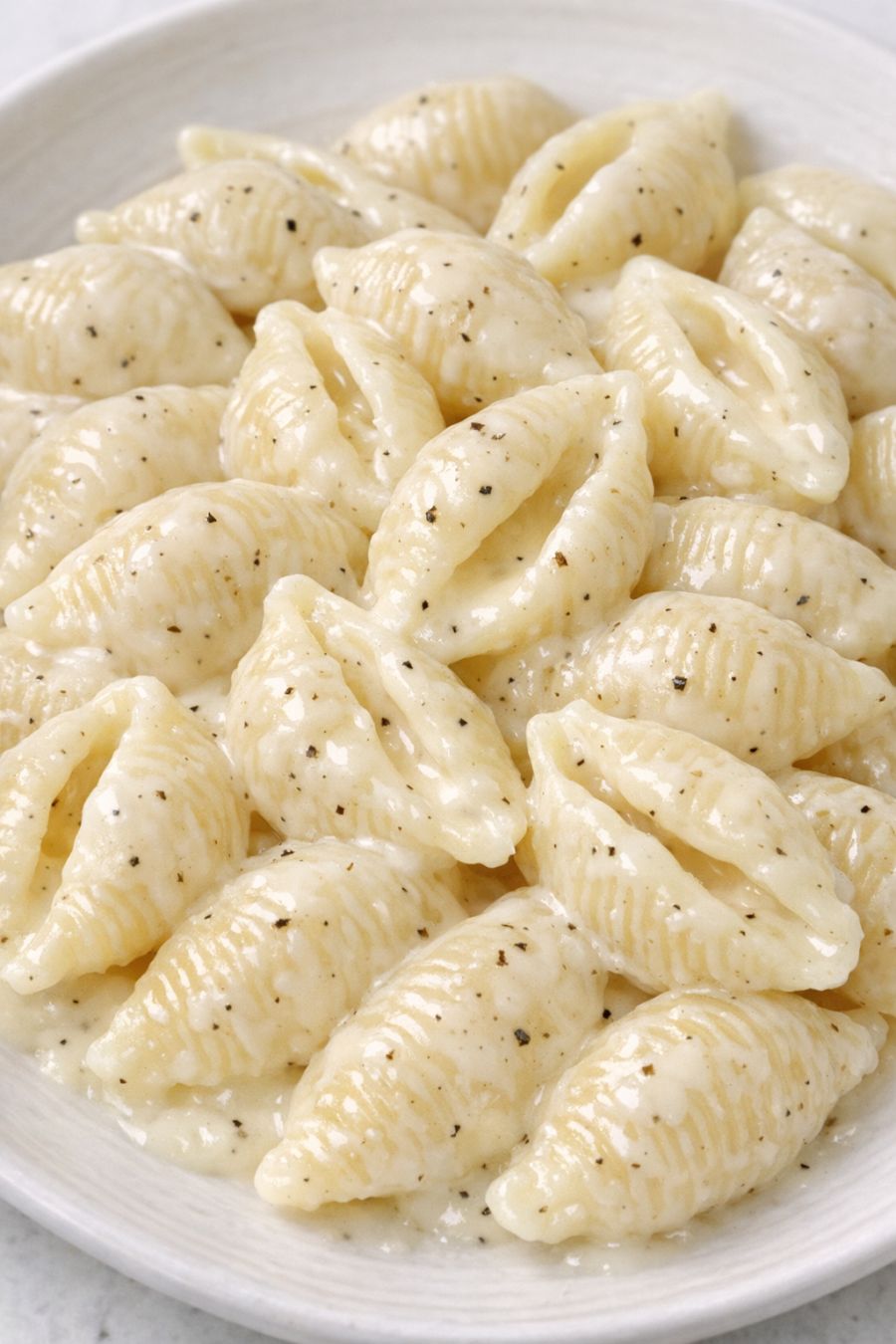
This 4-ingredient creamy garlic pasta is the kind of dish neighbors show up with when they know you’re worn out and running on fumes. It reminds me of the casseroles and hot dishes that used to appear on our farmhouse porch whenever someone was under the weather or working late in the fields. The ingredients are simple and sturdy—pasta shells, cream, garlic, and a bit of Parmesan—but together they turn into a glossy, velvety sauce that clings to every curve of the noodles. It’s filling, gentle on the stomach, and tastes like the sort of comfort food our Midwestern mothers and grandmothers leaned on when there wasn’t much in the pantry but everyone still needed a good, warm meal.
Serve this creamy garlic pasta in warm shallow bowls with a generous grind of black pepper on top. A crisp green salad with a tangy vinaigrette helps cut through the richness, and a side of steamed or roasted vegetables—like broccoli, peas, or carrots—adds color and balance. If you’ve got them, soft dinner rolls or a slice of buttered bread are perfect for swiping up the extra sauce. For something heartier, pair it with simple baked chicken or a pan-fried pork chop, but honestly, this pasta is filling enough to stand on its own for a cozy, no-fuss supper.
4-Ingredient Creamy Garlic Pasta
Servings: 4
Ingredients
12 ounces small pasta shells
2 cups heavy cream
4 large garlic cloves, finely minced
1 cup finely grated Parmesan cheese
1 teaspoon kosher salt, plus more to taste (optional pantry staple)
1/2 teaspoon freshly ground black pepper, plus more for serving (optional pantry staple)
Directions
Bring a large pot of well-salted water to a boil. Add the pasta shells and cook according to package directions until just al dente, stirring now and then so they don’t stick together.
While the pasta cooks, pour the heavy cream into a medium saucepan. Add the minced garlic and a pinch of salt and black pepper. Set the pan over low to medium-low heat and warm gently, stirring often, until the cream is steaming but not boiling. Let it bubble softly for 3–4 minutes to take the sharp edge off the garlic and thicken slightly.
Turn the heat under the cream down to its lowest setting. Add the grated Parmesan cheese a small handful at a time, stirring constantly until each addition melts smoothly into the cream before adding more. Keep the heat gentle to prevent the cheese from getting grainy. Taste and add a bit more salt or pepper if needed.
When the pasta is al dente, scoop out about 1/2 cup of the hot pasta water and set it aside. Drain the pasta well, then return it to the warm pot.
Pour the hot creamy garlic sauce over the drained pasta shells. Stir slowly but thoroughly so every shell is coated and filled with sauce. If the mixture seems too thick, splash in a tablespoon or two of the reserved pasta water at a time, stirring until the sauce is glossy and clings to the pasta like a heavy cream soup.
Let the pasta sit on the turned-off burner for 2–3 minutes, stirring once or twice. This short rest helps the shells soak up the sauce and turn even creamier, almost like a soft casserole. Serve hot with an extra sprinkle of Parmesan and a good grind of black pepper on top.
Variations & Tips
For a little color and freshness, stir in a handful of chopped fresh parsley or snipped chives right before serving. If you want a touch of warmth, add a pinch of red pepper flakes to the cream while it simmers with the garlic. You can swap the small shells for other short shapes like elbows, orecchiette, or small rotini, but the shells do a lovely job of catching the sauce. For a slightly lighter version, use half-and-half instead of heavy cream, but simmer it gently and add the Parmesan slowly so it doesn’t separate. If you’d like some protein, fold in cooked shredded chicken, crumbled bacon, or drained canned tuna at the end, just long enough to warm through. Food safety tips: Keep the cream over low to medium-low heat to avoid scorching or curdling, and never leave dairy-based sauces at room temperature for more than 2 hours; refrigerate leftovers promptly in a shallow container. Reheat gently on the stovetop over low heat with a splash of milk or water, stirring often until just warmed through, and avoid boiling to keep the sauce smooth.
