
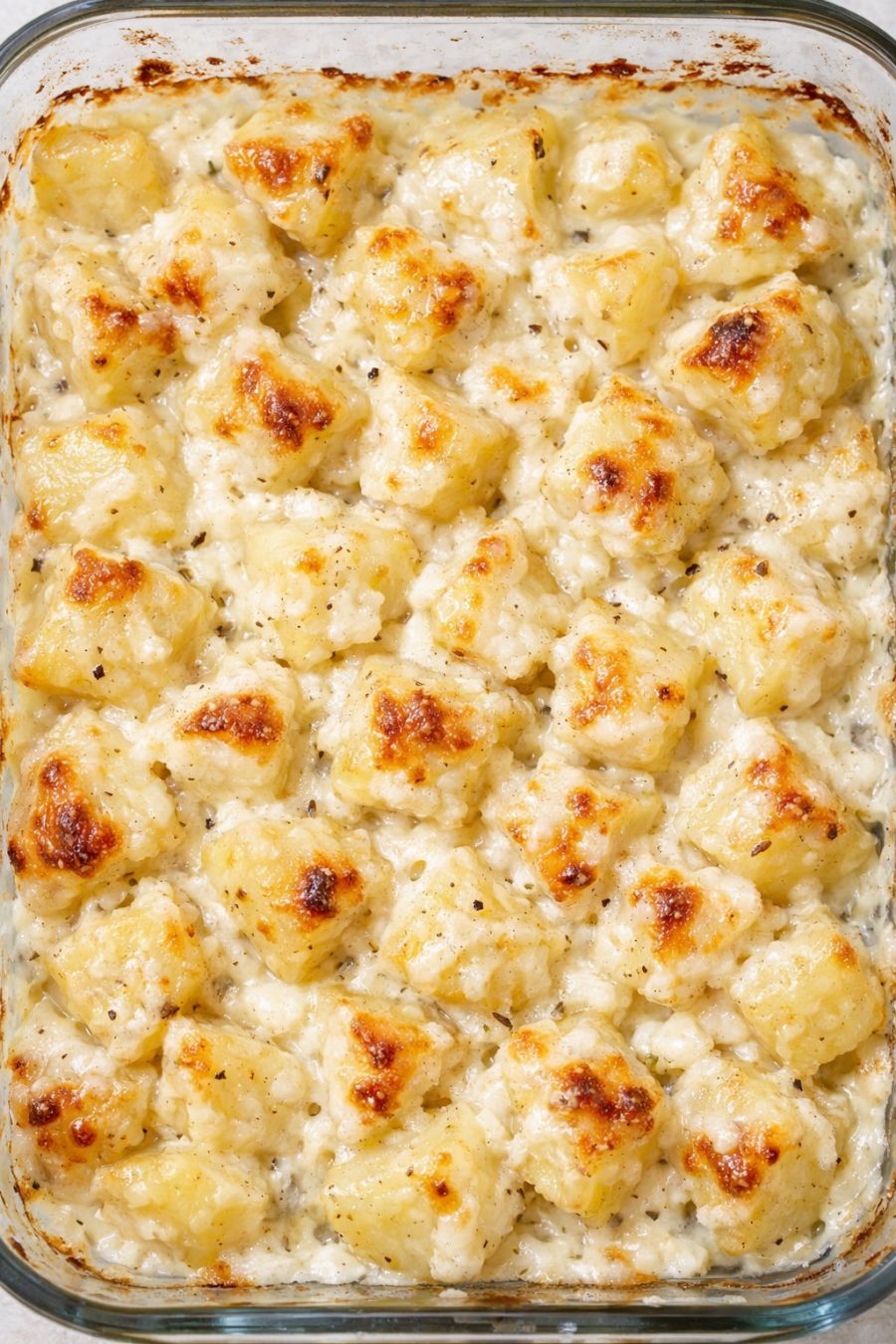
These oven baked 3-ingredients Amish buttermilk baked potatoes are the kind of simple, comforting dish my Midwestern heart loves. An Amish neighbor showed me this trick years ago: instead of fussing with lots of ingredients, you let buttermilk work its magic to turn plain potato chunks into the creamiest, coziest casserole. The potatoes bake slowly in a thick, tangy white sauce that forms right in the glass dish, so every bite is tender and saucy without needing a separate pot of cream sauce. It’s budget-friendly, family-friendly, and perfect for those nights when you want something warm and filling without a lot of work.
Serve these creamy buttermilk potatoes as a hearty side with roasted chicken, pork chops, or meatloaf, and add a simple green salad or steamed green beans for some color on the plate. They’re also wonderful alongside ham or sausage for a Sunday dinner. If you’re keeping it cozy and casual, just pair them with a pan of roasted vegetables and some crusty bread to soak up the extra sauce. Leftovers reheat nicely and can be served with scrambled eggs or a veggie omelet for an easy brunch.
Oven Baked 3-Ingredients Amish Buttermilk Baked Potatoes
Servings: 6
Ingredients
3 pounds russet or Yukon Gold potatoes, peeled and cut into 1-inch chunks
2 cups full-fat buttermilk, well shaken
4 tablespoons salted butter, cut into small pieces, plus a little extra for greasing the dish
Directions
Preheat your oven to 350°F (175°C). Lightly grease a 2- to 3-quart glass baking dish with a little butter so the potatoes don’t stick and the edges get nicely browned.
Peel the potatoes and cut them into roughly 1-inch chunks so they cook evenly. Try to keep the pieces close in size; this helps them all turn tender at the same time.
Spread the potato chunks evenly in the prepared glass baking dish, making a fairly even layer without packing them too tightly. A little space between pieces lets the buttermilk flow around them.
Pour the buttermilk evenly over the potatoes, tilting the dish gently if needed so the buttermilk settles down into the gaps. The potatoes should be mostly nestled in the liquid, with some tips peeking out.
Dot the top of the potatoes and buttermilk with the pieces of salted butter, scattering them over the whole surface. As the butter melts and bakes, it will help create that thick, creamy white sauce and golden edges.
Cover the baking dish tightly with foil. Bake, covered, for 45 minutes. This first covered bake lets the potatoes steam gently in the buttermilk so they soften and start to soak up the tangy flavor.
After 45 minutes, carefully remove the foil (watch for steam). Gently stir the potatoes once from the bottom of the dish so the thickening buttermilk coats everything, then spread them back into an even layer.
Return the dish to the oven, uncovered, and bake for another 30 to 40 minutes, stirring once more halfway through. The buttermilk will thicken into a creamy white sauce, the potatoes will become very tender, and the top will get lightly golden around the edges.
Check for doneness by piercing a potato chunk with a fork; it should slide in easily and the sauce should be thick and spoonable. If the potatoes need more time, continue baking in 5- to 10-minute increments until fully tender.
Let the casserole rest for about 10 minutes after removing it from the oven. The sauce will thicken a bit more as it cools, giving you those ultra-creamy centers and a nice, scoopable texture. Serve warm straight from the glass dish.
Variations & Tips
You can keep this recipe as simple as the Amish-style original or dress it up a bit for your own family. For a slightly richer version, use 3 tablespoons of butter in the dish and reserve 1 tablespoon to melt and drizzle over the top right before serving. If your family likes a little extra flavor, sprinkle in a pinch of salt and black pepper or a small handful of finely chopped fresh chives or green onions when you stir the potatoes halfway through baking (this technically adds ingredients beyond the base three, but it’s an easy way to customize). For cheese lovers, you can scatter a small handful of shredded cheddar or Swiss over the top for the last 10 minutes of baking so it melts without drying out the sauce. If you have picky eaters who don’t like visible herbs or browned bits, keep the potatoes in a slightly deeper layer so the top doesn’t brown as much and stir gently at the end to keep the sauce extra smooth. To lighten things up a bit, you can use low-fat buttermilk, but the sauce will be a little thinner and less rich; just bake uncovered a bit longer to help it thicken. Food safety tips: Keep the buttermilk refrigerated until you’re ready to use it, and don’t leave the finished casserole at room temperature for more than 2 hours. Refrigerate leftovers in a covered container and use within 3 to 4 days, reheating thoroughly until hot all the way through. When reheating, add a splash of fresh buttermilk or a tiny bit of milk if the sauce has thickened too much in the fridge.
