
This three-ingredient Easter cake is one of those almost-too-easy bakes that feels a bit like kitchen magic. You start exactly as the headline promises: pour dry yellow cake mix straight into an oven-safe baking dish, crack whole raw eggs right on top, add just two more simple pantry items, and stir it all together in the same pan. No stand mixer, no separate bowls, and minimal cleanup. While the method is modern and shortcut-friendly, the end result is reminiscent of classic Midwestern potluck cakes—tender, rich, and just sweet enough to feel special on a holiday table.
Serve this cake slightly warm or at room temperature, dusted with a little extra powdered sugar if you like. It pairs nicely with fresh berries or sliced fruit, a dollop of whipped cream, or a scoop of vanilla or lemon ice cream. For Easter brunch, offer it alongside coffee, tea, or a light sparkling wine. Because the cake is rich and buttery, it balances well with bright, tangy sides like a fruit salad or a simple citrusy green salad if you’re serving it as part of a larger meal.
3-Ingredient Oven-Baked Easter Cake
Servings: 8-10
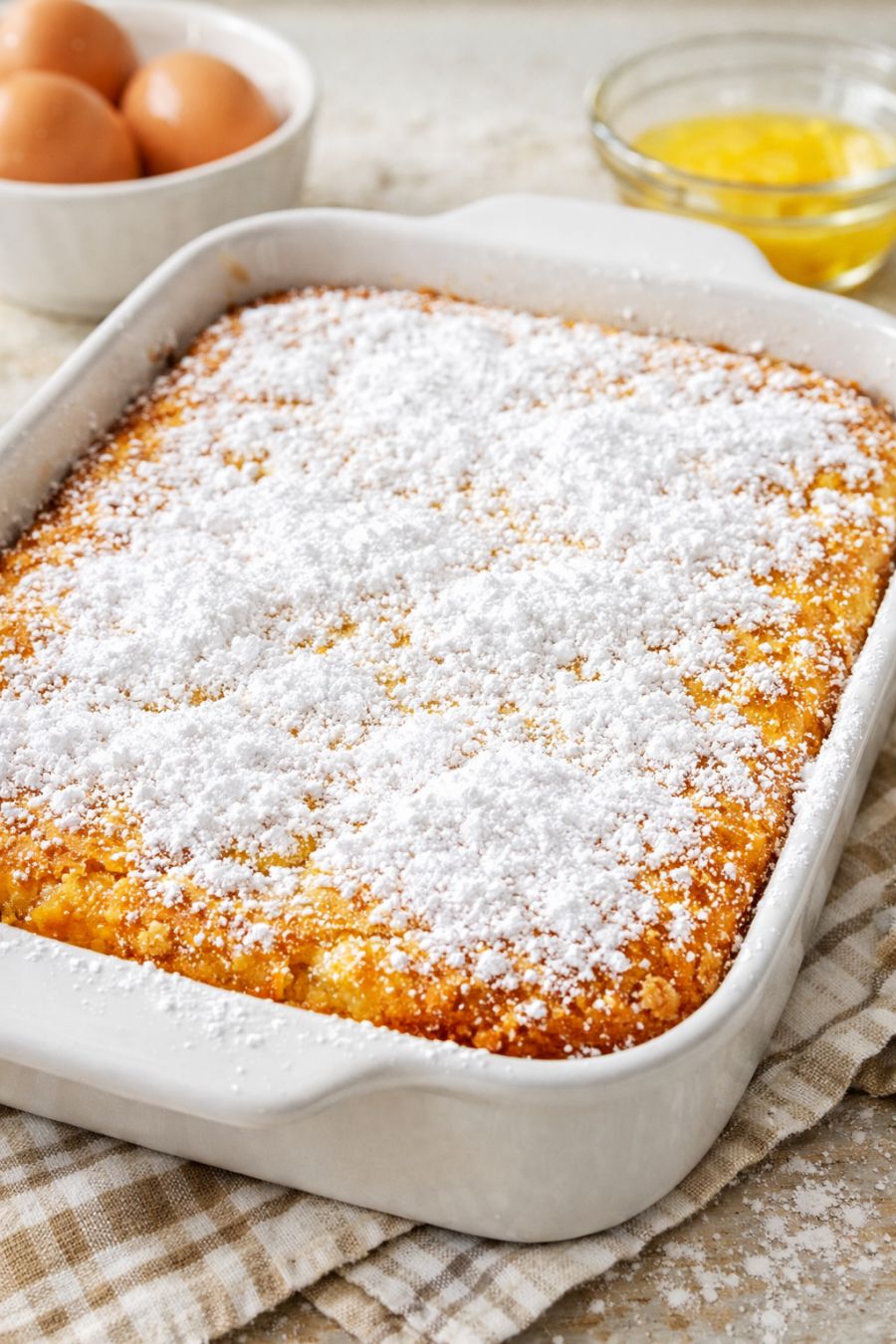
Ingredients
1 (15.25-ounce) box yellow cake mix, dry
4 large eggs, at room temperature
1/2 cup (1 stick) unsalted butter, melted and slightly cooled
Directions
Preheat your oven to 350°F (175°C). Lightly grease a 9x13-inch oven-safe baking dish with a little of the melted butter or nonstick spray, making sure the bottom and corners are coated.
Pour the entire box of dry yellow cake mix evenly into the prepared baking dish. Spread it into an even layer with your hand or a spatula, but do not mix with any liquid yet.
Crack the 4 large eggs directly over the dry cake mix in the baking dish, spacing them out across the surface so they’re not all in one spot. This should look like whole raw eggs sitting right on top of the dry mix.
Drizzle the melted, slightly cooled butter evenly over the eggs and exposed cake mix. Try to cover as much of the surface as possible so you don’t end up with dry patches.
Using a sturdy spatula or wooden spoon, mix everything together right in the baking dish. Scrape down into the corners and fold until no visible dry pockets of cake mix remain. The batter will be thick but should be evenly combined.
Smooth the top of the batter with your spatula so it bakes evenly, nudging it into the corners of the dish.
Bake in the preheated oven for 25–30 minutes, or until the top is golden, the edges are set, and a toothpick inserted into the center comes out mostly clean with a few moist crumbs but no wet batter.
Remove the dish from the oven and let the cake cool in the pan on a wire rack for at least 15–20 minutes before slicing. This rest helps the crumb set so you get neat slices.
Slice into squares and serve warm or at room temperature. If desired, dust with a little powdered sugar or top with fresh berries just before serving.
Variations & Tips
For a citrusy twist, add the finely grated zest of 1 lemon or orange on top of the eggs before you stir everything together; it will perfume the batter without adding extra ingredients to your shopping list. If you’d like a subtle vanilla note, splash in 1 teaspoon of vanilla extract when you mix the batter (this technically adds a fourth ingredient, but it’s a common pantry staple). To make it feel more festive for Easter, serve each slice with a spoonful of lemon curd, a handful of pastel-colored candies, or a drizzle of melted chocolate. You can also bake this in two 8-inch round pans instead of a 9x13-inch dish; start checking for doneness around 20–22 minutes. For a slightly lighter texture, you can reduce the butter to 6 tablespoons and add 2 tablespoons of milk, but keep in mind that changes beyond the basic three ingredients will shift the richness and crumb. Always let the cake cool a bit before cutting so it holds together nicely and stays moist.
