
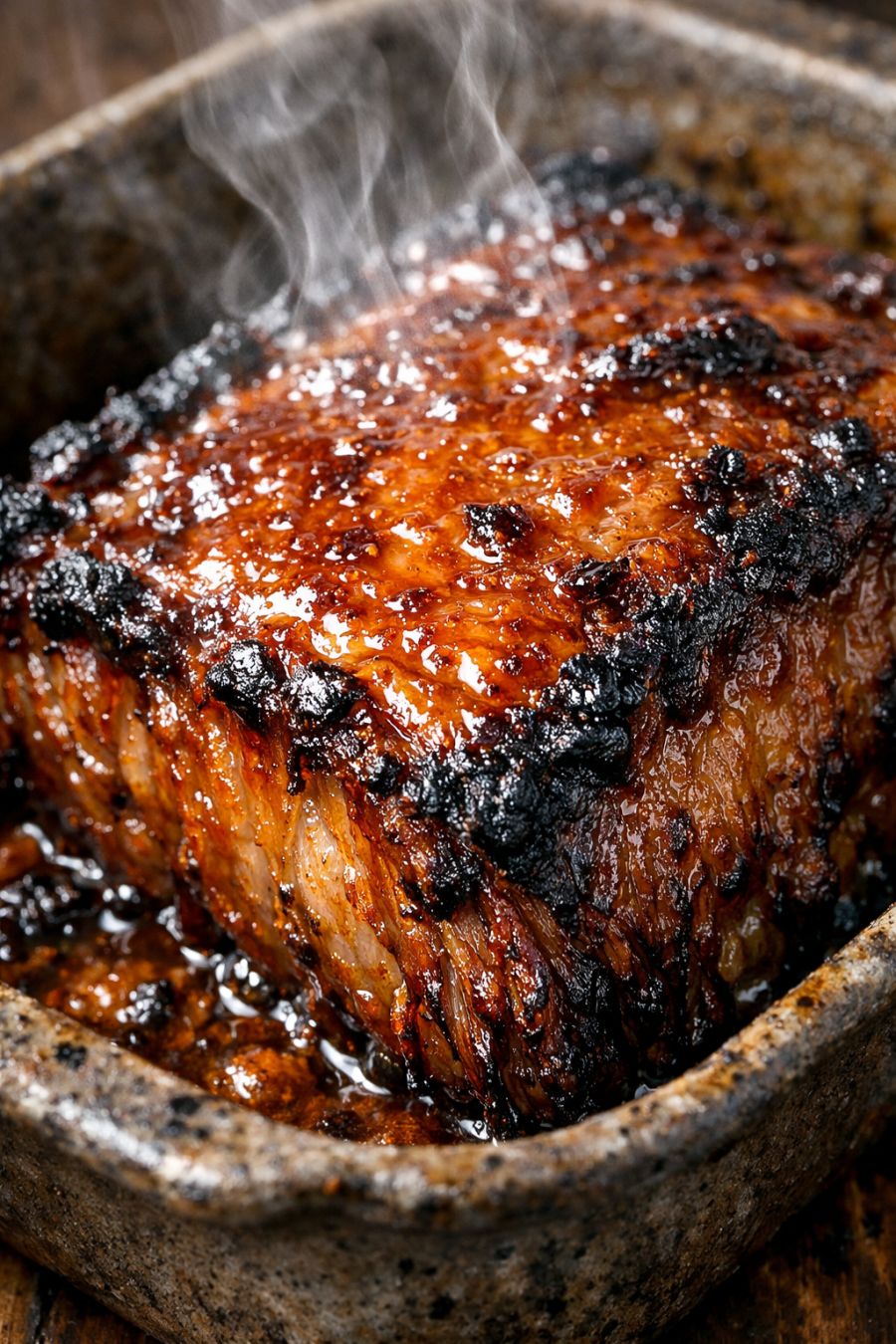
This 5-ingredient oven depression era amber glazed bake is my go-to when I want something hearty, old-fashioned, and comforting that I can have handled hours before the main event. It leans on simple pantry staples the way folks did during the Depression—nothing fancy, just a slow bake that turns a tough, inexpensive cut of meat into tender shreds under a deeply umami, amber-colored glaze. The edges get a little charred and sticky, the center stays juicy, and the whole dish can rest on the counter or be kept warm until everyone’s ready to eat after Lent or any time you’re craving that stick-to-your-ribs feeling.
I like to serve this amber glazed bake spooned over creamy mashed potatoes or buttered egg noodles so all that savory-sweet glaze has something to soak into. A simple side of green beans, roasted carrots, or a crisp salad with a tangy vinaigrette helps balance the richness. Warm dinner rolls or crusty bread are nice for mopping up the sauce, and if you’re feeding a crowd, you can stretch it further by piling the tender, glazed meat onto soft buns for easy sandwiches.
5-Ingredient Amber Glazed Oven Bake
Servings: 6
Ingredients
3 pounds beef chuck roast (or other well-marbled, inexpensive roast)
1 cup low-sodium beef broth
1/2 cup soy sauce
1/3 cup packed brown sugar
2 tablespoons tomato paste
Directions
Preheat your oven to 325°F (160°C). Place a deep stoneware baking dish on the counter so it’s ready. Pat the beef chuck roast dry with paper towels and lay it in the center of the dish.
In a medium bowl, whisk together the beef broth, soy sauce, brown sugar, and tomato paste until the sugar dissolves and the tomato paste is fully blended. The mixture should look like a dark amber sauce.
Pour the amber sauce evenly over the roast, turning the meat once or twice with tongs to coat all sides. Make sure some of the sauce settles around the edges of the roast in the bottom of the dish so it can reduce as it cooks.
Cover the stoneware dish tightly with a double layer of foil or a fitted lid. Slide it into the preheated oven and bake for 2 1/2 hours without uncovering, letting the meat slowly braise and start to tenderize.
After 2 1/2 hours, carefully remove the dish from the oven and peel back the foil away from you to avoid the steam. Baste the top of the roast with the pan juices, then spoon some of the liquid over any dry spots along the sides.
Return the dish to the oven, uncovered this time, and continue baking for another 45 to 60 minutes, basting once or twice. The liquid will reduce into a thick, shiny amber glaze, and the outer edges of the meat will look deeply roasted and a little charred while steam rises from the dish.
Check the roast for doneness by pulling at it with two forks; it should shred easily. If it still feels firm, cover loosely with foil and bake in 20-minute increments until fork-tender.
Once the meat is tender, use two forks to gently pull it into large, fibrous chunks right in the baking dish, tossing the pieces through the thick amber glaze so every strand gets coated. Let it rest for 10 to 15 minutes before serving so the juices settle and the glaze clings to the meat.
If you’re making this ahead of the main event, cover the dish and keep it warm in a 200°F (95°C) oven for up to an hour, or cool, refrigerate, and rewarm gently, stirring now and then to re-glaze the meat.
Variations & Tips
For a slightly lighter version, you can swap the beef chuck roast for a pork shoulder roast; the cooking time will be similar, and the natural sweetness of pork pairs beautifully with the amber glaze. If you prefer a bit more tang, stir 1 to 2 tablespoons of apple cider vinegar into the glaze mixture before pouring it over the meat (this keeps the ingredient list short but adds brightness). For picky eaters who like things on the sweeter side, increase the brown sugar by a tablespoon or two and serve the meat over buttered rice. To make the dish feel more Depression-era thrifty, stretch it by stirring in a drained can of white beans or chickpeas during the last 20 minutes of baking so they soak up the glaze. You can also shred leftover meat the next day and reheat it in a skillet until the edges crisp up, then tuck it into tortillas or serve on toast for an easy second-night meal.
