
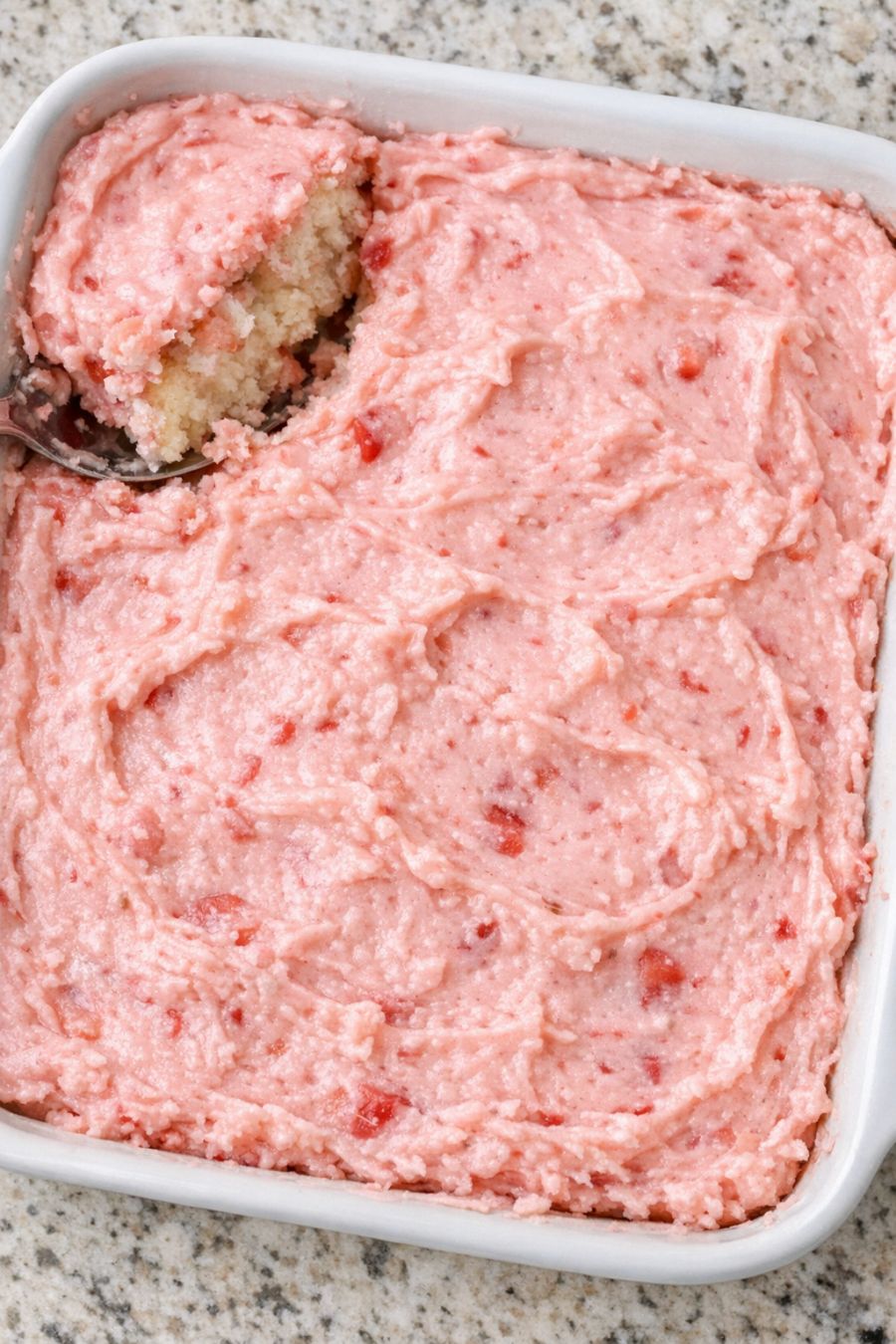
This strawberry sheet cake is the kind of simple bake my nana Pearl leaned on as soon as the Midwest thawed and good berries started showing up. It begins with a humble white cake mix, but a quick strawberry puree folded right into the batter gives it a soft, almost custardy texture with little pink flecks throughout. The frosting is nothing more than butter, more strawberry, and powdered sugar—no fancy techniques, just a bowl and a spoon. It’s the sort of dessert you can throw together on a weeknight, bring to a potluck, or scoop straight from the pan when the weather turns warm and you want something sweet without fuss.
Serve this strawberry sheet cake chilled or at cool room temperature, scooped or sliced straight from the ceramic baking dish. I like it with a cup of coffee in the afternoon or a small glass of cold milk after dinner. For a bit of contrast, pair it with something tangy—plain Greek yogurt dolloped on the side or a handful of fresh berries. If you’re entertaining, a simple picnic-style spread of grilled chicken, a green salad, and this cake for dessert makes a complete, unfussy warm-weather meal.
Strawberry Sheet Cake
Servings: 12
Ingredients
1 (15.25-ounce) box white cake mix
1 cup strawberry puree (from about 1 1/2 cups hulled fresh strawberries)
1/3 cup neutral oil (such as canola or vegetable)
3 large eggs, at room temperature
1/2 cup whole milk or buttermilk, at room temperature
1 teaspoon vanilla extract
1/4 teaspoon fine salt
1/2 cup finely chopped fresh strawberries (optional, for colorful bits in the cake)
1/2 cup (1 stick) unsalted butter, softened to room temperature
2 1/2 to 3 cups powdered sugar, sifted if lumpy
1/4 cup strawberry puree (plus 1 to 2 tablespoons more as needed)
1/2 teaspoon vanilla extract
Pinch of fine salt
Directions
Preheat your oven to 350°F (175°C). Lightly butter or spray a ceramic 9x13-inch baking dish and set it on a light-colored baking sheet if you have one; this helps the cake bake evenly without over-browning on the bottom.
Make the strawberry puree. Hull your fresh strawberries and place them in a blender or food processor. Blend until completely smooth. Measure out 1 1/4 cups of puree total: 1 cup for the cake batter and 1/4 cup for the frosting. If you have extra, save it to adjust the frosting later or spoon over servings.
Mix the cake batter. In a large mixing bowl, add the white cake mix, 1 cup strawberry puree, neutral oil, eggs, milk or buttermilk, vanilla extract, and salt. Using a hand mixer on low speed or a sturdy whisk, mix just until the batter is mostly smooth and no big dry pockets of mix remain. Scrape down the sides of the bowl once or twice to make sure everything is incorporated, but avoid overmixing so the texture stays tender.
Fold in the strawberry bits. If using, gently fold the finely chopped fresh strawberries into the batter with a spatula. They should be evenly distributed but not mashed; a few streaks and uneven spots are fine and will give you that soft-set, slightly rustic look once baked.
Bake the cake. Pour the batter into the prepared ceramic baking dish and smooth the top lightly with a spatula. The surface does not need to be perfectly even; a few swirls and dips will bake up into that homey, slightly uneven top. Bake for 25 to 32 minutes, or until the edges are lightly golden, the top looks set, and a toothpick inserted in the center comes out with just a few moist crumbs (not wet batter).
Cool the cake. Set the baking dish on a cooling rack and let the cake cool completely in the dish. This helps it firm up just enough while still staying very soft and scoopable. If you’re in a rush, you can cool it for 20 to 30 minutes at room temperature, then move it to the fridge to finish cooling.
Make the strawberry buttercream. In a medium bowl, beat the softened butter with a hand mixer or a wooden spoon until smooth and creamy. Add 2 1/2 cups powdered sugar, 1/4 cup strawberry puree, vanilla extract, and a pinch of salt. Mix on low speed (or stir gently) until the sugar is mostly incorporated, then increase the speed and beat until the frosting is smooth and spreadable. If it’s too thick, add more strawberry puree, 1 tablespoon at a time. If it’s too thin, add a bit more powdered sugar. You’re aiming for a soft, rich frosting that will spread easily but still hold gentle swirls.
Frost the cooled cake. Once the cake is fully cool, dollop the strawberry buttercream over the top. Use an offset spatula or the back of a spoon to spread it across the surface, letting it form soft waves and an intentionally slightly uneven finish. You don’t need sharp edges here; the charm is in the casual, homemade look.
Chill briefly for a soft-set texture. For that scoopable, soft-set feel, place the frosted cake in the refrigerator for at least 30 minutes. The frosting will firm just slightly while the cake stays very tender, so you can either cut squares or simply scoop portions out with a large spoon for a more rustic presentation.
Serve and store. Serve the cake straight from the ceramic dish, either scooped or cut into 12 pieces. Store leftovers tightly covered in the refrigerator for up to 3 days. The texture actually improves by the next day as the strawberry flavor seeps into the crumb.
Variations & Tips
To lean into the fruit, fold up to 3/4 cup finely chopped fresh strawberries or a small handful of freeze-dried strawberry pieces into the batter for more bright pink flecks and a slightly more textured surface. If fresh berries aren’t great, use frozen strawberries for the puree—just thaw and drain off any excess liquid before blending. For a lighter, more mousse-like topping, replace half of the butter in the frosting with 4 ounces of softened cream cheese; you’ll get a tangier, less sweet finish that pairs nicely with summer meals. If you prefer a less sweet cake overall, reduce the powdered sugar in the frosting to about 2 cups and rely on the natural sweetness of the berries. For a little crunch, scatter toasted sliced almonds or crushed vanilla wafers over the frosted cake just before serving. And if you don’t have a 9x13 ceramic dish, you can use a metal one; just check for doneness a few minutes earlier, as metal pans tend to bake a touch faster.
