
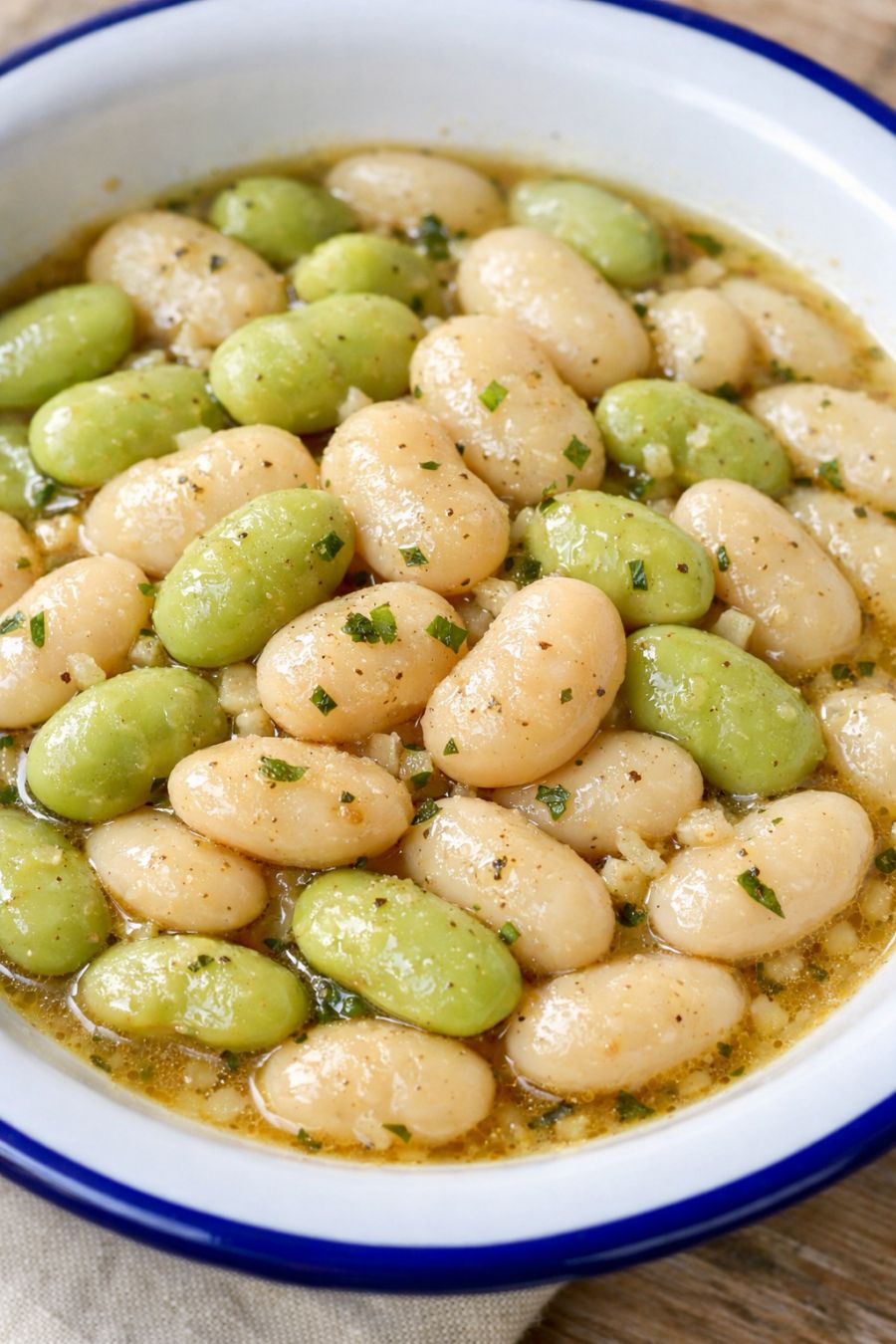
This southern 3-ingredient butter beans recipe is the kind of simple, comforting food that quietly steals the show. It’s inspired by the way older Southern home cooks treat a pot of beans: gently, patiently, and with a deep respect for what time and fat can do. My grandfather asks for a big bowl of these every weekend because they deliver that rich, almost creamy flavor you’d expect from a much more complicated recipe. The secret is using good frozen butter beans, real salted butter, and a long, slow simmer that coaxes starch from the beans into the cooking liquid, creating a naturally silky, savory broth without any extra thickeners or aromatics.
Serve these butter beans in wide bowls so you can really appreciate the buttery broth. They’re lovely alongside cornbread, biscuits, or a simple crusty baguette to soak up the liquid. For a Southern-style plate, pair them with roasted or fried chicken and a vinegary green salad or sautéed greens to balance the richness. They also work beautifully as a simple lunch with sliced tomatoes and cucumbers on the side, or spooned over plain white rice for something especially cozy and filling.
Southern 3-Ingredient Butter Beans
Servings: 4
Ingredients
2 pounds frozen butter beans (baby lima beans), not thawed
6 tablespoons salted butter, cut into pieces
4 cups water, plus more as needed
Directions
Place the frozen butter beans in a medium, heavy-bottomed pot or Dutch oven. Pour in the 4 cups of water; the beans should be mostly submerged, with just a few peeking above the surface.
Add the salted butter to the pot, scattering the pieces over the beans so they melt evenly as the pot heats.
Set the pot over medium heat and bring the mixture just up to a gentle simmer. You should see small, steady bubbles around the edges, not a rolling boil. Stir occasionally to help the butter melt into the liquid.
Once simmering, reduce the heat to low so the beans cook very gently. Partially cover the pot with a lid, leaving it slightly ajar to let some steam escape while still retaining enough moisture to build a broth.
Simmer the beans for 45 to 60 minutes, stirring every 10 to 15 minutes. As they cook, the beans will release starch into the liquid, and the butter will emulsify with that starchy water, creating a pale, rich, silky broth. If the liquid level drops too low and the beans are no longer loosely surrounded by broth, add a splash of hot water, stir, and continue to simmer.
Begin checking for doneness around 40 minutes. The butter beans are ready when they are completely tender and creamy all the way through, with no chalky bite in the center, and the broth has thickened slightly to a light, spoon-coating consistency.
Taste a spoonful of beans and broth together. If your butter is fairly mild, you may find the natural flavor of the beans and butter is just right as is. If you like a slightly looser broth, stir in a tablespoon or two of hot water until it reaches your preferred consistency.
Turn off the heat and let the pot sit, covered, for 5 to 10 minutes. This brief rest allows the beans to relax and the broth to settle into a glossy, velvety texture.
Ladle the butter beans and plenty of their buttery broth into a classic serving bowl. Serve warm, making sure each portion gets both beans and a generous amount of the rich, savory liquid.
Variations & Tips
Because this recipe is built on just three ingredients, each one matters. Choose good-quality salted butter; European-style butter with a higher fat content will give you an even richer, silkier broth. If you only have unsalted butter, you can still make the dish; simply season the finished beans lightly with salt to taste right at the end. For a slightly thicker, almost stew-like texture, mash a small spoonful of beans against the side of the pot during the last 10 minutes of cooking and stir them back into the broth. If you prefer a looser, soupier bowl, add a bit more hot water near the end until it matches what you see in classic Southern bean bowls. You can also adjust the richness by adding or reducing the butter by a tablespoon or two—more for a luxurious, almost saucy finish, less for a lighter broth that still tastes deeply of beans. Leftovers keep well in the refrigerator for several days; as they sit, the beans will continue to absorb the broth, so you may want to stir in a splash of water when reheating to bring back that glossy, spoonable consistency.
