
These 4-ingredient potato pancakes are the kind of cheap, filling dinner my own Midwestern relatives leaned on when the cupboards were almost bare. They’re made from nothing more than potatoes, onion, egg, and a bit of salt, yet they cook up into flat, golden-brown patties with lacy, crunchy edges and a soft, steamy center. Versions of potato pancakes show up all over Eastern and Central Europe, but this stripped-down, pantry-friendly approach is very much a farmhouse style: practical, comforting, and satisfying enough that everyone reaches for seconds.
Serve these potato pancakes hot, straight from the pan, with a simple green salad or sliced cucumbers dressed in vinegar and a pinch of sugar to cut through the richness. A spoonful of sour cream or plain yogurt on the side is classic and makes them feel more substantial, while applesauce adds a gentle sweetness that works especially well if you’re serving kids. If you want to turn this into a full dinner, pair the pancakes with a fried or poached egg on top and whatever pickles you have in the fridge.
4-Ingredient Potato Pancakes
Servings: 4
Ingredients
2 pounds russet potatoes, peeled
1 medium yellow onion (about 5 ounces), peeled
2 large eggs
1 1/2 teaspoons fine salt, plus more to taste
Vegetable oil, for frying (enough to lightly coat the pan)
Directions
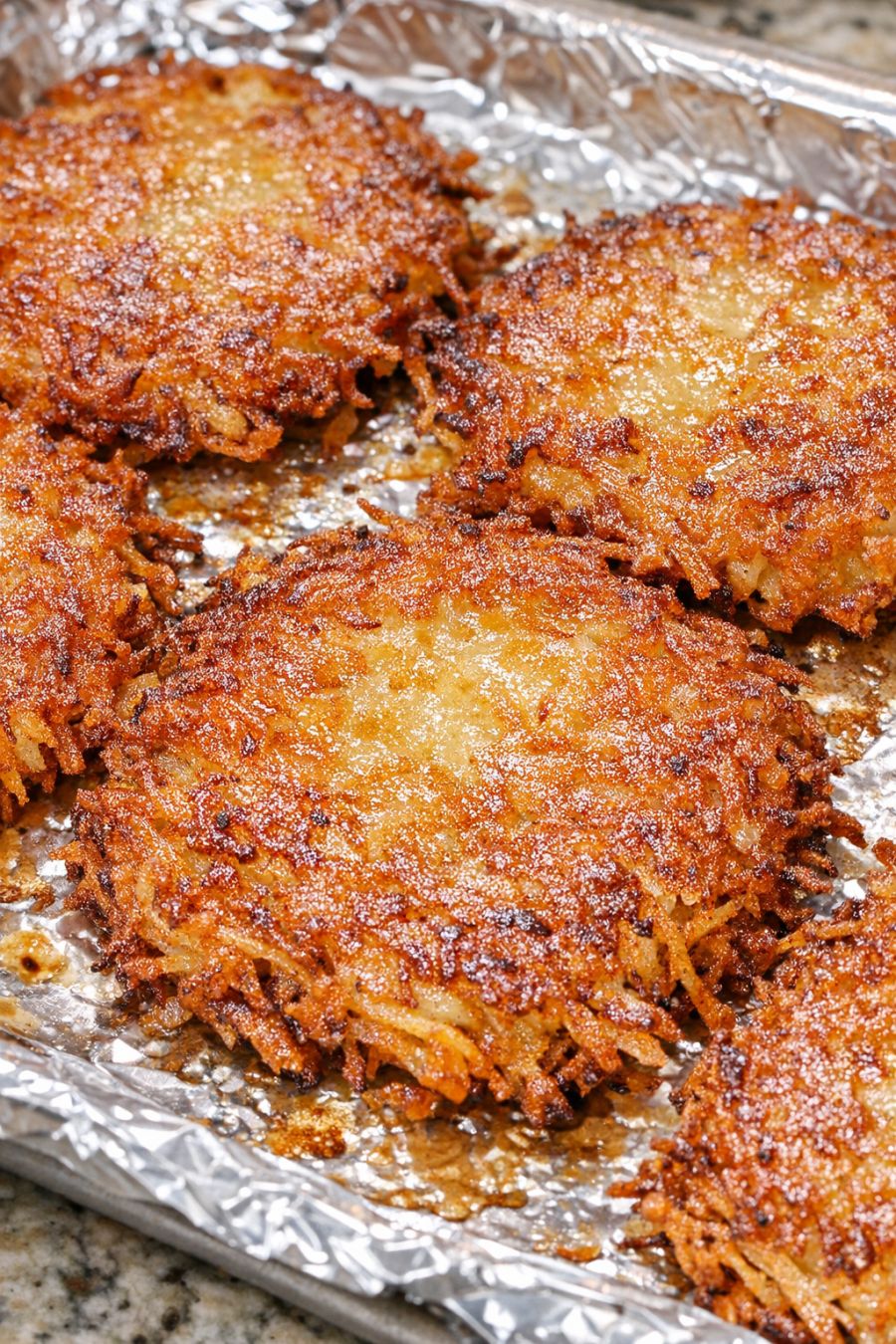
Set up your work area: Line a large baking sheet with foil so you have a place to transfer the cooked pancakes; this helps match that glossy, golden look and makes cleanup easier. Lightly brush or rub the foil with a thin film of oil to keep the pancakes from sticking.
Grate the potatoes and onion: Using the large holes of a box grater, grate the potatoes into a large bowl. Grate the onion directly over the potatoes. The onion juice will help keep the potatoes from browning and adds a lot of flavor for so few ingredients.
Squeeze out excess liquid: Place the grated potato-onion mixture in a clean kitchen towel or several layers of paper towels. Working over the sink, twist and squeeze firmly to remove as much water as you can; this step is essential for crisp, crunchy edges instead of soggy pancakes.
Mix the batter: Return the squeezed potato-onion mixture to the bowl. Add the eggs and 1 1/2 teaspoons salt. Stir with a fork until everything is evenly coated and the egg is well distributed. The mixture should look slightly wet but not soupy; the starch from the potatoes will help it hold together.
Heat the oil: Pour a thin layer of vegetable oil into a large skillet (just enough to fully coat the bottom with a little extra for shallow frying) and set it over medium to medium-high heat. Give the oil a couple of minutes to heat; it should shimmer and a small pinch of the potato mixture should sizzle immediately when it hits the pan.
Form and fry the pancakes: Working in batches, drop heaping tablespoons of the potato mixture into the hot oil, spacing them a bit apart. Immediately press each mound gently with the back of the spoon to form a flat patty about 1/4 inch thick. Flattening ensures that signature combination of crunchy, frizzled edges and a tender center.
Cook until golden and crisp: Fry each pancake for 3 to 5 minutes per side, adjusting the heat as needed so they brown to a deep golden color without burning. You should see the edges turn crisp and lacy, and the surface will look glossy from the hot oil. Flip carefully with a thin spatula once the first side is well browned and set.
Transfer to foil-lined pan: As each batch finishes, transfer the pancakes to the oiled, foil-lined baking sheet in a single layer. Sprinkle very lightly with a pinch of salt while they’re still hot. The foil helps keep the bottoms crisp and shows off those golden, flat patties with their crunchy shredded edges.
Repeat with remaining mixture: Continue forming and frying pancakes, adding a bit more oil to the pan as needed to maintain a thin, even layer. Give the oil a moment to reheat between batches so every pancake develops a good crust.
Serve hot: Serve the potato pancakes right away while the edges are at their crispiest and the centers are warm and soft. If you need to hold them briefly, keep the foil-lined baking sheet in a low oven (about 200°F / 95°C) for up to 20 minutes before serving.
Variations & Tips
Because this recipe is built on just four core ingredients, small tweaks make a noticeable difference. For a slightly richer texture, you can swap one of the eggs for an extra egg yolk, which helps the pancakes brown more deeply. If you prefer a firmer, more structured pancake, reserve a tablespoon or two of the potato liquid after squeezing, let the starch settle at the bottom, pour off the water, and stir the starch back into the mixture. To stretch the recipe when feeding a crowd, you can add 1 to 2 tablespoons of flour or fine breadcrumbs to the mixture; this technically adds another ingredient, but it makes the batter go further and helps it hold together if your potatoes are very watery. Try using red or Yukon Gold potatoes for a creamier interior, though russets will give you the crispiest edges. You can also adjust the onion: more onion for sweetness and moisture, or less for a milder flavor. For slightly lighter pancakes, shallow-fry in a bit less oil and then finish them on the foil-lined baking sheet in a 375°F (190°C) oven for 5 to 8 minutes to crisp without absorbing as much fat. Leftovers reheat surprisingly well on a foil-lined pan in a hot oven or toaster oven until the edges re-crisp.
