
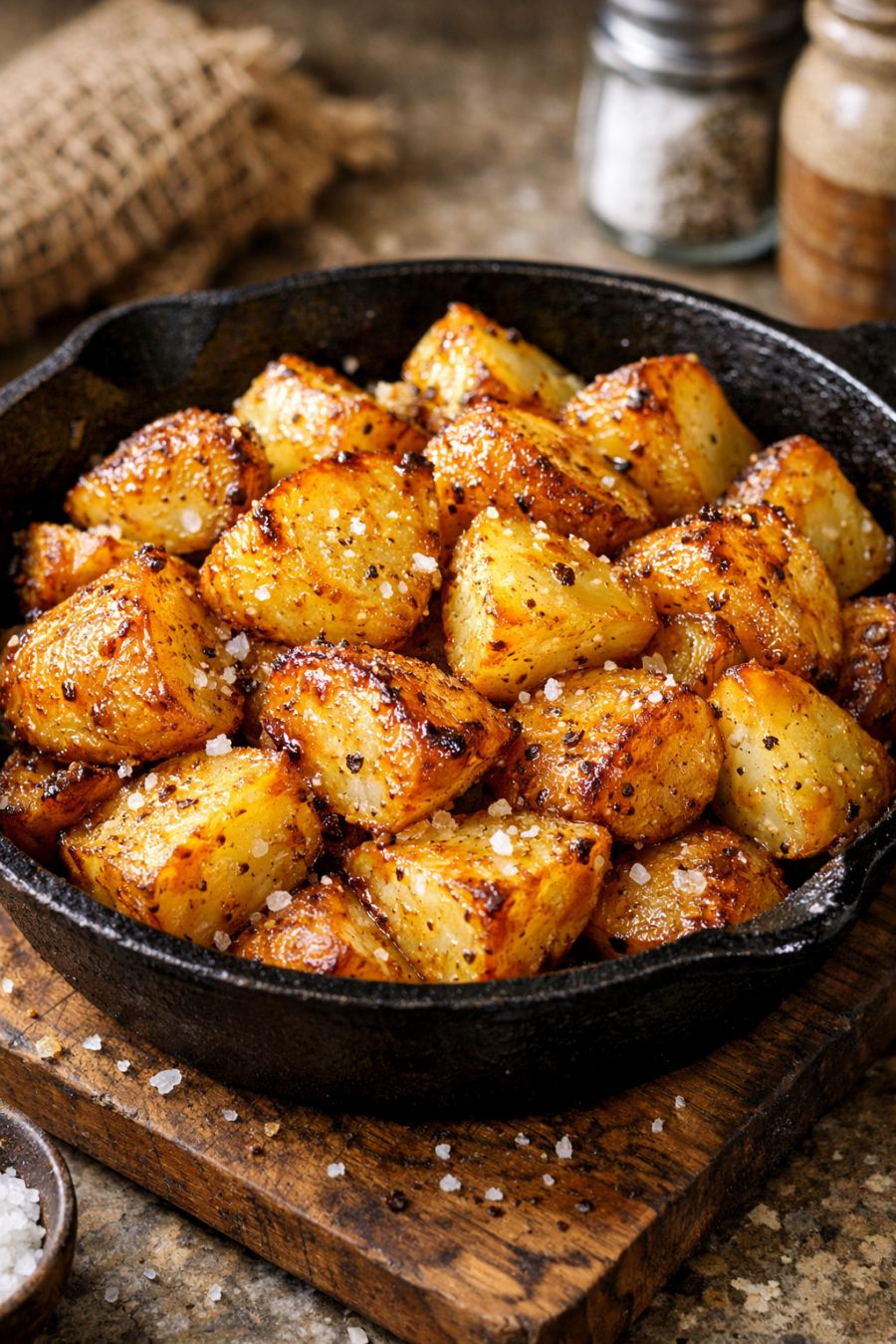
This is my stripped-down, weeknight-default potato side: chunky russets tossed in hot, melted lard and roasted in a cast iron skillet until the edges go shatteringly crisp. It’s loosely inspired by old Amish and farm-style cooking, where lard was the everyday fat and potatoes were a dependable staple. With only three ingredients—russet potatoes, lard, and a generous sprinkle of salt—you get something that tastes far more complex than the effort involved. If you’ve ever wondered what makes diner home fries or old-fashioned roast potatoes so deeply satisfying, this is that flavor, done in the oven with almost no fuss.
These potatoes are hearty enough to sit next to just about anything: roast chicken, pork chops, sausages, or a simple pan-fried steak. I like them with a crisp green salad or steamed green beans to balance the richness, and they’re excellent under a fried egg for a quick brunch-for-dinner situation. A side of applesauce or pickles gives a nice tangy contrast, and if you have gravy or pan drippings from whatever main you’re cooking, these potatoes are perfect for soaking it all up.
Oven-Baked 3-Ingredient Amish Lard Roasted Potatoes
Servings: 4
Ingredients
2 pounds russet potatoes, scrubbed and cut into 1-inch chunks
1/4 cup lard, gently melted
1 1/2 teaspoons kosher salt, plus more to taste
Directions
Preheat your oven to 425°F (220°C). Place a 10–12 inch cast iron skillet on the middle rack while the oven heats so the pan gets hot.
While the skillet heats, scrub the russet potatoes (peel if you prefer) and cut them into roughly 1-inch chunks so they cook evenly.
In a small saucepan or microwave-safe bowl, gently melt the lard just until liquid. You want it fully melted but not smoking hot.
Carefully remove the hot cast iron skillet from the oven and place it on a sturdy, heatproof surface. Add the raw potato chunks directly to the dry, hot skillet, spreading them into an even layer.
Pour the melted lard evenly over the raw chunked potatoes in the cast iron skillet, making sure each piece gets a light coating. Sprinkle the kosher salt over the top.
Using a heatproof spatula or tongs, quickly toss the potatoes in the skillet to coat them in the lard and salt, then spread them back into a single, mostly even layer. A little overlap is fine, but avoid a deep pile.
Return the skillet to the oven and roast for 20 minutes without stirring, allowing the bottoms to start browning and crisping.
After 20 minutes, carefully remove the skillet and gently turn the potatoes with a spatula, bringing the less-cooked sides down toward the pan. Spread them out again and return to the oven.
Roast for another 15–20 minutes, stirring once more if needed, until the potatoes are deep golden brown on the edges, crisp outside, and tender when pierced with a fork.
Taste and sprinkle with a bit more salt if needed. Serve the potatoes straight from the cast iron skillet while they’re hot and crisp.
Variations & Tips
If you’d like to keep the ingredient list simple but add a little nuance, you can play with the cut and the salt. Cut the potatoes into wedges instead of chunks for a steakhouse feel, or go smaller for extra-crispy, almost hash-style potatoes. Use a coarse sea salt for a more pronounced crunch or a smoked salt for a subtle campfire note. To stay true to the three-ingredient spirit but layer in aroma, you can warm a clove of smashed garlic or a sprig of rosemary in the lard as it melts, then remove and discard them before pouring the lard over the potatoes; the flavor will be gentle but present without technically adding another ingredient to the pan. For a make-ahead head start, you can parboil the potato chunks in salted water for 5–7 minutes, drain very well, rough up the edges in the colander, and then proceed with the hot-skillet and melted-lard method; this gives an even fluffier interior and extra-craggy exterior. If you don’t have a cast iron skillet, use a heavy metal baking sheet that can preheat in the oven—just be sure to pour the melted lard over the potatoes directly on the hot pan to mimic that sizzling contact you’d get from cast iron.
