
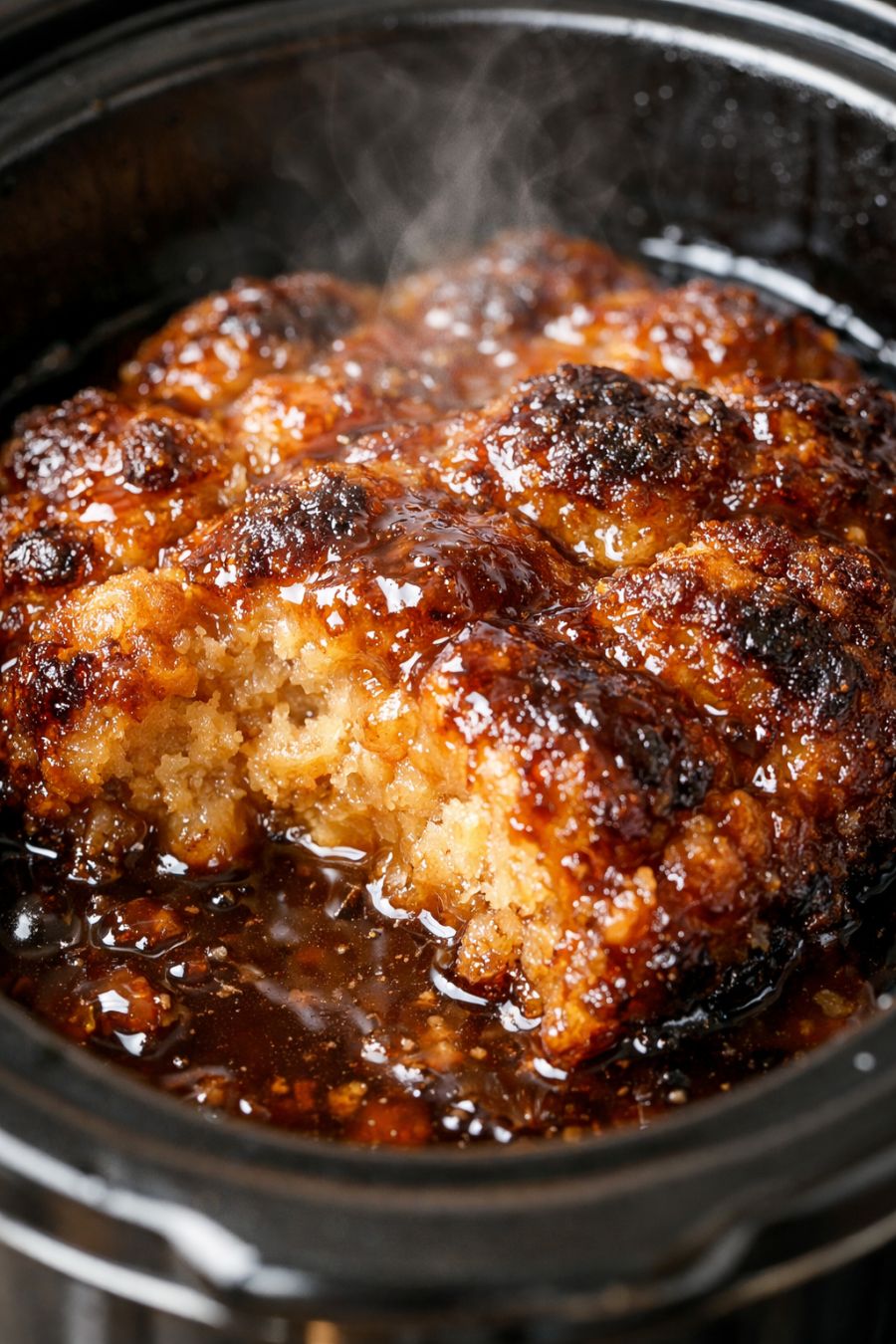
This 4-ingredient slow cooker poor man’s pudding is the kind of springtime comfort dessert I lean on when I want something cozy, budget-friendly, and totally make-ahead for a Sunday gathering. It’s inspired by old-fashioned “poor man’s pudding” and bread puddings that turned simple pantry staples into something special. Everything goes into the slow cooker hours before company arrives, then slowly transforms into a spongy, caramelized dessert mass bathed in a dark amber glaze. It’s the kind of recipe you can make with what you already have on hand—no fancy ingredients, just rich flavor coaxed out over time.
Serve this warm right out of the slow cooker, spooned into bowls so everyone gets some of the spongy cake and plenty of the dark caramel sauce. A little pour of cold cream, a scoop of vanilla ice cream, or a dollop of whipped topping makes it feel extra special without much effort. I like to set the slow cooker on the table (on a trivet) and let everyone serve themselves family-style, with coffee or hot tea on the side. It’s rich enough to stand alone, so you don’t really need anything else beyond maybe some fresh berries if you want a touch of spring color.
4-Ingredient Slow Cooker Poor Man’s Pudding
Servings: 6-8
Ingredients
4 cups day-old bread, cut in 1-inch cubes (any plain sandwich or French bread)
2 cups milk (whole or 2%)
1 cup packed brown sugar, divided
4 tablespoons unsalted butter, melted (plus a little extra for greasing the crock)
Directions
Grease the inside of a 4- to 6-quart slow cooker with a little butter to keep the pudding from sticking and to help those edges caramelize and toast.
Spread the bread cubes evenly in the bottom of the greased slow cooker, gently pressing them down into a fairly even layer but not packing them too tightly. You want room for the custard to soak in so it turns spongy and tender.
In a medium bowl, whisk together the milk, 1/2 cup of the brown sugar, and the melted butter until the sugar is mostly dissolved and the mixture looks smooth and creamy.
Pour the milk mixture slowly and evenly over the bread cubes, pressing the bread down gently with the back of a spoon so every piece gets moistened. Let it sit for 5–10 minutes so the bread can soak up some of the liquid.
Sprinkle the remaining 1/2 cup brown sugar evenly over the top of the soaked bread. As it cooks, this sugar will melt down into a dark amber glaze and pool at the bottom, giving you that saucy, caramelized finish.
Cover the slow cooker with the lid and cook on LOW for 3 to 4 hours, or until the center is set but still soft and spongy, and the edges are deep golden-brown and caramelized. Avoid lifting the lid too often so the pudding can steam and rise nicely.
Once done, turn off the slow cooker and let the pudding rest, covered, for about 10–15 minutes. This helps the sauce thicken slightly while the dessert stays hot and steamy inside.
To serve, spoon down through the spongy top to scoop up both the caramelized edges and the dark amber sauce from the bottom. Serve warm straight from the slow cooker, with any optional toppings you like.
Variations & Tips
For picky eaters, you can use all white sandwich bread so the texture is extra soft and uniform—kids tend to love the simple sweetness. If you’d like a slightly richer pudding, swap half of the milk for evaporated milk or add an extra tablespoon of butter to the custard mixture. For a deeper caramel flavor, use dark brown sugar instead of light, or add a tiny pinch of salt to balance the sweetness (still keeping it to four main ingredients by using salted butter in place of unsalted). You can also adjust the texture by using slightly more or less bread: more bread for a firmer, cake-like pudding, or less for a softer, saucier dessert. If your slow cooker runs hot, check at the 2 1/2-hour mark so the edges don’t over-brown; if the center isn’t set yet, lay a piece of foil or a clean kitchen towel under the lid to catch excess moisture and help it cook through. Leftovers reheat nicely in the microwave with a splash of milk to bring back that steamy, spongy texture.
