
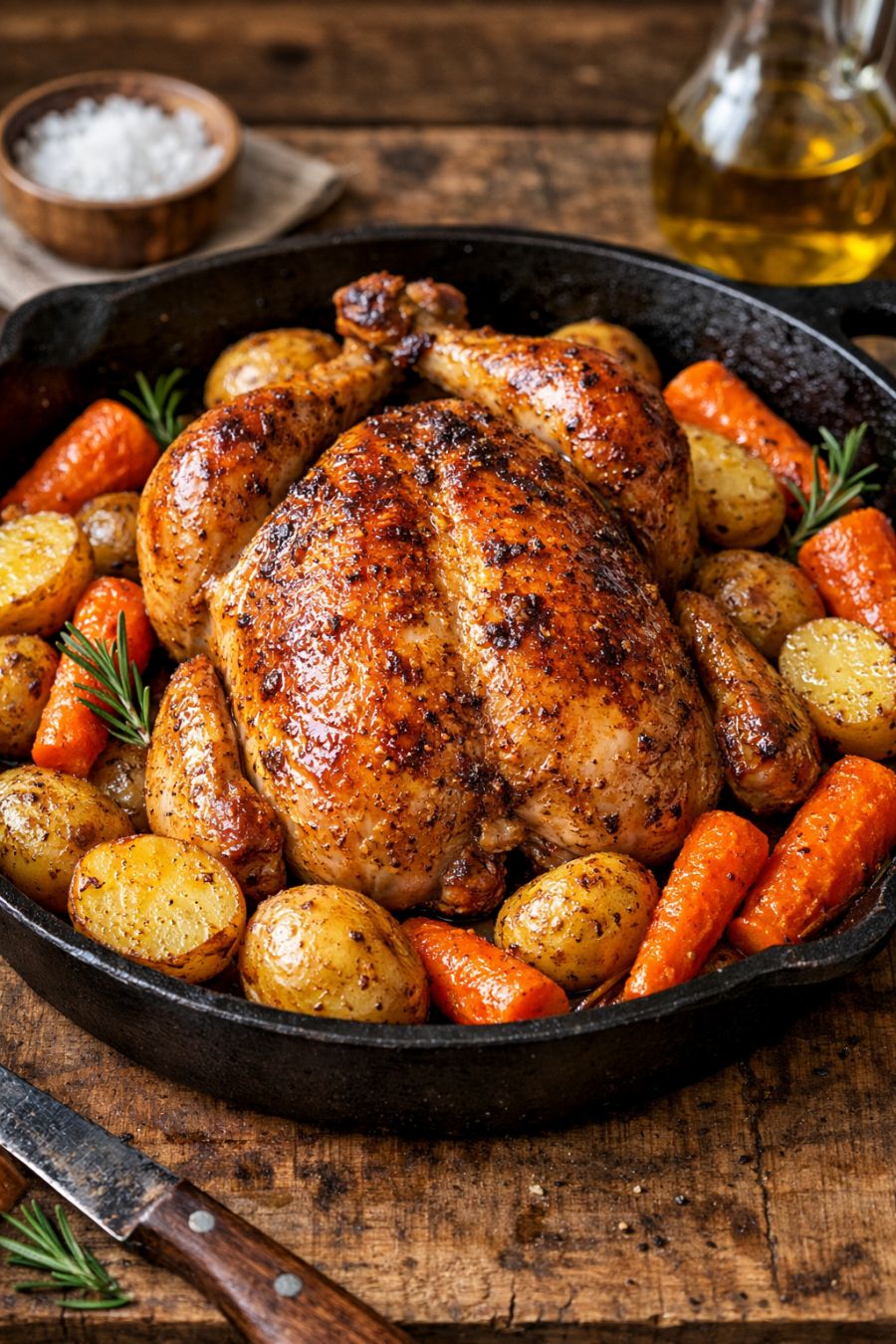
This 4-ingredient oven chicken is the kind of cozy Sunday dinner that makes the whole house smell amazing and brings everyone to the table fast. You literally put a raw whole chicken in a cast iron roasting pan, scatter three simple pantry staples around it, and let the oven do the work. It’s the kind of no-fuss, old-fashioned Midwestern comfort meal our moms and grandmas relied on—simple ingredients, big flavor, and plenty of tender meat for seconds (and sandwiches the next day).
Serve this roast chicken straight from the cast iron pan at the center of the table so everyone can help themselves. Spoon some of the flavorful juices over the carved meat and the roasted vegetables. It pairs perfectly with mashed potatoes, buttered egg noodles, or rice to soak up the drippings, plus a simple green salad or steamed green beans for something fresh and crisp. Warm dinner rolls or crusty bread are great for sopping up every last bit of that savory pan sauce.
4-Ingredient Oven Chicken
Servings: 4-6
Ingredients
1 whole chicken (about 4–5 pounds), giblets removed and patted dry
2 tablespoons vegetable oil (or other neutral pantry oil)
2 teaspoons salt (plus more to taste)
1 1/2 pounds mixed pantry vegetables, chopped (such as potatoes, carrots, and onions)
Directions
Preheat your oven to 425°F (220°C). Place a 12-inch cast iron roasting pan or skillet on the middle rack while the oven heats so the pan gets nice and hot.
Pat the whole chicken very dry with paper towels, inside and out. This helps the skin crisp up beautifully. If there are giblets inside the cavity, remove and discard or save for another use.
Rub the chicken all over with the vegetable oil, making sure to coat the legs, wings, and breast. Sprinkle the salt evenly over the entire bird, including a light sprinkle inside the cavity.
In a large bowl, toss the chopped pantry vegetables (potatoes, carrots, onions, or what you have on hand) with any oil left on your hands or in the measuring spoon. If they seem too dry, you can drizzle on a tiny bit more oil from your pantry, but keep in mind the chicken will release plenty of flavorful juices.
Carefully remove the hot cast iron pan from the oven and place it on the stovetop or a heat-safe surface. Quickly spread the chopped vegetables in an even layer in the bottom of the pan so they form a colorful bed.
Set the seasoned whole chicken breast-side up directly on top of the vegetables in the cast iron pan. Tuck the wing tips under so they don’t burn. The chicken should be resting right on that vibrant layer of chopped veggies.
Place the pan back in the oven and roast at 425°F (220°C) for 20 minutes to help the skin start to crisp and brown.
Without opening the oven too long, reduce the heat to 375°F (190°C) and continue roasting for 40–60 minutes more, depending on the size of your chicken. Baste once or twice by spooning some pan juices over the top if you like, but it’s not required.
The chicken is done when the thickest part of the thigh reaches 165°F (74°C) on an instant-read thermometer and the juices run clear when pierced. If the skin is getting too dark before the chicken is cooked through, tent a piece of foil loosely over the top.
Carefully remove the pan from the oven. Let the chicken rest in the cast iron pan on the counter for 10–15 minutes so the juices settle. This is a good time to gently stir the vegetables in the pan juices so they get coated and finish softening.
Transfer the chicken to a cutting board and carve into breasts, thighs, drumsticks, and wings. Spoon the roasted vegetables and savory juices from the cast iron pan around the sliced chicken on a serving platter, or bring the whole pan to the table and let everyone dig in family-style.
Variations & Tips
If you have picky eaters, lean into the vegetables they already like—use mostly potatoes for kids who prefer plain flavors, and keep onions in larger chunks so they’re easy to avoid. You can also separate the vegetables into sections in the pan so each child gets their favorite mix. For a slightly different pantry twist, swap some of the potatoes for sweet potatoes or butternut squash if you keep those on hand. If your family prefers extra-crispy skin, leave the chicken uncovered the entire time and avoid basting in the last 20 minutes. For a quicker weeknight version, use a smaller chicken (around 3 pounds) and start checking for doneness a bit earlier. Leftover chicken is wonderful shredded into chicken salad, quesadillas, or tossed with cooked noodles and a bit of the pan juices. If anyone in the family is sensitive to salt, you can reduce the salt on the chicken and let each person season their own portion at the table.
