
This 3-ingredient oven pork shoulder bake is my go-to Spring Sunday comfort meal when I want dinner basically handled hours before the grandkids (or in my case, nieces and nephews) come flying through the door. It’s all about letting the oven do the work while you get the house ready or enjoy a quiet afternoon. The pork slow-roasts into tender, pull-apart shreds under a glossy, umami-rich glaze that looks like you fussed all day, even though you only used pantry staples and one baking dish.
I like to pile this pulled pork onto soft rolls with a quick bagged coleslaw on the side for crunch, or spoon it over mashed potatoes or buttered egg noodles to soak up all that dark, sticky glaze. Roasted carrots, green beans, or a simple green salad keep things light and springy. For a more casual spread, set the baking dish right on the table with tongs, a bowl of pickles, and some store-bought potato salad or macaroni salad and let everyone build their own plates.
3-Ingredient Oven Pulled Pork Shoulder Bake
Servings: 6-8
Ingredients
4–5 lb bone-in pork shoulder (pork butt), excess fat trimmed
1 1/2 cups thick barbecue sauce (your favorite, preferably smoky and slightly sweet)
1/2 cup low-sodium soy sauce (or tamari for gluten-free)
Directions
Preheat your oven to 300°F (150°C). Choose a ceramic baking dish or Dutch oven that fits the pork shoulder snugly but with a little room around the sides. Lightly grease the bottom if your dish tends to stick.
In a medium bowl, whisk together the barbecue sauce and soy sauce until smooth and glossy. This is your umami-rich glaze and braising liquid all in one.
Place the pork shoulder in the center of the baking dish, fat side up. Pour the sauce mixture all over the pork, turning it once or twice with tongs to coat every side. Finish with the pork fat side up so it bastes the meat as it cooks.
Cover the baking dish tightly with a double layer of foil (or a lid, if using a Dutch oven). You want it well sealed so the pork steams gently and stays super moist while it roasts.
Bake the covered pork at 300°F (150°C) for 3 1/2 to 4 1/2 hours, depending on the size of your roast, until it’s very tender and you can easily pull it apart with a fork. I usually plan on about 4 hours and check around the 3 1/2-hour mark.
Carefully remove the dish from the oven and peel back the foil away from you to avoid the steam. Use two forks to test the meat—if it doesn’t shred easily, re-cover and bake in 30-minute increments until it does.
Once the pork is fork-tender, use tongs to pull off and discard any large fatty pieces. Shred the pork directly in the baking dish with two forks, mixing it into the dark, glossy sauce and all the flavorful juices gathered at the bottom.
Turn the oven up to 375°F (190°C). Spread the shredded pork evenly in the baking dish so it’s coated in sauce but still has some surface exposed. Return the dish to the oven, uncovered, for 10–15 minutes to let the top caramelize slightly and the glaze thicken and turn shiny.
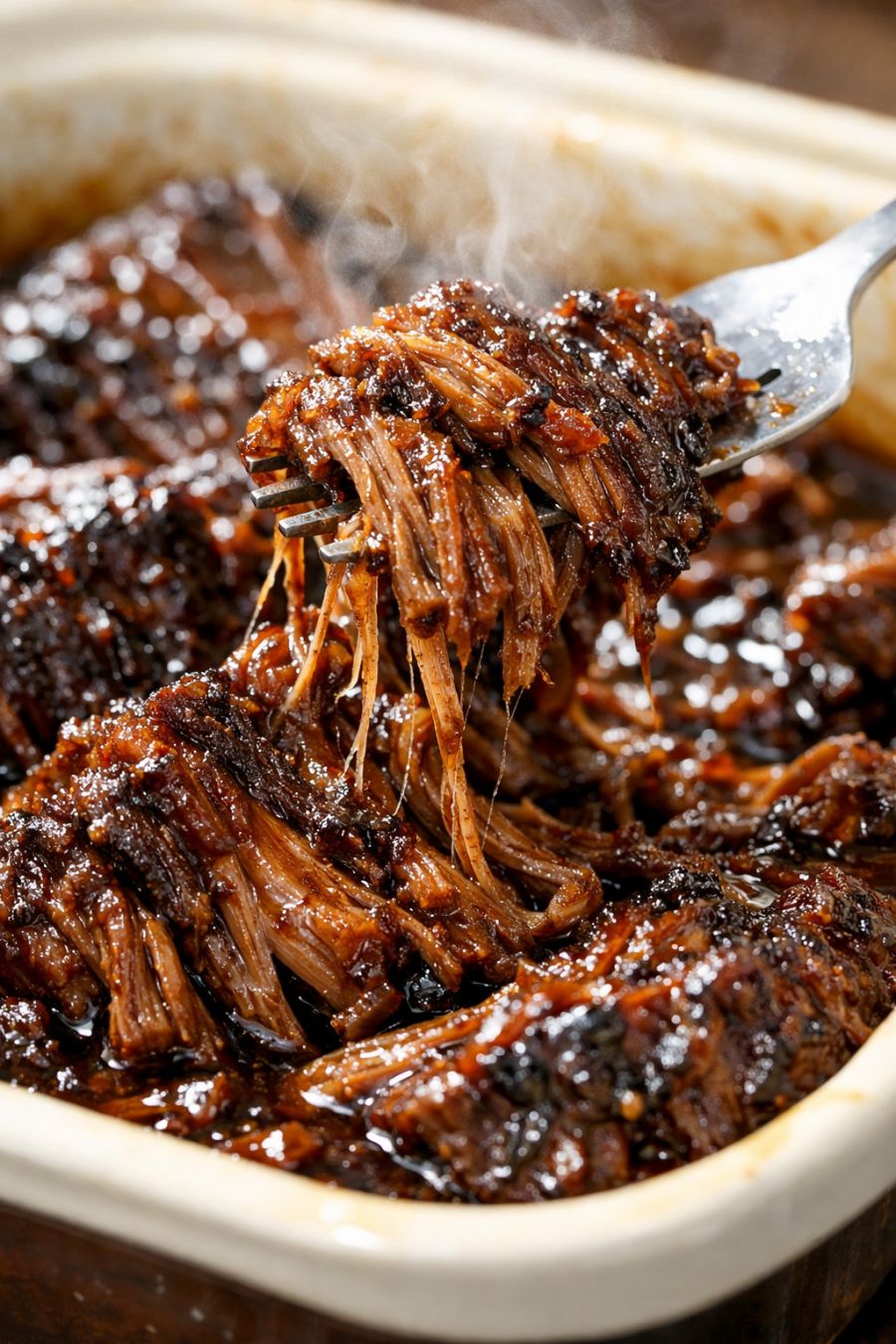
Serve the pork hot, straight from the ceramic baking dish, with extra sauce spooned over the top. The meat should be succulent, fibrous, and pulling apart easily, with steam rising and a rich, umami glaze clinging to every strand. If making ahead, let it cool slightly, cover, and keep warm in a low oven or reheat gently before serving.
Variations & Tips
To keep this firmly in the 3-ingredient lane, I like to play with the main components instead of adding more items. For a sweeter, more kid-friendly version, swap in a honey or brown sugar barbecue sauce and use a reduced-sodium soy sauce so the flavors stay balanced. If you prefer a tangy, springy vibe, choose a vinegar-forward barbecue sauce; it will cut through the richness of the pork and feel a little lighter. You can also switch the cut to a boneless pork shoulder of similar weight—just check for doneness a bit earlier, as it can cook slightly faster. For make-ahead entertaining, cook the pork fully in the morning, shred it in the sauce, and keep it covered in the fridge; reheat, uncovered, at 325°F (165°C) until hot and bubbling, then give it a quick 5–10 minute blast at 375°F (190°C) to re-caramelize the glaze. Leftovers freeze well in a flat zip-top bag and reheat beautifully for weeknight sandwiches, grain bowls, or quick tacos.
