
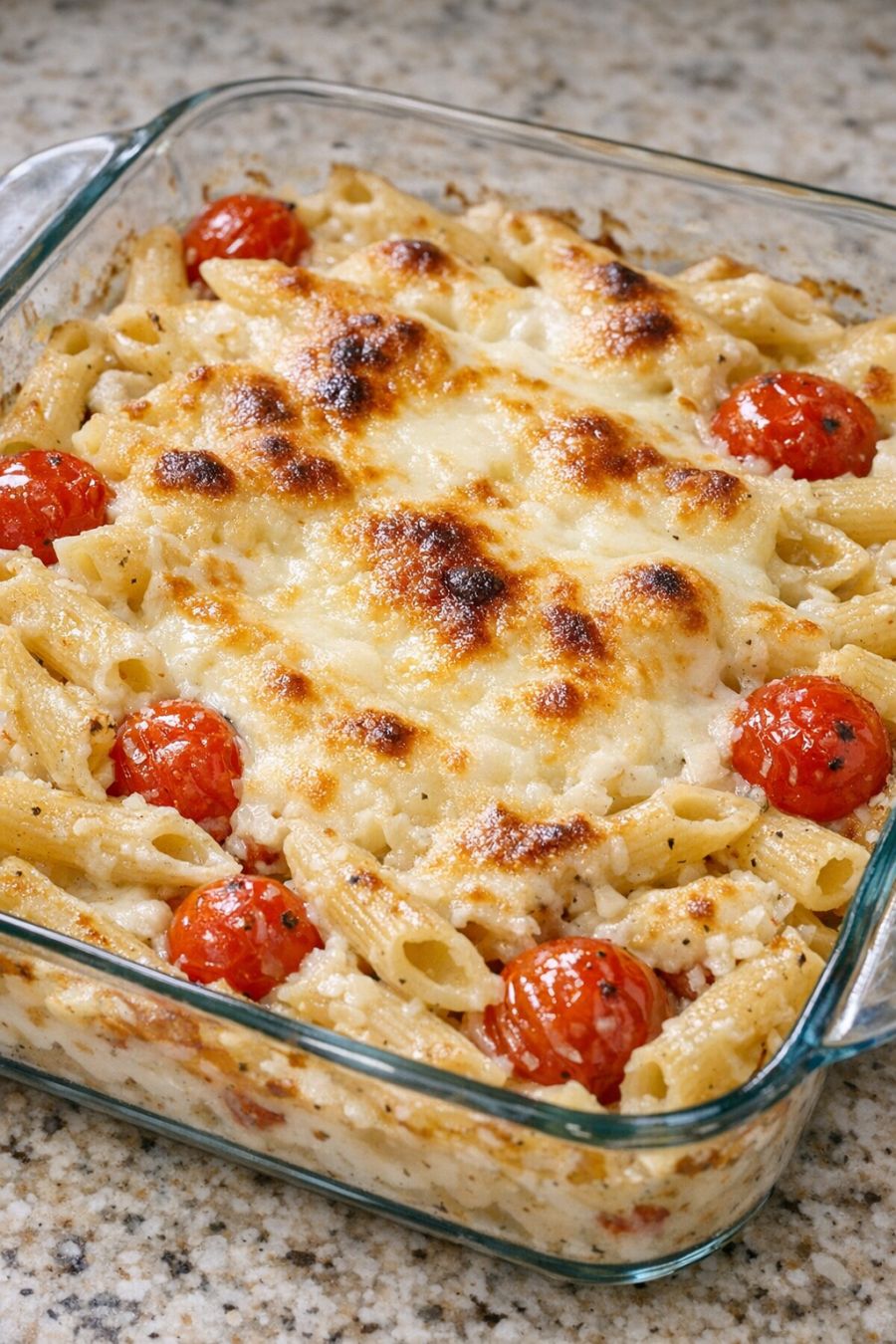
This 5-ingredient oven Easter pasta reminds me of the kind of church-supper casseroles that showed up every spring when the tulips started peeking through the snow. Everything goes straight into a 9x13 glass dish—raw penne, a simple creamy sauce, and plenty of cheese—then the oven does the rest. No boiling pasta, no fussy steps, just an easy, comforting bake that feels right at home on an Easter table or any busy weeknight when you want something warm and familiar.
Serve this creamy pasta straight from the glass casserole dish with a simple green salad—leaf lettuce with sliced radishes and a splash of vinegar and oil tastes just like the ones we used to have on the farm. A side of steamed or roasted vegetables, such as broccoli or green beans, adds color and crunch. Warm dinner rolls or buttered garlic toast are perfect for soaking up the extra sauce, and if it’s Easter, it sits nicely beside baked ham or roasted chicken.
5-Ingredient Oven Easter Pasta
Servings: 6-8
Ingredients
12 ounces uncooked penne pasta (about 3 cups dry)
3 cups whole milk
1 cup heavy cream
2 cups shredded mozzarella cheese, divided
1 teaspoon kosher salt (plus more to taste)
Directions
Preheat your oven to 375°F (190°C). Place a rack in the center of the oven so the casserole bakes evenly.
Lightly grease a 9x13-inch glass casserole dish with a bit of butter or nonstick spray if you like, just enough to keep the pasta from sticking around the edges.
Dump the uncooked penne pasta evenly into the bottom of the glass casserole dish, spreading it out so it covers the surface in a fairly even layer.
In a medium bowl or large measuring cup, whisk together the whole milk, heavy cream, and kosher salt until the salt is dissolved and the liquid looks smooth and glossy.
Pour the milk and cream mixture evenly over the raw penne in the casserole dish. The pasta will look like it’s swimming in a white liquid—that’s exactly what you want so it can soak and cook in the oven.
Sprinkle 1 1/2 cups of the shredded mozzarella cheese evenly over the top, leaving the remaining 1/2 cup for later. Some of the cheese will sit in little pale, creamy-looking mounds on top of the liquid and pasta, which helps create those rich pockets of flavor as it bakes.
Cover the casserole dish tightly with aluminum foil, making sure to crimp the edges so steam stays inside and cooks the raw pasta through.
Bake the covered casserole at 375°F (190°C) for 35–40 minutes, until the pasta is mostly tender when you poke a piece with a fork and the sauce is hot and bubbling around the edges.
Carefully remove the foil (watch for hot steam), sprinkle the remaining 1/2 cup mozzarella evenly over the top, and return the dish to the oven uncovered.
Bake uncovered for another 10–15 minutes, or until the cheese on top is melted and lightly golden and the pasta is fully tender. If you like a deeper golden top, you can leave it in a few minutes longer, keeping an eye on it.
Let the casserole rest on the counter for 5–10 minutes before serving. This short rest lets the sauce thicken slightly so it clings to the penne, just like the cozy casseroles that used to sit on my grandmother’s kitchen table.
Taste a bite and add a pinch more salt at the table if needed. Scoop generous spoonfuls straight from the glass dish and serve warm.
Variations & Tips
For a heartier holiday version, scatter 1–2 cups of diced cooked ham or leftover Easter ham over the pasta before you pour on the milk and cream; it will warm and mingle with the sauce as everything bakes. If you’d like a bit of color and a nod to spring, you can stir in 1 cup of thawed frozen peas during the last 10 minutes of baking, when you add the final sprinkle of cheese. To change the flavor, swap part of the mozzarella for shredded cheddar or Swiss—just keep the total amount of cheese the same so the recipe still works. If your family prefers a saucier pasta, add an extra 1/2 cup of milk before baking; for a slightly firmer casserole, bake a few minutes longer uncovered. You can also assemble the dish a few hours ahead, cover, and refrigerate; when baking from cold, add about 5–10 extra minutes to the covered baking time so the raw penne has a chance to soften properly.
