
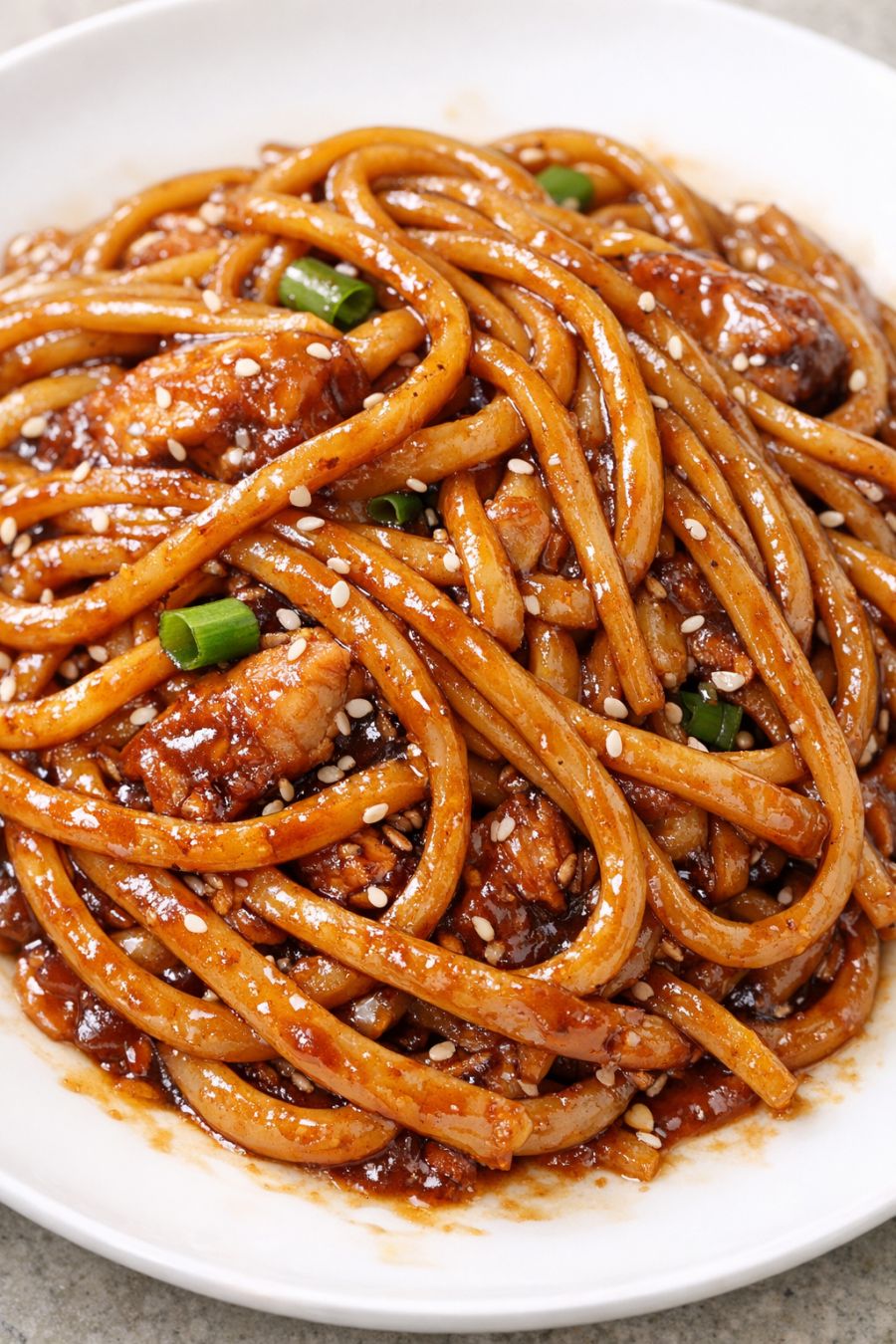
This slow cooker 3-ingredient hoisin noodle dish is my grandmother’s clever shortcut to that glossy, restaurant-style side you always wish you could recreate at home. She grew up stretching pantry staples into something special, and this is one of those recipes that proves how far a few good ingredients can go. Hoisin sauce brings deep, sweet-salty umami; soy sauce sharpens and balances it; and plain dried spaghetti stands in beautifully for restaurant lo mein or chow mein noodles. The slow cooker does the work, leaving you with tender, slippery noodles coated in a thick, dark reddish-brown glaze that tastes like it came straight from your favorite takeout spot.
Serve these hoisin noodles hot, piled onto a simple white plate or shallow bowl so the glossy sauce can really show off. They’re ideal as a side dish for roasted or grilled meats, pan-seared tofu, or a quick stir-fried vegetable medley. I like to pair them with something crisp and fresh—think cucumber salad, steamed broccoli, or a simple slaw—to balance the richness and stickiness of the sauce. If you’re turning this into a full meal, add a fried or soft-boiled egg on top and a side of sautéed greens for a satisfying, restaurant-style spread at home.
Slow Cooker 3-Ingredient Hoisin Noodles
Servings: 4
Ingredients
12 oz dried spaghetti or other long pasta
3/4 cup hoisin sauce
1/4 cup low-sodium soy sauce
3 1/2 cups water (for cooking the noodles in the slow cooker; does not count toward the 3 core ingredients)
Nonstick cooking spray or 1 tsp neutral oil (for greasing the slow cooker insert; optional)
Directions
Lightly grease the inside of your slow cooker with nonstick spray or a little neutral oil to help prevent the noodles from sticking.
In the slow cooker, whisk together the hoisin sauce, soy sauce, and 3 1/2 cups water until the hoisin is fully dissolved and the liquid looks smooth and uniform.
Break the dried spaghetti in half so it fits more easily into the slow cooker. Add the pasta to the hoisin mixture, spreading the noodles out and gently pressing them down so they’re as submerged as possible.
Cover and cook on HIGH for 1 1/2 to 2 hours, stirring every 30 minutes. Each time you stir, separate any noodles that are clumping and make sure they’re coated in the sauce. The noodles will soften gradually and the liquid will thicken into a glossy, dark reddish-brown sauce.
Begin checking for doneness at around 1 hour and 20 minutes. The noodles are ready when they’re tender but not mushy and most of the liquid has reduced to a thick, sticky coating. If the noodles are still firm and there’s a lot of liquid, continue cooking in 10–15 minute increments, stirring each time.
Once the noodles are cooked to your liking and the sauce is thick and shiny, turn off the slow cooker. Let the noodles sit, covered, for 5–10 minutes; this rest helps the sauce cling even more and gives you that restaurant-style, slippery, glossy finish.
Give the noodles a final stir to coat them evenly in the thick hoisin glaze. Transfer immediately to a serving platter or individual plates, twirling the noodles so the sauce stays on the surface, and serve hot as a savory side dish.
Variations & Tips
For a spicier version, add 1–2 teaspoons of chili garlic sauce or a pinch of crushed red pepper flakes to the hoisin and soy mixture before cooking. If you prefer a slightly less sweet profile, swap 2 tablespoons of the hoisin for additional soy sauce or a splash of rice vinegar to boost tang and cut richness. To mimic different restaurant styles, try using lo mein or udon noodles instead of spaghetti, adjusting the cook time slightly since thicker noodles may need an extra 10–15 minutes. For more intense umami, stir in a teaspoon of toasted sesame oil at the end of cooking—this doesn’t change the core 3-ingredient base but adds a fragrant, nutty finish. You can also bulk this up while still treating it as a side: fold in pre-cooked vegetables (such as steamed broccoli, snap peas, or shredded carrots) or leftover rotisserie chicken right at the end, just long enough to warm through without overcooking. If the sauce ever feels too thick, loosen it with a tablespoon or two of hot water; if it’s too thin, let the noodles rest uncovered on WARM for a few extra minutes, stirring occasionally, until the glaze looks thick and glossy.
