
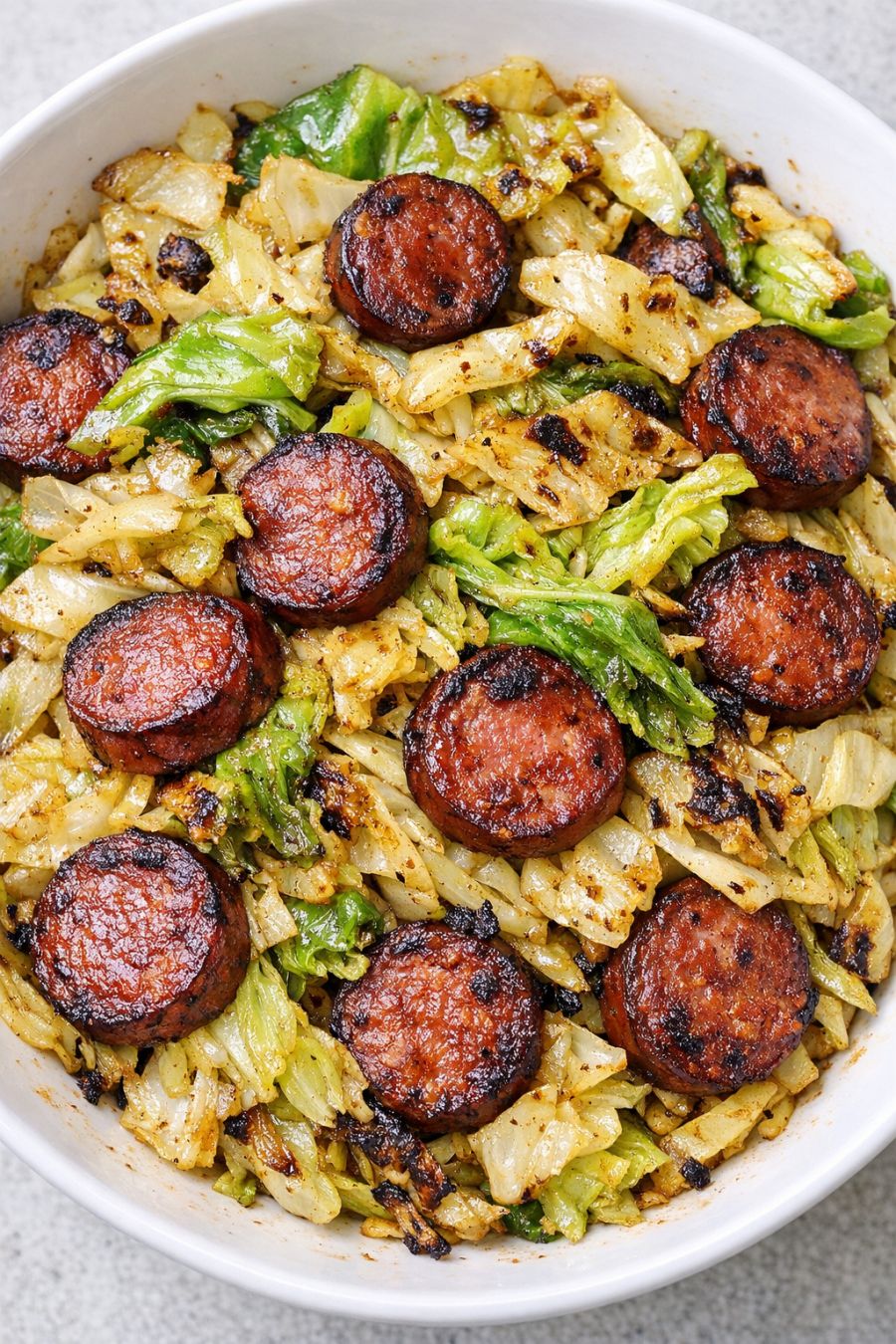
This 4-ingredient fried cabbage and sausage is one of those cozy, cheap meals that feels way fancier than it is. My dad made a version of this every spring when the weather was still chilly and we were all craving something hearty but not heavy like a stew. The cabbage gets wilted and caramelized with charred edges, and the smoked sausage turns crispy and deep red, so the whole pan smells rich and smoky. It’s perfect for busy weeknights because everything happens in one skillet, and you can have it on the table in about 30 minutes with almost no prep.
I like to serve this straight from the skillet into a big white bowl and let everyone scoop their own. It’s great on its own, but if you want to stretch it, spoon it over buttered egg noodles, mashed potatoes, or simple white rice to soak up all the smoky, savory drippings. A slice of crusty bread or cornbread on the side is perfect for swiping through the bottom of the bowl. If you’re trying to keep dinner lighter, pair it with a simple green salad dressed with lemon and olive oil to balance the richness of the sausage.
4-Ingredient Fried Cabbage and Sausage
Servings: 4
Ingredients
12 ounces smoked sausage or kielbasa, sliced into 1/4-inch coins
1 medium green cabbage (about 2 pounds), cored and thinly sliced
3 tablespoons vegetable oil (or other neutral cooking oil)
1 1/2 teaspoons kosher salt, plus more to taste
Directions
Prep the ingredients: Slice the smoked sausage into 1/4-inch coins. Core the cabbage and thinly slice it into shreds. Keep the cabbage fairly thin so it wilts and chars nicely in the skillet.
Heat the skillet: Set a large, heavy skillet (cast iron if you have it) over medium-high heat. Add 2 tablespoons of the vegetable oil and let it heat until it shimmers.
Brown the sausage: Add the sliced sausage in an even layer. Let it cook undisturbed for 3 to 4 minutes so the bottoms get deeply browned and slightly crisp. Stir and continue cooking for another 2 to 3 minutes until most pieces are dark red and caramelized on the edges. Transfer the sausage to a plate, leaving as much of the flavorful fat in the pan as possible.
Start the cabbage: Add the remaining 1 tablespoon of oil to the same skillet if it looks dry. Add the sliced cabbage and sprinkle with 1 1/2 teaspoons kosher salt. It will look like a lot at first, but it cooks down. Toss to coat the cabbage in the oil and sausage drippings.
Fry and char the cabbage: Let the cabbage cook over medium-high heat for 5 to 7 minutes, stirring only every couple of minutes. You want some of the edges to sit against the hot pan long enough to get browned and slightly charred while the rest softens and turns bright green.
Finish cooking and combine: When the cabbage is mostly tender with plenty of caramelized spots, return the browned sausage and any juices from the plate to the skillet. Toss everything together and cook for another 3 to 5 minutes, letting the flavors meld and the cabbage pick up more smoky flavor from the sausage.
Taste and serve: Taste and adjust the salt if needed. Spoon the fried cabbage and sausage into a big serving bowl. Serve hot, making sure everyone gets a mix of wilted, browned cabbage and crispy sausage coins in each scoop.
Variations & Tips
Use this as a flexible base and tweak it to fit your week. For extra smoky depth, choose a very smoky kielbasa or andouille sausage; turkey or chicken sausage work too if you want to lighten it up a bit, though they won’t render quite as much fat. If you like a little kick, add a pinch of red pepper flakes or black pepper when you add the cabbage. You can also squeeze a little lemon juice or splash a teaspoon of apple cider vinegar over the finished dish to brighten it without adding more ingredients to the main cooking process. To make it more filling, stir in leftover cooked potatoes or egg noodles at the end so they soak up the drippings. For meal prep, cook a batch on Sunday and pack it into containers with rice or mashed potatoes—it reheats well in a skillet over medium heat with just a tiny drizzle of oil to re-crisp the sausage and refresh the char on the cabbage.
