
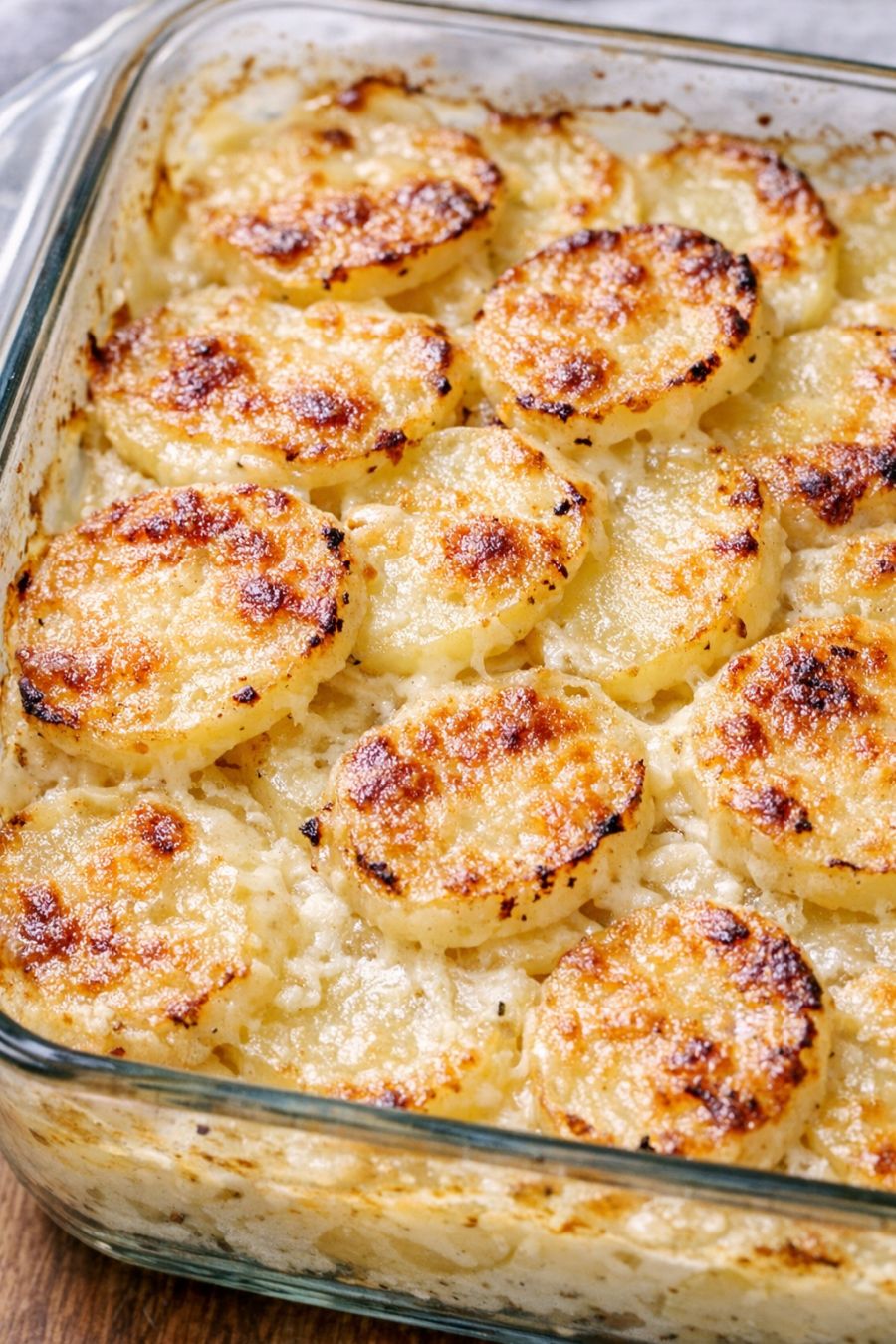
This oven baked 4-ingredient poor man’s scalloped potato bake is the kind of dish that quietly holds a family together. My grandpa made this on cold evenings when there wasn’t much in the pantry, but he could always find potatoes, an onion, a bit of flour, and some milk. No cheese, no fancy seasonings—just simple ingredients layered in a glass dish and baked until the potatoes turned unbelievably creamy with golden-brown edges. It’s the sort of humble, heartwarming food that tastes like home and proves you don’t need much to make something special.
Serve this potato bake straight from the glass dish while it’s still bubbling around the edges. It pairs beautifully with simple, hearty mains like roast chicken, meatloaf, baked ham, or pan-fried pork chops. Add a green vegetable—steamed peas, green beans, or a tossed salad—for a bit of color and freshness. Leftovers reheat well and can be served alongside eggs and sausage for a cozy farmhouse-style breakfast the next morning.
Oven Baked 4-Ingredient Poor Man’s Scalloped Potato Bake
Servings: 6
Ingredients
3 pounds russet or Yukon Gold potatoes, thinly sliced
1 medium yellow onion, very thinly sliced
1/4 cup all-purpose flour
3 cups whole milk
Salt and black pepper, to taste (optional, not counted as ingredients)
Soft butter or oil, for greasing the baking dish (optional, not counted as ingredient)
Directions
Preheat your oven to 375°F (190°C). Lightly grease a 9x13-inch glass baking dish with a little butter or oil so the potatoes don’t stick.
Peel the potatoes if you like (my grandpa usually did), then slice them as thin as you reasonably can, about 1/8-inch thick. A sharp knife works just fine; they don’t have to be perfect. Slice the onion very thin as well so it softens and melts into the potatoes.
In a small bowl, stir together the flour with a good pinch of salt and black pepper if you’re using them. This seasoned flour will help thicken the milk into a creamy sauce right in the oven.
Spread a thin, even layer of potato slices over the bottom of the greased glass dish. Scatter a few onion slices over the potatoes. Sprinkle a spoonful or two of the flour mixture lightly over the top of that layer.
Repeat the layering: potatoes, a scatter of onion, then a light sprinkle of the flour mixture. Keep going until you’ve used all the potatoes and onions, finishing with a layer of potatoes on top. Try to keep the layers fairly even so they cook at the same pace.
Slowly pour the milk over the layered potatoes, aiming to wet all the layers. The milk should come almost to the top of the potatoes but not completely cover them. Gently press down on the top with your hand or the back of a spoon to help the milk settle into the layers.
Cover the baking dish tightly with foil and place it on the middle rack of the oven. Bake for about 45 minutes, until the potatoes begin to soften and the milk is hot and starting to thicken.
Remove the foil and continue baking for another 25–35 minutes, or until the potatoes are very tender when pierced with a knife and the top is lightly golden with some browned edges. The milk and flour will have turned into a creamy sauce that bubbles up around the slices.
Let the dish rest for at least 10–15 minutes before serving. The sauce will thicken a bit more as it cools, and the layers will hold together better when you scoop them out. Serve warm, straight from the glass dish, with those golden edges showing.
Variations & Tips
For a richer version, you can swap part of the milk for evaporated milk or half-and-half, but the old-fashioned way is just plain whole milk. If you like a little color and flavor, sprinkle a touch of paprika or dried parsley over the top before baking; my grandpa sometimes did that on Sundays to make it look a bit fancier. For extra onion flavor, grate a tablespoon of onion into the milk before pouring it over the potatoes. If your potatoes are very starchy, you can rinse the slices briefly in cold water and pat them dry to keep the sauce from getting too gluey, though we hardly ever bothered on the farm. To stretch the dish for more people, use a slightly deeper dish and add another potato or two, then increase the milk as needed so it still comes near the top. Leftovers can be reheated, covered, in a low oven or in a skillet with a splash of milk; they’re wonderful crisped up a bit on the bottom. If you must cook ahead, bake until just tender, cool, then reheat uncovered until bubbly and browned right before serving.
