
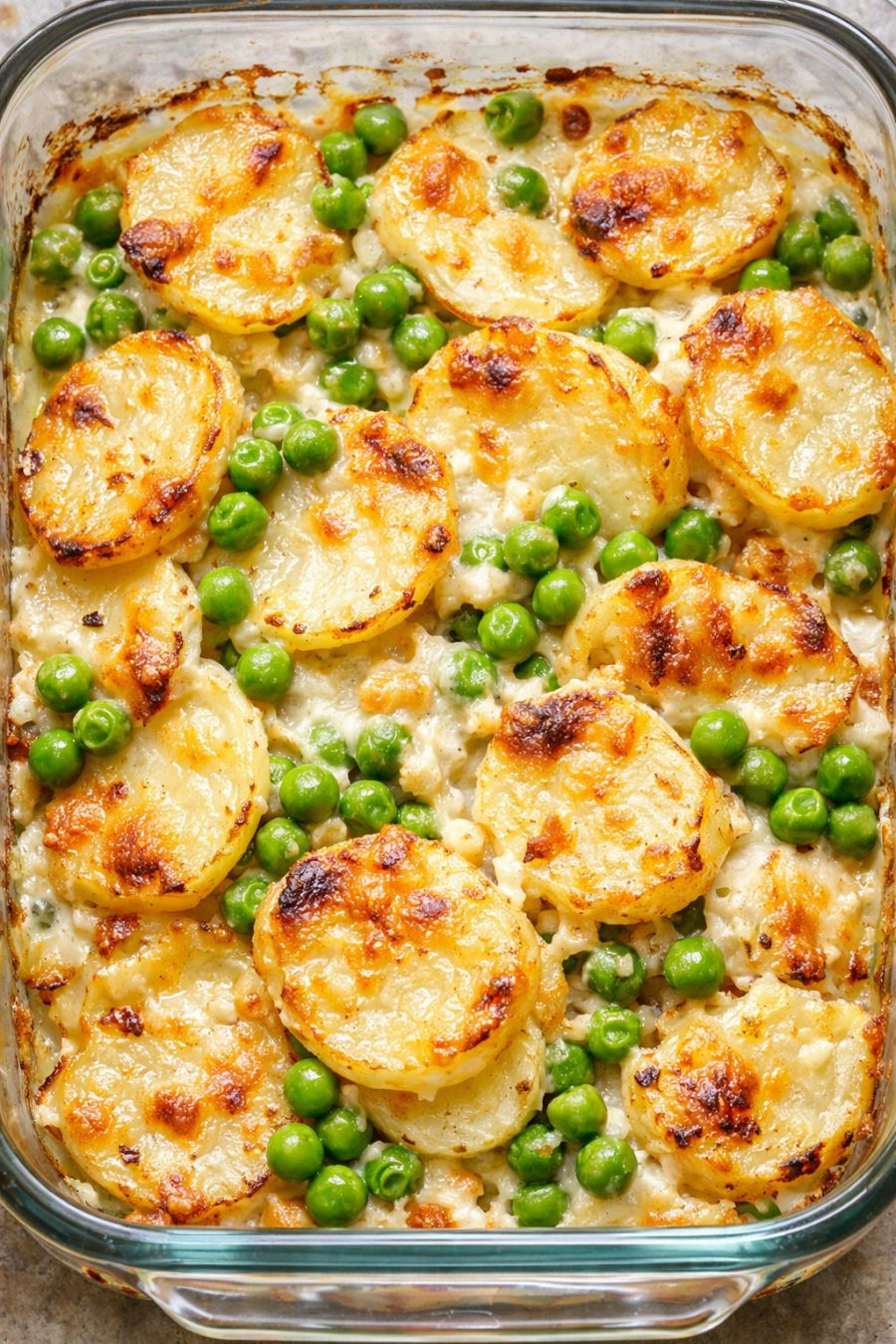
This oven baked 4-ingredients spring pea potato casserole is one of those hand-me-down dishes that shows up at every holiday in my family. My grandmother made it for Easter and Christmas, and she loved to brag that it only took four ingredients to get that rich, creamy center and golden crust everyone fought over. It’s simple enough for a busy weeknight, but special enough to sit proudly next to a roast or ham on the holiday table. If you can slice potatoes and open a bag of peas, you can make this cozy, old-fashioned side that feels like a warm hug.
This casserole is lovely alongside roasted chicken, ham, or a simple pan-seared pork chop. I like to add something fresh and crunchy on the table, like a green salad or steamed green beans with lemon, to balance the creaminess. Warm dinner rolls or crusty bread are perfect for scooping up the extra sauce from the bottom of the dish. For a full holiday spread, pair it with glazed carrots, a simple cranberry relish, and a light dessert—this casserole is rich enough that you don’t need anything too heavy afterward.
4-Ingredient Spring Pea Potato Casserole
Servings: 6
Ingredients
2 1/2 pounds russet or Yukon Gold potatoes, peeled and thinly sliced (about 1/8-inch thick)
1 1/2 cups frozen spring peas (no need to thaw)
2 cups heavy cream
1 1/2 cups shredded cheese (such as mild cheddar, Gruyère, or Colby Jack), divided
Directions
Preheat your oven to 375°F (190°C). Lightly grease a 9x13-inch glass casserole dish so the potatoes don’t stick and the edges can get nice and golden.
Peel the potatoes and slice them as thinly and evenly as you can, about 1/8-inch thick. If you have a mandoline slicer, this is a good time to use it, but a sharp knife works just fine. Pat the slices dry with a clean kitchen towel to remove extra moisture so the casserole gets creamier instead of watery.
Spread a single, even layer of sliced potatoes over the bottom of the prepared casserole dish, slightly overlapping the slices like shingles. Sprinkle a small handful of peas over the potatoes, then sprinkle a light layer of shredded cheese (using about 1/2 cup total for this first layer).
Repeat the layering: potatoes, peas, then cheese, until you’ve used all the potatoes and peas. Try to end with a layer of potatoes on top so the cheese and cream can form a pretty golden crust.
Slowly pour the heavy cream evenly over the entire dish, letting it seep down between the layers. Gently press down on the top with clean hands or the back of a spatula to help the cream settle through the potatoes and peas.
Sprinkle the remaining shredded cheese evenly over the top layer of potatoes. This will melt into a rich, bubbly, golden crust as it bakes.
Cover the casserole loosely with foil (tent it so it doesn’t stick to the cheese) and bake in the preheated oven for 45 minutes. This helps the potatoes cook through without the top burning.
After 45 minutes, carefully remove the foil and continue baking for another 20–30 minutes, or until the potatoes are very tender when pierced with a knife and the top is deeply golden and bubbling around the edges.
Once baked, remove the casserole from the oven and let it rest for at least 10–15 minutes before serving. This resting time helps the creamy sauce thicken up a bit so the slices hold together instead of sliding apart.
Serve the casserole straight from the glass dish, scooping down to get some of the tender potatoes, sweet peas, and that rich golden crust in every portion. It reheats well, so don’t worry if you have leftovers—my family actually thinks it tastes even better the next day.
Variations & Tips
For picky eaters who aren’t sure about peas, you can cut the peas down to 1 cup and tuck them more toward the middle layers so they’re not as visible on top. If your family prefers a milder flavor, choose a mild cheddar or Colby Jack; for a more grown-up version, Gruyère or a sharp white cheddar adds a nutty, savory note. To lighten it up a bit, you can swap half of the heavy cream for whole milk, understanding that the sauce will be slightly less thick and rich. If you like a little extra color on top, turn the broiler on for 2–3 minutes at the very end—but watch closely so the cheese doesn’t burn. This casserole can be assembled a few hours ahead, covered, and kept in the fridge; just add an extra 10 minutes or so to the baking time if it goes into the oven cold. For smaller gatherings, halve the recipe and bake it in an 8x8-inch dish. And if you need to make it feel more like a complete meal on a busy weeknight, you can stir in leftover cooked ham or rotisserie chicken between the layers, keeping in mind that this technically adds ingredients beyond the traditional four my grandmother used for holidays.
