
This 3-ingredient corned beef and cabbage is the kind of set-it-and-forget-it meal my own Midwestern relatives would have appreciated: hearty, economical, and comforting. It leans on a classic Irish-American combination—brined beef brisket and cabbage—kept blissfully simple so the meat’s spice packet can do all the heavy lifting. Everything simmers slowly in one pot until the brisket is tender enough to fall apart with a fork and the cabbage turns silky and sweet, bathed in savory juices. It’s ideal for spring holidays or any day when you want a traditional, hands-off dinner that quietly cooks itself while you go about your day.
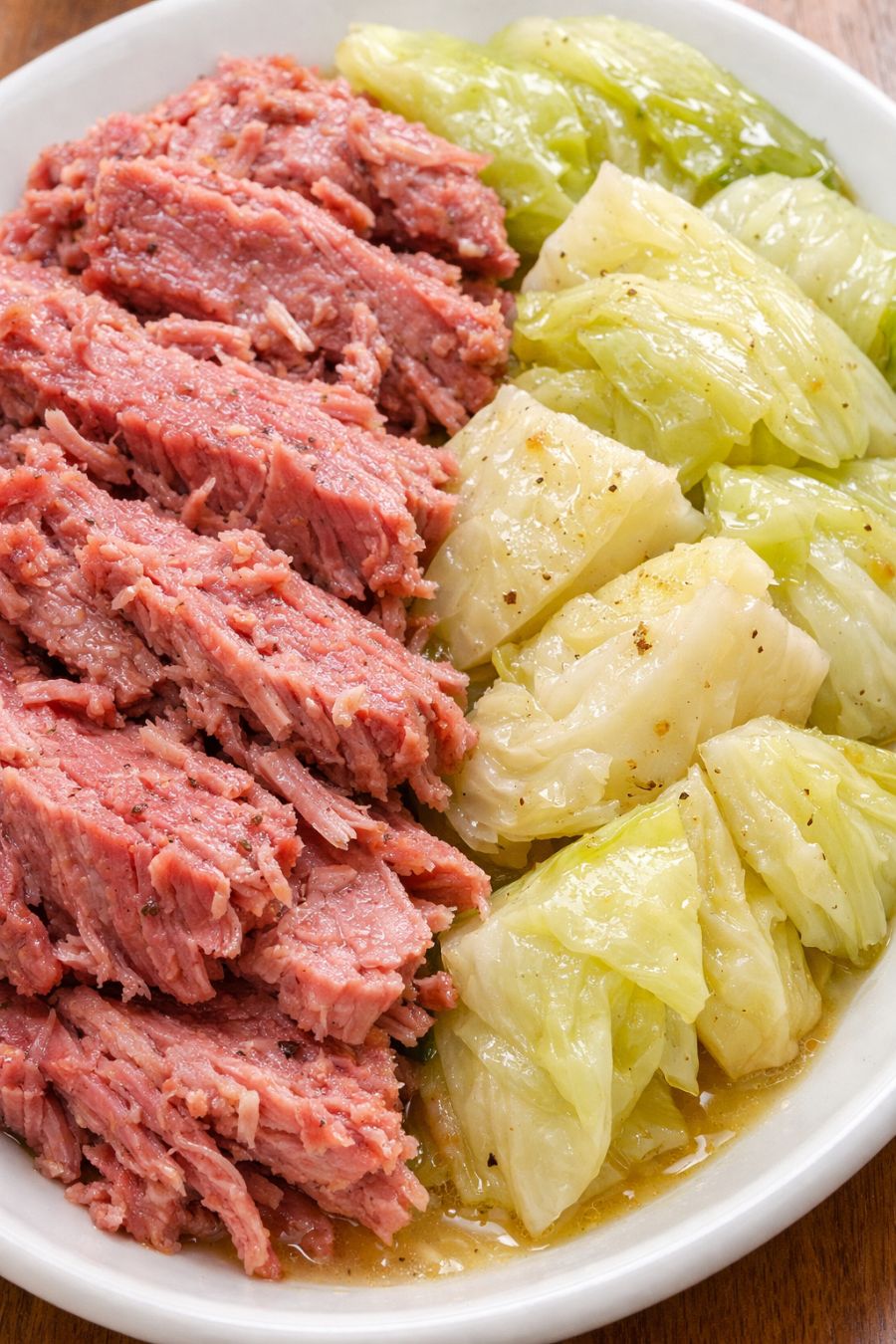
Serve the sliced, tender corned beef and cabbage wedges on a warm white platter, spooning plenty of the cooking juices over the top. This is lovely with boiled or mashed potatoes if you want to keep things classic, though a crusty loaf of bread is equally good for soaking up the broth. A sharp mustard or creamy horseradish on the side adds a nice contrast to the rich meat. For something fresh, pair it with a simple green salad dressed with a tangy vinaigrette, or some sliced apples to echo the sweetness that develops in the slow-cooked cabbage.
3-Ingredient Corned Beef and Cabbage
Servings: 6
Ingredients
3–4 pound corned beef brisket, including spice packet
1 medium head green cabbage (about 2–2 1/2 pounds), cored and cut into wedges
4 cups water
Directions
Place the corned beef brisket, fat side up, in a large heavy pot or Dutch oven. Sprinkle the contents of the included spice packet evenly over the meat.
Pour the water around (not directly over) the brisket so you don’t wash off the spices. The liquid should come about halfway up the sides of the meat; add a bit more water if needed to reach that level.
Cover the pot with a tight-fitting lid and bring to a gentle simmer over medium heat. Once it reaches a simmer, reduce the heat to low so the liquid barely bubbles. This slow, quiet cooking is key to meat that falls apart on the fork.
Simmer the corned beef, covered, for about 2 1/2 to 3 hours, or until the brisket is very tender when pierced with a fork. Check once or twice during cooking to ensure the heat stays low and the liquid level remains about halfway up the meat, adding a splash of water if needed.
When the brisket is tender, carefully lift it out of the pot and transfer it to a cutting board. Cover loosely with foil to keep warm and let it rest while you cook the cabbage. Skim any excess fat from the surface of the cooking liquid if desired.
Add the cabbage wedges to the same pot, nestling them into the hot, seasoned cooking liquid. Bring the pot back to a gentle simmer over medium heat, then reduce to low. Cover and cook for 15–20 minutes, or until the cabbage is very soft and pale green, just on the verge of falling apart but still holding its wedge shape.
While the cabbage cooks, slice the rested corned beef against the grain into thick slices. For that pulled, fall-apart texture, you can also gently separate some of the slices into chunks with a fork.
To serve, arrange the sliced or pulled corned beef on a white serving platter. Nestle the steamed cabbage wedges alongside the meat. Spoon some of the hot cooking juices over both the beef and cabbage so they glisten and stay moist. Serve immediately, passing extra juices at the table for anyone who wants more.
Variations & Tips
For a slightly richer broth without adding more ingredients, sear the corned beef briefly in the dry pot over medium-high heat before adding the water; the browned bits on the bottom will deepen the flavor of the cooking liquid. If you prefer a more structured texture to the meat, reduce the cooking time slightly so the brisket slices hold together firmly, then slice thinly across the grain. For a more shredded, pulled effect that matches the falling-apart description, cook closer to the longer end of the time range and use two forks to gently pull the meat into large, rustic pieces before plating. You can also play with how you cut the cabbage: wedges give you that classic look, but thick slices or large chunks will soften more quickly and soak up even more of the savory broth. Leftovers reheat beautifully in a covered skillet with a splash of water, or can be gently warmed in some of the reserved cooking liquid to keep everything moist and tender.
