
This 4-ingredient slow cooker roast leans into the mid-century habit of turning a few pantry staples into a deeply comforting family meal. A pork blade roast is especially well suited to low, gentle cooking because its marbling melts into the meat over time, creating tender slices and a savory gravy with very little hands-on work. If you like practical, old-fashioned dinners that fill the kitchen with a rich aroma and stretch easily into leftovers, this vintage-style July Jamboree Roast is an easy one to keep in rotation.
Serve this roast with mashed potatoes, buttered egg noodles, or fluffy rice to catch the sauce, and add a green vegetable such as steamed green beans, peas, or roasted broccoli for balance. Warm dinner rolls, applesauce, or a simple cucumber salad also pair nicely, especially if you want the meal to feel a bit more picnic-inspired and summery despite the slow-cooked coziness.
4-Ingredient Slow Cooker Vintage July Jamboree Roast
Servings: 6
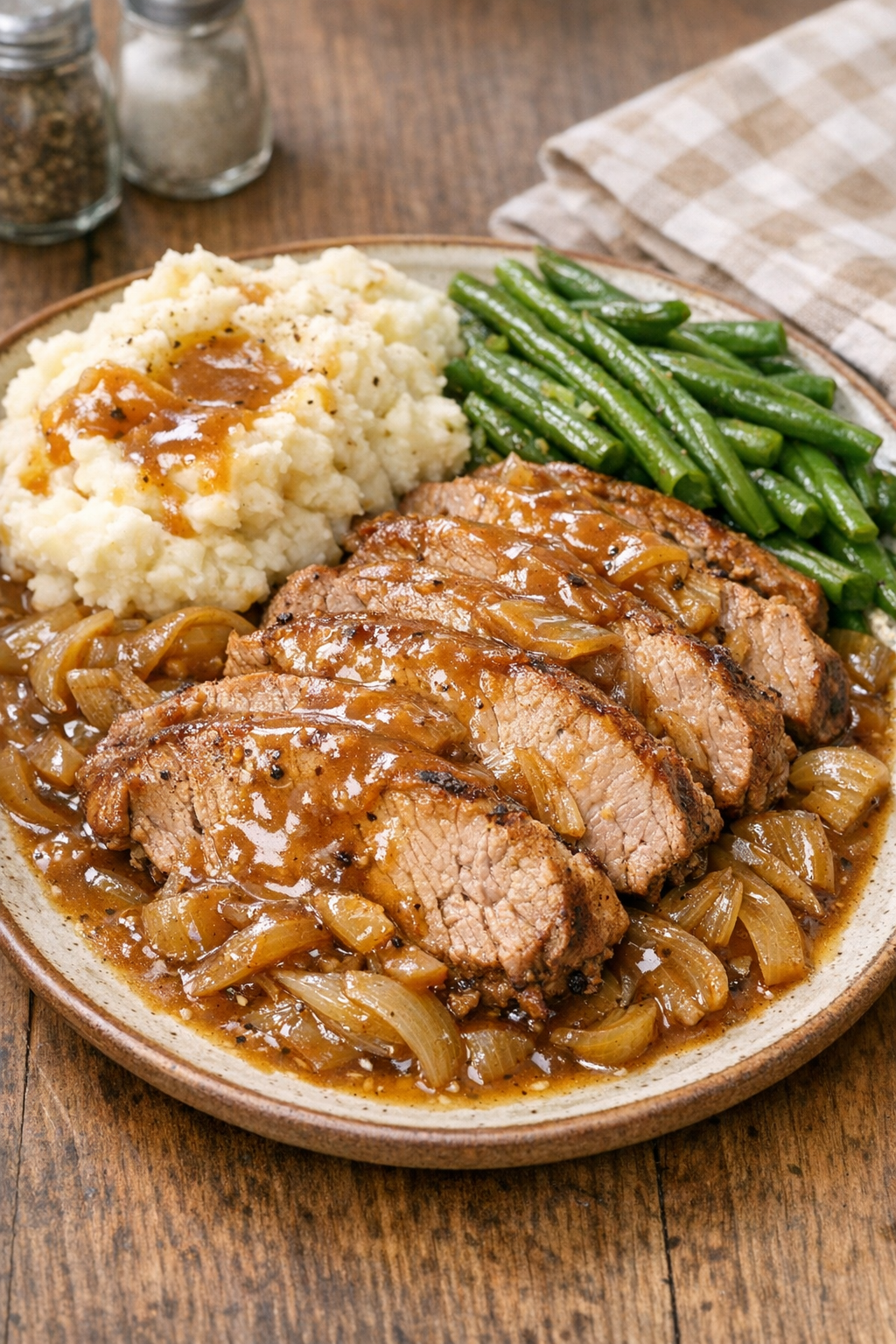
Ingredients
1 raw pork blade roast, about 3 to 4 pounds
1 packet dry onion soup mix, about 1 ounce
1 can cream of mushroom soup, 10 1/2 ounces
1 cup water
Directions
1. Place the raw pork blade roast in the bottom of the slow cooker.
2. In a small bowl, stir together the dry onion soup mix, cream of mushroom soup, and water until mostly smooth, then pour the mixture over the roast.
3. Cover and cook on low for 8 to 10 hours or on high for 5 to 6 hours, until the pork is very tender and easy to pull apart with a fork.
4. Transfer the roast to a platter, spoon some of the sauce over the top, and serve hot.
Variations & Tips
For deeper flavor: If you have a few extra minutes, brown the pork blade roast in a hot skillet before placing it in the slow cooker. This is not necessary for tenderness, but it does add a richer roasted note and a darker finished sauce.
Make the gravy smoother: For a more uniform sauce, whisk the soup mixture very thoroughly before adding it to the cooker, and stir the liquid well once or twice near the end of cooking if your schedule allows.
Add a vegetable base: A layer of thick onion slices or carrots under the roast works well and gives the finished dish more body. This is a useful variation when you want more of a complete one-pot supper.
Use the right cut: Pork blade roast is ideal here because it has enough fat and connective tissue to stay moist during long cooking. A leaner cut will not give you the same succulent texture, so this is one recipe where the cut truly matters.
Plan for leftovers: Leftover pork can be shredded and spooned over baked potatoes, tucked into sandwiches, or reheated with extra sauce over noodles the next day. The flavor often improves after a night in the refrigerator.