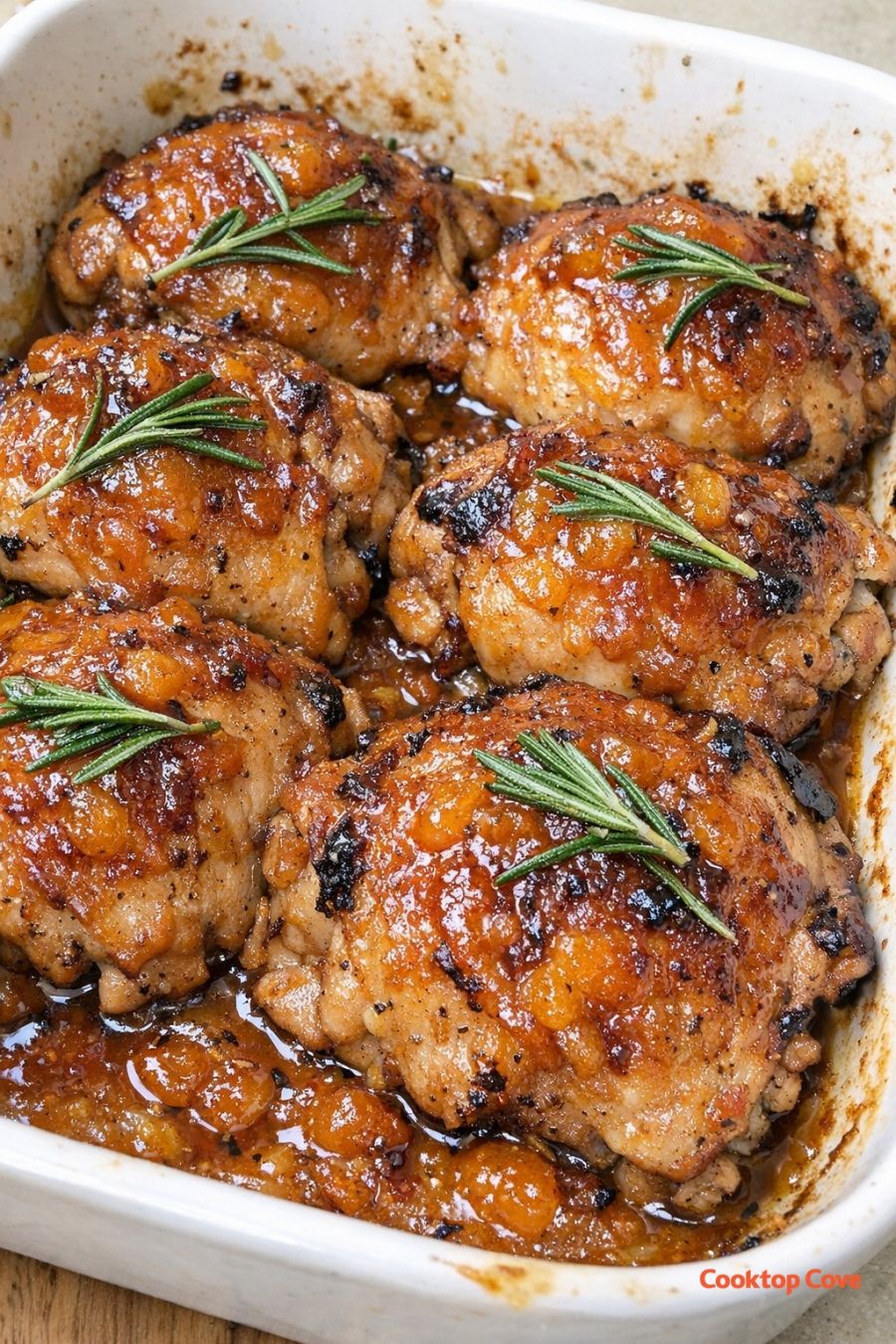
This oven baked 3-ingredients apricot rosemary chicken is the kind of dish that disappears from the table before you’ve even had a chance to sit down. My aunt first carried this into our family’s summer cookout in a plain white baking dish, still warm from her old electric oven, and by the time it hit the picnic table, everyone was asking what smelled so good. It’s a simple, practical recipe—just chicken, apricot, and rosemary—but it bakes up into glossy, golden thighs with caramelized edges that taste like you fussed all afternoon. It’s very much in the spirit of old Midwestern church suppers: pantry-friendly, forgiving, and made to share.
This chicken is lovely with simple sides that soak up the sweet-savory juices. I like to spoon it over buttered rice or mashed potatoes, with a side of green beans or a crisp lettuce salad. At a cookout, it sits nicely alongside corn on the cob, coleslaw, and a pan of baked beans. A crusty loaf of bread is handy for mopping up the apricot-rosemary glaze, and if you’re serving a crowd, round out the meal with a fruit salad or a simple cucumber and onion salad for something cool and tangy.
Oven Baked 3-Ingredient Apricot Rosemary ChickenServings: 4
Ingredients
2 1/2 to 3 pounds bone-in, skin-on chicken thighs (about 6–8 pieces)
1 cup apricot preserves or apricot jam
2 tablespoons finely chopped fresh rosemary, plus extra small sprigs for garnish
1 teaspoon kosher salt (optional, but recommended)
1/2 teaspoon black pepper (optional, but recommended)
1 tablespoon neutral oil or softened butter for greasing the baking dish (optional)
Directions
Preheat your oven to 375°F (190°C). Lightly grease a white ceramic baking dish with oil or butter so the chicken doesn’t stick and the glaze can caramelize nicely.
Pat the chicken thighs dry with paper towels. This helps the skin turn golden and keeps the sauce from getting too watery. If you’re using salt and pepper, season both sides of the chicken now.
In a small bowl, stir together the apricot preserves and chopped fresh rosemary until well combined. The preserves should be thick but spreadable; if they are very stiff, you can warm them in the microwave for 10–15 seconds to loosen.
Arrange the chicken thighs in a single layer in the baking dish, skin side up, leaving a little space between each piece so the heat can circulate.
Spoon the apricot-rosemary mixture evenly over the chicken, coating the tops and sides of each thigh. It’s fine if some of the mixture settles into the bottom of the dish; it will turn into a flavorful glaze as it bakes.
Place the dish on the middle rack of the preheated oven and bake for 35–45 minutes, or until the chicken is cooked through and the skin is golden and glossy. The internal temperature should reach at least 165°F (74°C) when checked with an instant-read thermometer in the thickest part, not touching the bone.
About halfway through baking, carefully baste the chicken by spooning some of the pan juices and melted apricot mixture back over the thighs. This helps build that shiny, caramelized coating you see in the picture.
If you’d like deeper color and more caramelization on the apricot coating, move the dish to the top rack for the last 5 minutes of baking, or briefly broil on high for 1–3 minutes. Watch closely so the sugars in the preserves don’t burn.
Remove the baking dish from the oven and let the chicken rest for 5–10 minutes. The glaze will thicken slightly as it cools. Tuck a few fresh rosemary sprigs around the chicken for a pretty presentation, then serve the thighs straight from the white ceramic dish, spooning the caramelized apricot juices over each piece.
Variations & Tips
You can easily adapt this simple recipe to suit your table while keeping the spirit of my aunt’s cookout dish. For a little tang, stir 1–2 tablespoons of Dijon mustard into the apricot preserves before spreading over the chicken. If you don’t have fresh rosemary, use 1–1 1/2 teaspoons dried rosemary, crushed lightly between your fingers to release the flavor. Boneless, skinless chicken thighs will also work; start checking for doneness around 25–30 minutes, as they cook faster and won’t brown quite as much. For a sweeter, stickier glaze, add 1–2 tablespoons of brown sugar to the apricot mixture; for a bit of heat, add a pinch of red pepper flakes or a dash of hot sauce. If you’re cooking for a smaller household, cut the recipe in half and use a smaller baking dish so the glaze doesn’t burn around the edges. For food safety, always thaw chicken completely in the refrigerator, not on the counter, and avoid rinsing raw chicken, which can spread bacteria around your sink. Use a clean cutting board and utensils for the cooked chicken, and wash your hands well after handling it. Check that the chicken reaches at least 165°F (74°C) in the thickest part and refrigerate leftovers within 2 hours, storing them in a shallow, covered container. Leftovers reheat nicely in a low oven, covered, until warmed through.