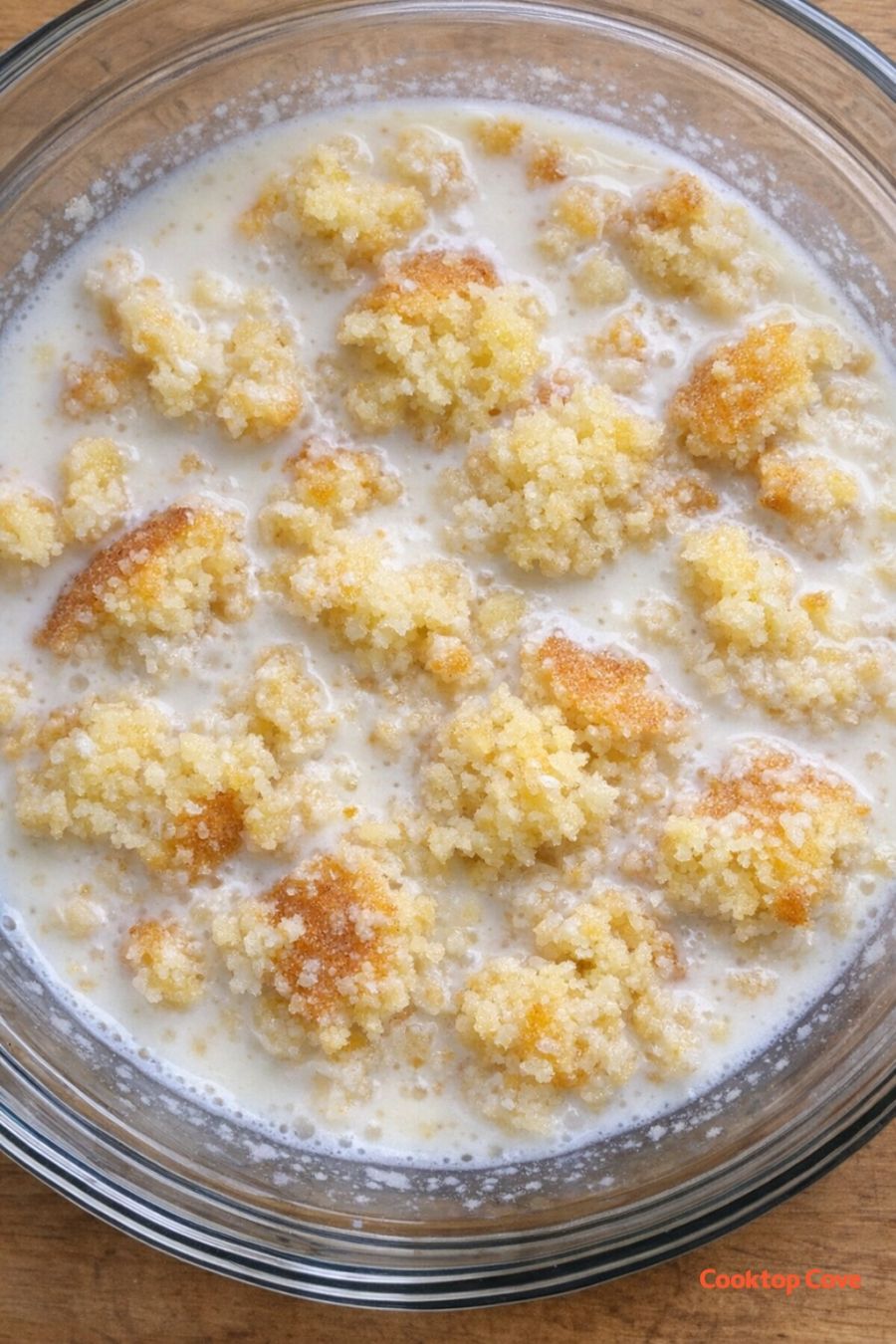
This little bowl of crumbled cornbread and cold buttermilk is the kind of thing that quietly kept families going when times were lean. My grandfather used to talk about those early summers on the farm, when the garden was just getting started and money was tight. There might not have been meat on the table every night, but there was always a pan of simple cornbread and a jug of tangy buttermilk. Stirred together, it turned into something cool, filling, and more comforting than it had any right to be. It’s not fancy and it’s not meant to be—it’s a Depression-era staple that still makes a humble, soothing meal or snack on hot days when you don’t want to fuss.
Serve this right away while the buttermilk is still cold and the cornbread is softening but not completely dissolved. It makes a light meal on its own, or you can set it beside sliced garden tomatoes, cucumbers with a little salt, or a wedge of sharp cheddar if you have it. Some folks like a small dish of fresh berries or sliced peaches on the side, but the beauty of this bowl is that it’s perfectly satisfying all by itself, especially on a warm afternoon or as a simple late-night supper.
2-Ingredient Cornbread and ButtermilkServings: 2
Ingredients
2 cups crumbled day-old cornbread (plain, unsweetened if possible)
2 to 2 1/2 cups cold cultured buttermilk
Directions
Have your cornbread fully baked, cooled, and at least a few hours old so it holds its shape when crumbled. A simple, plain cornbread made from cornmeal, a little fat, and liquid is closest to what farm families used, but any basic, not-too-sweet cornbread will work.
Break the cooled cornbread into rough, bite-size chunks with your hands. You want uneven, craggy pieces about 1/2 to 1 inch across, with some fine crumbs mixed in. Measure out about 2 cups of loosely packed crumbles.
Place the crumbled cornbread into a medium clear glass bowl so you can see the golden pieces through the sides, or divide it evenly between two smaller clear bowls if you prefer individual servings.
Pour 2 cups of very cold buttermilk over the cornbread, starting around the edges and then over the top, until the cornbread is mostly submerged. If you like it looser and more like a spoonable “soup,” add up to an extra 1/2 cup buttermilk.
Gently press the cornbread down with the back of a spoon so the chunks soak up some of the buttermilk but still keep their shape. Do not stir hard—you want visible, rough golden chunks sitting in the creamy white liquid, not a smooth mash.
Let the bowl rest on the counter for 3 to 5 minutes so the cornbread softens and the flavors settle together, but serve while the buttermilk is still nicely chilled.
Serve with a spoon, scooping down through the thick buttermilk and tender cornbread chunks in each bite. Eat it slowly and enjoy it for what it is: a simple, cooling, and surprisingly comforting taste of another time.
Variations & Tips
If your cornbread is very dry or a couple of days old, it will soak up more buttermilk; simply add a splash more until you see some creamy liquid pooling around the chunks. If your cornbread is fresh and tender, start with a little less buttermilk so it doesn’t fall apart too fast. For a taste closer to what many Midwestern farm families knew, use an unsweetened or barely sweet cornbread—too much sugar will fight with the tang of the buttermilk. If you don’t have traditional buttermilk, you can use cultured buttermilk from the store; avoid using just milk with lemon as a substitute here, since the flavor and thickness won’t be quite right. Some folks like a small pinch of salt or a dusting of black pepper stirred in to bring out the corn flavor, though the original version was often just the two ingredients and nothing more. For a heartier bowl, you can crumble in a little extra cornbread and let it soak longer so it thickens to almost a spoon bread texture. Always keep buttermilk refrigerated, and don’t use it if it smells off in a way that’s different from its normal tang or if it has visible mold. Use clean utensils and a clean bowl, and refrigerate any leftovers right away, though this dish is best eaten soon after it’s made while the buttermilk is cold and the cornbread still has some texture.