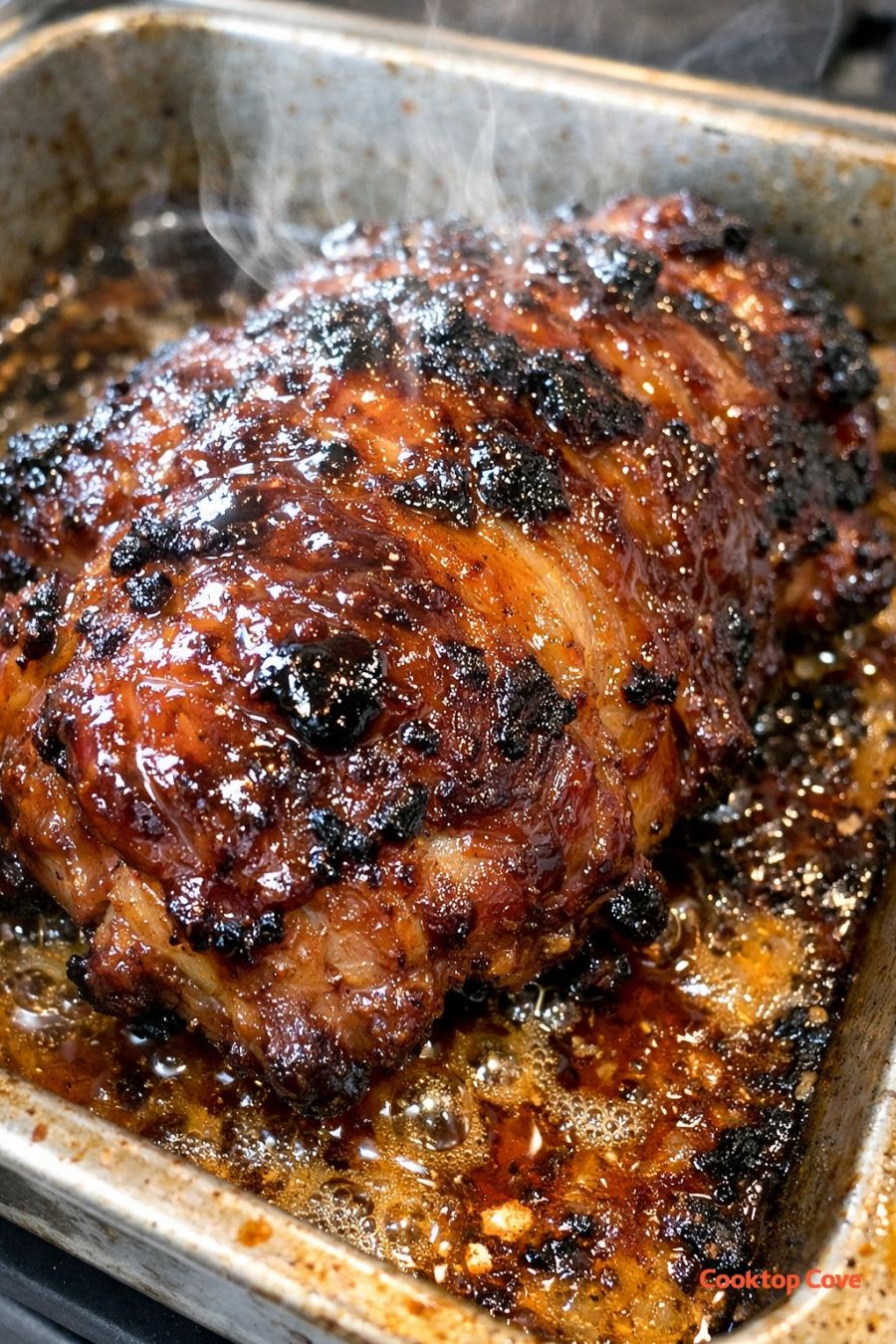
This 3-ingredient oven beef is my pre-summer standby for nights when I want dinner handled hours ahead with almost no thought. It’s essentially a hands-off, slow-roasted beef roast that bastes in its own juices and a glossy glaze, giving you that deeply caramelized, unidentifiable-but-irresistible roasted protein look you’d catch in a close-up phone photo: bubbling fat, sticky edges, and a sheet pan full of flavor. The method borrows from simple Midwestern pot roast traditions—low, slow, and forgiving—but strips it down to just beef, a pantry sauce, and one aromatic, so you can slide it into the oven and get on with your afternoon.
I like to serve this sliced or shredded over a wide plate of buttered egg noodles or mashed potatoes so the glossy pan juices have somewhere to pool. Roasted asparagus, green beans, or a simple green salad with a sharp vinaigrette balance the richness nicely. If you’re leaning casual, tuck the beef into soft rolls with a spoonful of the glaze and a crunchy slaw. A light, chilled red wine or a cold beer works well alongside, but iced tea with lemon is just as satisfying on a pre-summer evening.
3-Ingredient Glazed Oven BeefServings: 6
Ingredients
3 to 4 lb (1.4 to 1.8 kg) beef chuck roast, boneless, patted dry
1 cup (240 ml) thick teriyaki or soy-based grilling sauce or glaze
1 large yellow onion, sliced into thick rings
Directions
Heat the oven to 300°F (150°C). Set a rack in the center of the oven. Choose a metal baking sheet with a rim or a shallow metal roasting pan large enough to hold the roast with a little space around it.
Scatter the sliced onion in an even layer over the baking sheet or roasting pan. This creates a simple aromatic bed that keeps the beef slightly elevated and flavors the juices as they cook.
Place the beef chuck roast on top of the onion slices. Pat the surface dry with paper towels if it has any excess moisture; this helps the glaze cling and encourages better browning.
Pour about half of the teriyaki or grilling sauce over the top of the roast, using a spoon or your hands to spread it over all exposed surfaces. Let any excess drip down onto the onions and pan. Reserve the remaining sauce for later in the cook.
Cover the pan tightly with heavy-duty aluminum foil, crimping the edges well to trap steam. This covered phase lets the beef gently braise in its own juices and the sauce, keeping it moist and tender.
Transfer the covered pan to the oven and cook for 2 1/2 hours without opening the foil. During this time the beef should begin to soften and release flavorful fat and juices into the pan.
After 2 1/2 hours, carefully remove the pan from the oven and peel back the foil away from you to avoid the burst of hot steam. The beef should be starting to feel tender when poked with a fork, though not fully shreddable yet.
Spoon some of the pan juices over the top of the roast, then pour on the remaining teriyaki or grilling sauce, coating the top and sides. Increase the oven temperature to 350°F (175°C).
Return the pan to the oven, uncovered, and roast for 30 to 45 minutes more, basting once or twice with the pan juices. During this stage, the sauce will reduce and thicken into a glossy glaze, and the edges of the beef will caramelize and brown deeply.
Begin checking for doneness at the 30-minute mark. The beef is ready when it is very tender and can be pulled apart easily with two forks, and the surface looks deeply browned and sticky with glaze. If needed, continue roasting in 10-minute increments until it reaches this point.
Once the beef is tender and glazed, remove the pan from the oven and let the roast rest, loosely tented with foil, for 10 to 15 minutes. This rest helps the juices redistribute and keeps the meat moist when sliced or shredded.
To serve, slice the beef across the grain or use two forks to pull it into large, rustic chunks. Spoon some of the glossy pan juices and softened onions over the top. Serve hot, with any remaining juices passed at the table.
Variations & Tips
You can shift the personality of this three-ingredient supper just by swapping the glaze. Any thick, high-sugar sauce that can reduce to a sticky finish will work: try a smoky barbecue sauce for a more classic Midwestern feel, a hoisin-based sauce for something slightly sweeter and darker, or a gochujang barbecue sauce for gentle heat. If you prefer leaner meat, a top round roast can be used, but it will be sliceable rather than shreddable and slightly less forgiving—pull it from the oven as soon as it’s tender to avoid dryness. For a more pronounced crust, move the pan to the upper third of the oven for the last 5 to 8 minutes, or briefly broil on high, watching closely so the sugars in the glaze don’t burn. Leftovers keep well in the refrigerator for up to 4 days; reheat gently with a splash of water, covered, so the glaze loosens without scorching. For food safety, start with a fresh, properly refrigerated roast, avoid leaving the beef at room temperature for more than 2 hours total, and use a clean, instant-read thermometer if you’re unsure about doneness—aim for at least 190°F (88°C) in the center for pull-apart chuck. Always cool leftovers quickly and store them in shallow containers. If you’d like more vegetables but want to keep prep easy, tuck a few whole, scrubbed carrots or halved baby potatoes around the roast during the covered phase; they’ll roast in the beef fat and glaze without adding to your ingredient list if you already have them on hand.