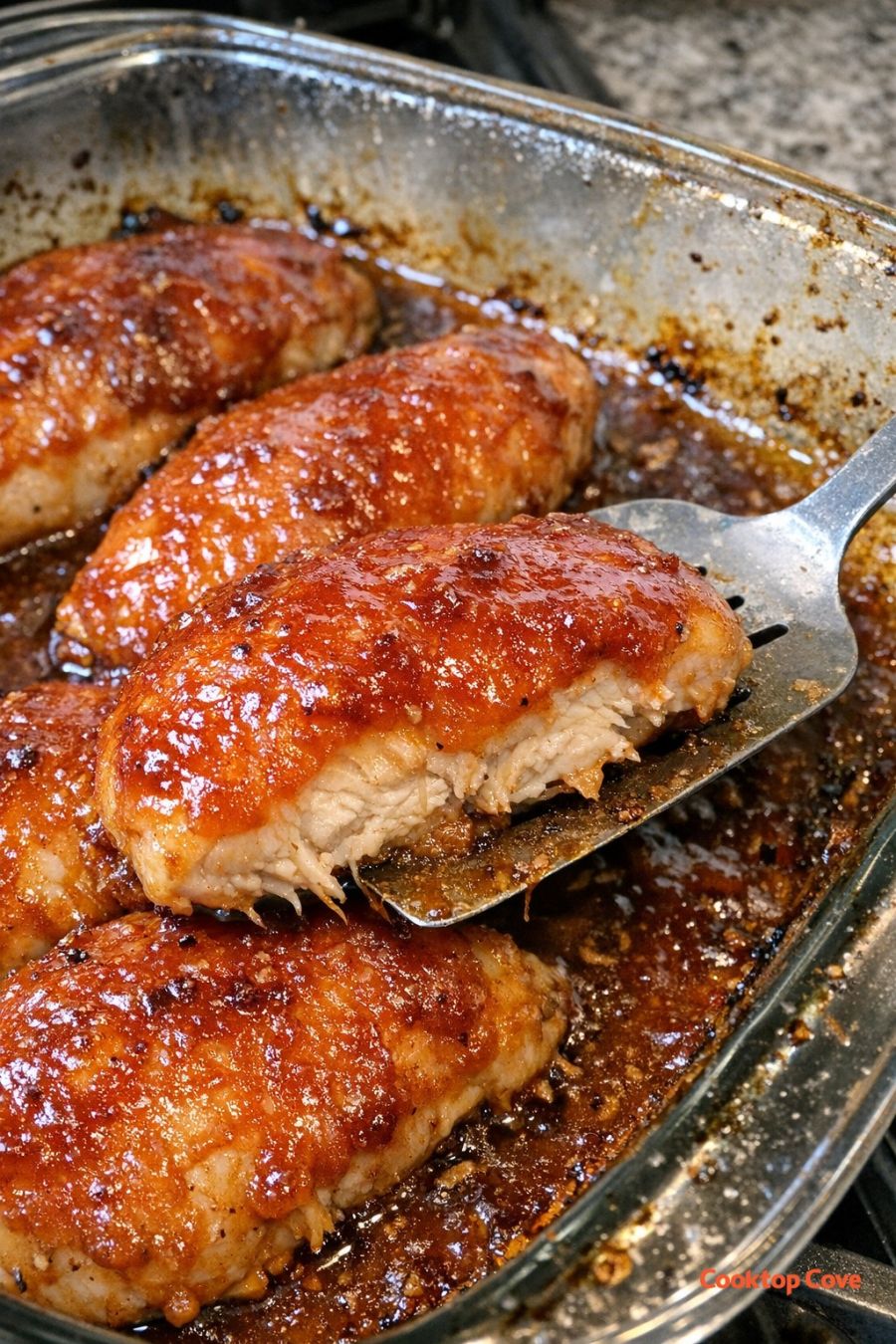
This oven baked 3-ingredient French dressing chicken is one of those old-fashioned, sweet-and-tangy dishes that tastes like it came straight from a Sunday dinner at Grandma’s house. My grandmother used to make this every spring when the weather finally started to warm up, and the smell of it baking would fill the whole house. The magic is in the sticky, reddish-orange sauce that bakes down into a glossy glaze and soaks into the rice. It’s budget-friendly, uses only pantry ingredients, and is easy enough to toss together on a busy weeknight but special enough for family dinner.
This chicken is best served over a bed of hot, fluffy white rice so all that sweet and tangy pan sauce can soak right in. You can also use brown rice or buttered egg noodles if that’s what your family likes. I like to add a simple green side—steamed green beans, a tossed salad, or roasted broccoli—to balance the richness of the sauce. A pan of dinner rolls or buttered French bread is perfect for mopping up every last bit of the caramelized sauce from the casserole dish.
Oven Baked 3-Ingredient French Dressing ChickenServings: 4
Ingredients
2 pounds boneless, skinless chicken breasts (about 4 medium breasts)
1 cup thick, creamy French salad dressing (not light or fat-free)
1 cup apricot preserves or jam
Directions
Preheat your oven to 375°F (190°C). Lightly grease a 9x13-inch glass casserole dish so the chicken doesn’t stick and the glaze can bubble and caramelize around the edges.
Pat the chicken breasts dry with paper towels and trim any excess fat. Lay the chicken in a single layer in the prepared casserole dish, leaving a little space between each piece so the sauce can flow around them.
In a medium bowl, whisk together the French dressing and apricot preserves until the mixture is smooth, thick, and evenly blended. It should be a pretty reddish-orange color and slightly glossy.
Pour the dressing mixture evenly over the chicken breasts, making sure each piece is well coated. Use the back of a spoon to spread the sauce so it covers all the tops and sides. Spoon some sauce into the corners of the dish so it can bake into a sticky pan sauce.
Cover the casserole dish loosely with foil and place it on the middle rack of the preheated oven. Bake for 20 minutes covered to let the chicken start cooking gently and the sauce begin to warm and thin out.
Remove the foil, carefully baste the chicken with the sauce from the bottom of the dish, and return the uncovered dish to the oven. Continue baking for another 20 to 30 minutes, basting once or twice more, until the chicken is cooked through and the sauce is thick, sticky, and caramelized around the edges. The internal temperature of the thickest part of the chicken should reach 165°F (74°C).
If you want an extra-sticky, lightly caramelized top, switch the oven to broil for the last 2 to 3 minutes of cooking. Watch closely so the sugars in the sauce don’t burn—pull it out as soon as the glaze looks bubbly and slightly darkened in spots.
Let the chicken rest in the hot pan for 5 to 10 minutes before serving. The sauce will thicken a bit more as it cools. Use a metal spatula to lift each piece, scraping up plenty of the sticky reddish-orange glaze and pan juices. Serve the chicken over hot rice and spoon extra sauce from the casserole dish over the top.
Variations & Tips
For a slightly less sweet version, use 3/4 cup French dressing and 3/4 cup apricot preserves and whisk in 1 to 2 tablespoons of water or low-sodium chicken broth to thin the sauce. If your family likes a little kick, add a pinch of red pepper flakes or a teaspoon of Dijon mustard to the dressing and preserves before baking. You can also swap the apricot preserves for orange marmalade or peach preserves for a different fruity twist while keeping the same sticky, tangy feel. If your kids are picky about chicken breasts being too thick, slice the breasts in half horizontally into thinner cutlets so they cook more evenly and stay tender—just start checking for doneness a bit earlier. To stretch the meal, tuck a few halved baby potatoes or carrot chunks around the chicken before adding the sauce; just know they may not be as caramelized as the chicken itself. For food safety, always handle raw chicken on a separate cutting board, wash your hands and any utensils or surfaces that touch the raw meat, and never reuse the bowl that held raw chicken without washing it thoroughly first. Use a meat thermometer to ensure the chicken reaches an internal temperature of 165°F (74°C) in the thickest part. If you make this ahead, cool it quickly, store it covered in the refrigerator within 2 hours, and reheat until hot and steaming all the way through before serving.