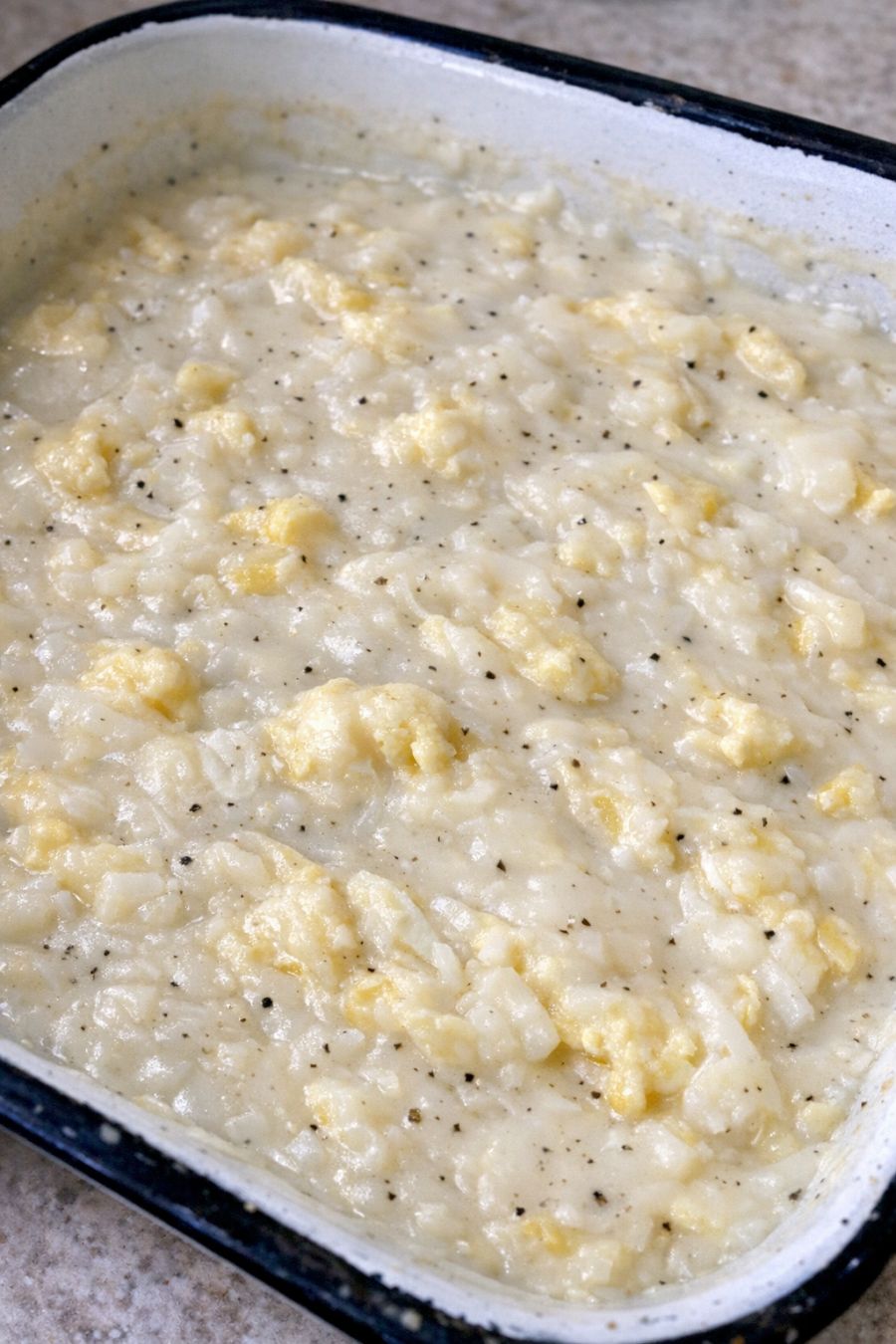
This 3-ingredient depression era egg gravy is the kind of dish my grandparents would have recognized instantly: humble, filling, and built from what was on hand. In the 1930s, stretching a couple of eggs into a pan of creamy, peppery gravy meant six kids could sit down to biscuits and feel like they’d had a real meal. There’s no flour here—just milk, eggs, and fat from the pan—so the eggs themselves become tender ribbons that thicken the gravy. It’s simple, comforting, and surprisingly satisfying poured over hot biscuits or toast.
Serve this egg gravy ladled generously over split, warm biscuits—homemade or from a can, whatever you have. It’s also excellent over buttered toast, leftover dinner rolls, or boiled potatoes. Add a side of whatever fruit is around (an apple, orange slices, or canned fruit) to round out the plate. A cup of coffee or hot tea keeps the spirit of a simple, thrifty breakfast, but this gravy also works as a quick, budget-friendly dinner alongside sautéed greens or a small salad.
3-Ingredient Depression Era Egg GravyServings: 4
Ingredients
2 tablespoons bacon grease, lard, or unsalted butter
3 large eggs
2 1/2 cups whole milk (or whatever milk you have)
1 teaspoon kosher salt, plus more to taste
1 teaspoon freshly ground black pepper, or to taste
Directions
Set out a medium enamel roasting pan or wide, shallow skillet. The light-colored surface makes it easier to see the eggs as they cook and keeps the gravy from browning too much.
Crack the eggs into a medium bowl. Add the salt and pepper. Beat with a fork until the yolks and whites are well combined and slightly frothy; this helps the eggs form soft ribbons instead of big curds.
Pour the milk into the bowl with the beaten eggs and whisk or stir until the mixture looks uniform and pale yellow. This is your base for the gravy.
Place the enamel pan over medium heat and add the bacon grease (or lard or butter). Let it melt completely and heat until it’s just shimmering but not smoking. You want it hot enough that the egg mixture will start to set on contact, but not so hot that it browns instantly.
Give the egg-and-milk mixture one last stir, then pour it into the hot pan in a steady stream. Do not walk away—this cooks quickly.
Let the mixture sit undisturbed for 20–30 seconds so a thin layer begins to set on the bottom. You’ll see small, soft curds forming and the edges thickening slightly.
Using a heatproof spatula or wooden spoon, begin gently scraping the bottom of the pan, pulling the cooked egg up into the liquid in long, loose ribbons. Keep the heat on medium to medium-low so the mixture steams and thickens without boiling hard.
Continue to cook, stirring slowly and constantly, scraping across the bottom and around the edges. The goal is a creamy, pourable gravy with visible, tender strands of cooked egg running through it—not a fully scrambled solid mass.
As the gravy thickens, you’ll notice it lightly coats the back of your spoon and small, soft egg ribbons are suspended throughout. This usually takes 5–8 minutes, depending on your pan and stove. If it starts to bubble vigorously or stick, reduce the heat.
Taste and adjust the seasoning with more salt and black pepper as needed. The black pepper should be visible as small specks throughout the pale gravy, just like the old-fashioned versions.
When the gravy is thick but still spoonable and creamy (it will continue to thicken slightly as it cools), remove the pan from the heat. If it becomes too thick, stir in a splash more milk to loosen it to your liking.
Serve the egg gravy immediately, ladled over hot split biscuits, toast, or potatoes. If it sits and thickens, you can gently rewarm it over low heat with a bit more milk, stirring constantly to keep the texture smooth and creamy.
Variations & Tips
Because this recipe is built on just three core ingredients—eggs, milk, and fat—it’s easy to adapt based on what you have. For the fat, bacon grease is most traditional and adds a smoky depth, but lard, schmaltz, or even neutral oil will work. Butter gives a milder, creamier flavor if you don’t have drippings. If your milk is low-fat or you’re using reconstituted dry milk, expect a slightly thinner gravy; just cook it a little longer over gentle heat to reach a creamy consistency. You can also stretch the gravy further by adding up to 1 additional cup of milk and cooking longer; the egg ribbons will be a bit more delicate but still satisfying. For extra richness, whisk in a tablespoon of butter at the end off the heat. To echo modern cream gravies, you can add a pinch of onion powder, garlic powder, or smoked paprika, but keep it light so the simple egg-and-milk flavor still shines. If you’d like more protein, crumble a small amount of cooked sausage or bacon into the finished gravy, though that does move it away from the strict Depression-era spirit. Food safety tips: Use pasteurized milk and fresh eggs with intact shells, and keep the mixture over medium to medium-low heat, stirring constantly, so it reaches a safe temperature (the gravy should be steaming hot and the eggs fully set, not runny). Do not leave the cooked gravy at room temperature for more than 2 hours; refrigerate leftovers promptly in a covered container and use within 2 days. Reheat gently over low heat, stirring often and adding a splash of milk to restore a pourable texture, and avoid boiling to prevent curdling or scorching.