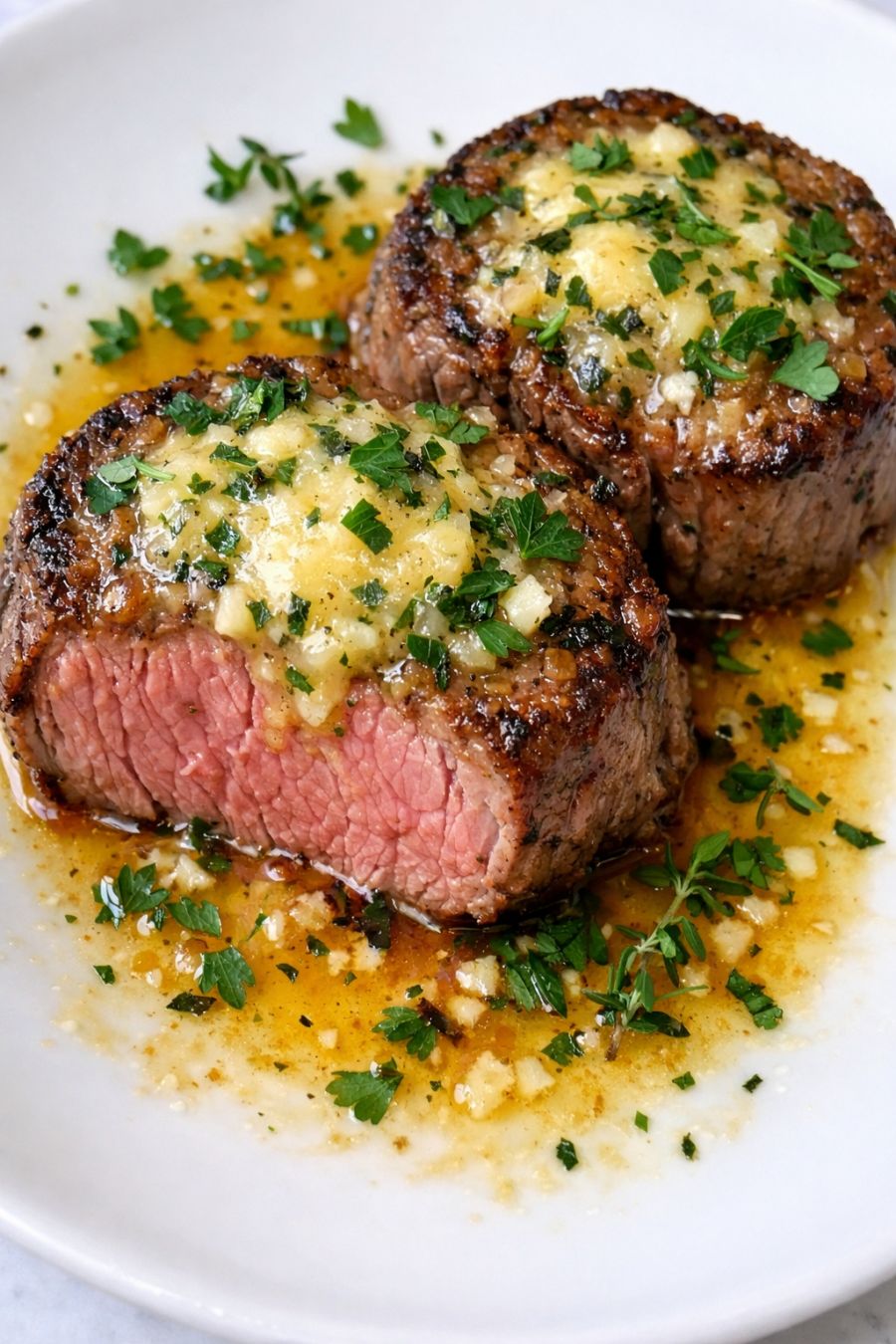
This slow cooker 4-ingredient herb butter filet mignon is my secret weapon for nights when I want something truly elegant with almost no effort. Filet is a naturally tender cut, and here it gently cooks in its own juices with a generous cap of herb butter that melts down and bastes the meat. The result is thick medallions of perfectly pink beef, bathed in buttery pan juices that taste like you fussed for hours. It’s very much a Midwestern dinner-party classic in spirit: simple ingredients, familiar flavors, but plated in a way that makes your guests feel like they’re at a white-tablecloth restaurant. My mother-in-law actually told me it was the most elegant dinner she’d ever had at our house, and I credit the butter for that melt-in-your-mouth texture.
Serve these butter-basted filet medallions on warm white plates so the herb butter stays glossy and melted. I like to spoon some of the buttery juices from the slow cooker over the top, then scatter a bit of fresh parsley for color. Classic sides work beautifully: creamy mashed potatoes or a potato gratin to soak up the sauce, simply steamed green beans or asparagus, or a crisp green salad with a light vinaigrette to balance the richness. A loaf of crusty bread is ideal for mopping up every last bit of the buttery juices, and if you enjoy wine, a medium-bodied red like a Pinot Noir or a Merlot is a natural pairing.
Slow Cooker 4-Ingredient Herb Butter Filet MignonServings: 4
Ingredients
4 (6–8 oz) beef filet mignon steaks, about 1 1/2 inches thick, trimmed
1 teaspoon kosher salt (plus more to taste)
1/2 teaspoon freshly ground black pepper (plus more to taste)
8 tablespoons (1 stick) unsalted butter, softened
2 tablespoons finely chopped fresh herbs (such as parsley and chives, or parsley and thyme), plus extra for garnish
Directions
Pat the filet mignon steaks dry with paper towels. This helps them sear better and keeps excess moisture out of the slow cooker.
Season both sides of each steak evenly with the kosher salt and black pepper. Let the steaks sit at room temperature for about 15–20 minutes while you prepare the herb butter.
In a small bowl, mash together the softened butter and the finely chopped fresh herbs until well combined. Taste and adjust with a pinch of salt or pepper if needed. Set aside at cool room temperature; you want it soft and spreadable.
Optional but recommended for deeper flavor and color: Heat a large skillet over medium-high heat. When hot, add a very thin smear of butter from your herb butter (or a teaspoon of neutral oil). Sear the filets 1–2 minutes per side, just until nicely browned. You are not cooking them through, only creating a flavorful crust. Transfer the seared steaks directly to the slow cooker in a single layer if possible.
If you prefer to skip searing, simply place the seasoned raw filet mignon steaks in a single layer in the bottom of the slow cooker.
Divide the herb butter into four equal portions. Spread or pat one portion of herb butter on top of each steak, pressing it gently so it adheres. Any remaining butter can be dotted around the steaks in the slow cooker.
Cover the slow cooker with the lid and cook on LOW for 1 1/2 to 2 1/2 hours, depending on your slow cooker and desired doneness. Begin checking at 1 1/2 hours. For the most melt-in-your-mouth texture, aim for medium-rare to medium: an instant-read thermometer inserted into the center of a steak should read about 130–135°F (54–57°C) for medium-rare or 140°F (60°C) for medium.
Once the steaks reach your preferred doneness, turn off the slow cooker. Carefully transfer the filet medallions to a plate or cutting board, tent loosely with foil, and let rest for 5–10 minutes. This allows the juices to redistribute, keeping the meat tender.
While the meat rests, gently stir the buttery juices in the slow cooker. Taste and adjust seasoning with a pinch more salt or pepper if needed; this will be your simple sauce.
To serve, place each filet mignon on a warm white plate. Spoon some of the golden herb butter juices over the top and around the steak so they pool slightly on the plate. Sprinkle with a little extra chopped fresh herbs for color. Serve immediately, passing any remaining buttery juices at the table for drizzling.
Variations & Tips
You can adapt this simple four-ingredient concept in several ways while keeping the spirit of an elegant, butter-basted filet. Herb variations: Use different soft herbs depending on what you have: tarragon for a faint anise note, rosemary for a more robust, woodsy flavor (use less, as it’s strong), or a mix of parsley, chives, and thyme for a classic steakhouse profile. Garlic twist: If your crowd loves garlic, you can mash 1 small finely minced clove into the butter. Keep in mind that garlic becomes quite pronounced in the slow cooker, so a little goes a long way. Peppery finish: For a bistro-style feel, crack a bit of extra black pepper over the steaks just before serving. Richer sauce: After removing the steaks, you can whisk a splash of warm beef broth or a tablespoon or two of dry red wine into the buttery juices in the slow cooker, then simmer briefly on HIGH with the lid off to slightly reduce. Keep it light so you don’t overpower the delicate filet. Doneness control: Slow cookers vary in heat output, so the time range is important. If your slow cooker tends to run hot, start checking earlier and use an instant-read thermometer rather than relying on time alone. It’s much easier to stop at medium-rare than to rescue an overcooked filet. Food safety tips: Always keep raw beef refrigerated until you’re ready to cook and avoid leaving it at room temperature for more than 1 hour total. Use clean utensils and a clean cutting board when handling raw meat, and wash your hands thoroughly afterward. When checking temperature, insert a clean thermometer into the center of the thickest steak and avoid touching the bottom or sides of the slow cooker, which can give a false reading. Do not hold the finished steaks in the slow cooker on WARM for long periods, as this can gradually overcook the meat; instead, rest them briefly, then serve. Leftovers should be cooled quickly, stored in an airtight container, and refrigerated within 2 hours, then reheated gently to avoid drying out the tender meat.