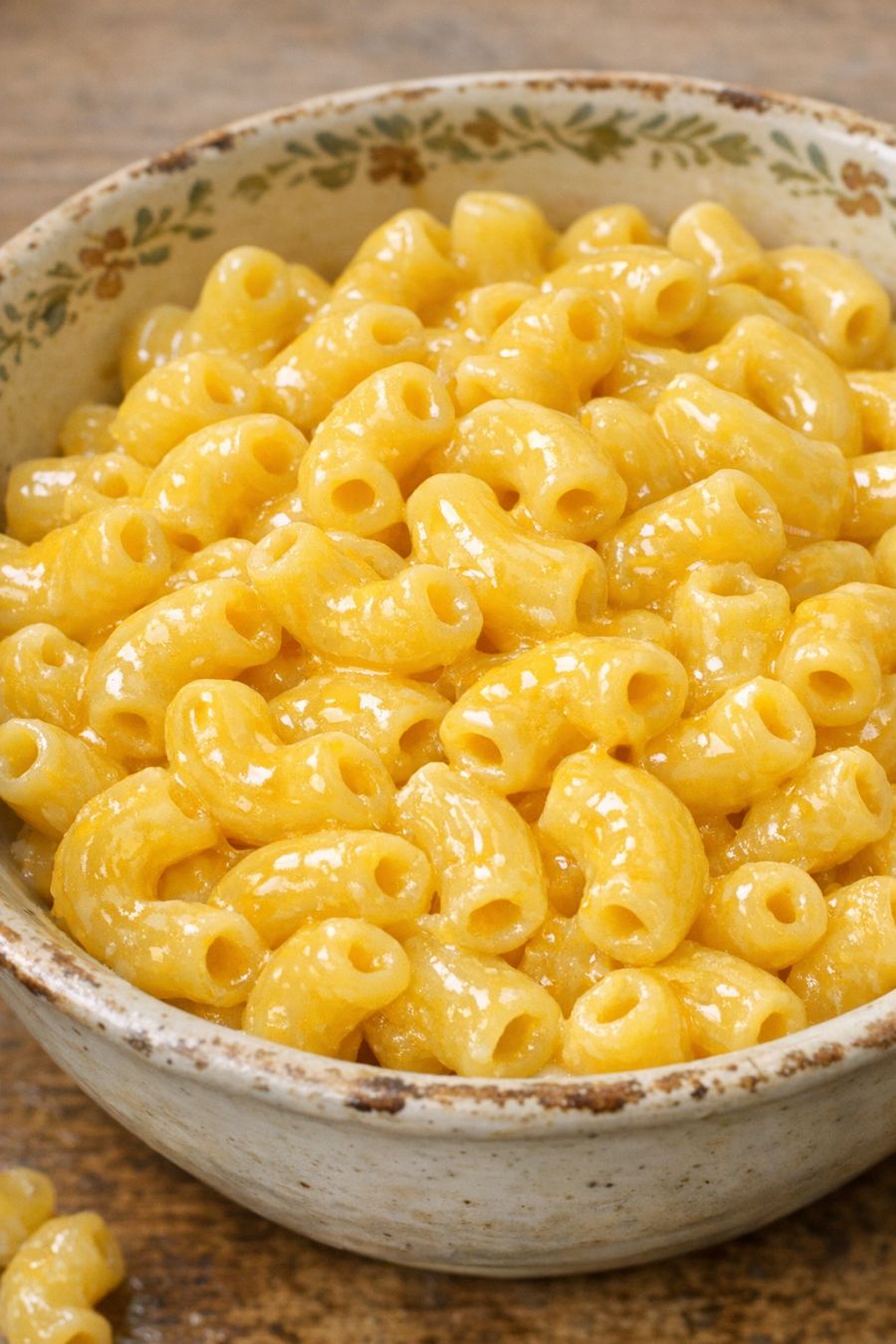
This 3-ingredient stovetop macaroni and cheese is the kind of quiet, cozy meal that makes a rainy spring afternoon feel special instead of disappointing. My aunt used to pull this together when we were stuck inside, and I still remember watching the cheese melt into the hot pasta while the windows fogged up. It’s rich, comforting, and wonderfully simple—just tender elbow macaroni, plenty of melty yellow cheese, and milk to bring it all together in one pot. No fancy techniques, no extra fuss, just a warm bowl of creamy mac and cheese that feels like a hug in a vintage dish.
Serve this macaroni and cheese piping hot in deep bowls so the sauce stays silky and glossy. It’s lovely with a simple green salad dressed with lemon and olive oil, or some steamed broccoli or peas on the side for a bit of color and crunch. For heartier appetites, pair it with sliced ham, rotisserie chicken, or even leftover meatloaf. A little black pepper on top is nice for the grown-ups, and buttered toast or garlic bread makes it feel like a complete, stick-to-your-ribs meal.
3-Ingredient Stovetop Macaroni and CheeseServings: 4
Ingredients
2 cups dry elbow macaroni
3 cups whole milk (plus an extra splash if needed)
3 cups shredded yellow cheddar cheese, firmly packed
Directions
Add the dry elbow macaroni and the 3 cups of whole milk to a medium, heavy-bottomed saucepan. Stir so all the pasta is submerged.
Place the pan over medium-low heat. Bring the milk just to a gentle simmer, stirring often and scraping the bottom of the pan to keep the pasta from sticking or the milk from scorching.
Continue to cook, stirring frequently, until the macaroni is tender and most of the milk has been absorbed and thickened, 10–15 minutes. If the milk starts to boil too hard, lower the heat to prevent scorching. If the pan looks too dry before the pasta is tender, add a small splash of extra milk and keep stirring.
Once the macaroni is cooked to your liking and there is still a bit of creamy milk in the pan, turn the heat down to low. Gradually add the shredded cheddar cheese, one small handful at a time, stirring constantly after each addition until the cheese is fully melted and the sauce is smooth before adding more.
When all the cheese is melted and the sauce is glossy and clings to the pasta, remove the pan from the heat. If the sauce seems too thick, stir in a spoonful or two of extra milk until it loosens to a creamy consistency. Let the mac and cheese sit for 1–2 minutes to thicken slightly.
Taste and adjust the texture if needed with a tiny splash more milk. Spoon into bowls and serve warm, while the cheese is still shiny and the sauce is silky.
Variations & Tips
For picky eaters, you can use a milder yellow cheese, like a young cheddar or Colby, so the flavor is gentle and familiar. If your kids are used to boxed macaroni, shredding the cheese very finely helps it melt into a smoother, more uniform sauce that looks similar to what they know. For a slightly lighter feel, you can use 2% milk instead of whole; just be sure to stir more often and keep the heat low so the sauce doesn’t separate. If you’d like a bit more flavor for adults, stir in a pinch of salt and black pepper, a small spoonful of prepared mustard, or a dash of hot sauce—just keep those as optional table additions so everyone can season their own bowl. To sneak in veggies, stir in some thawed frozen peas or finely chopped steamed broccoli right at the end; the heat of the pasta will warm them through. Food safety tips: Keep the heat on medium-low to prevent milk from scorching; if you see brown bits forming on the bottom, lower the heat and gently scrape them up before they burn. Do not leave milk and pasta unattended on the stove, as milk can quickly boil over. Refrigerate leftovers within 2 hours in a shallow container, and reheat gently on the stovetop with a splash of extra milk, stirring often until hot and creamy again.