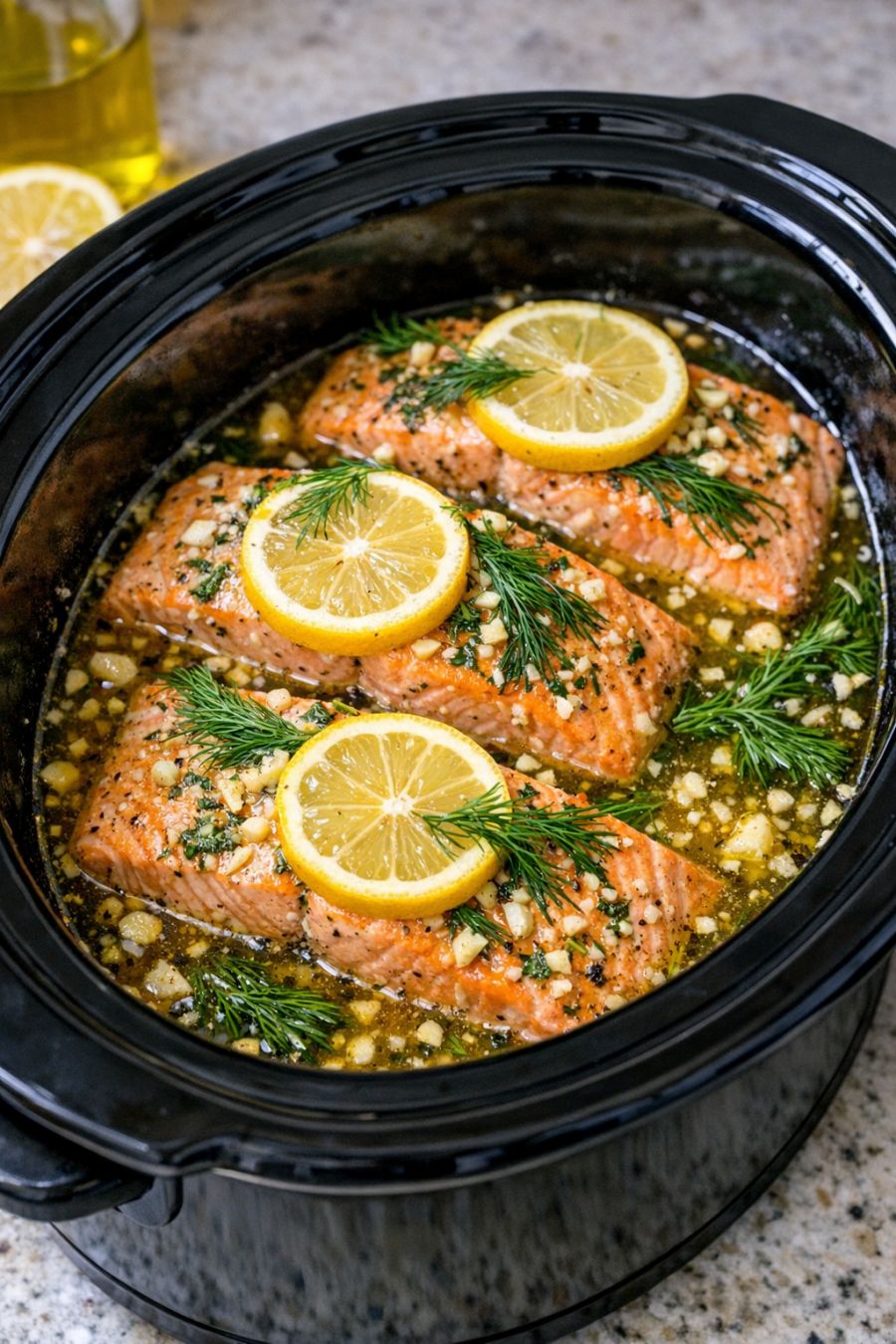
This 5-ingredient slow cooker lemon dill salmon is one of those weeknight miracles you pull out when the day has completely gotten away from you. You literally toss entirely frozen salmon fillets straight into the crock, add just four more simple ingredients, and let the slow cooker do the work. The gentle heat keeps the fish moist and flaky, and the bright lemon and dill flavor tastes like something from a nice restaurant, not a busy family kitchen. It’s the kind of meal that has husbands (and kids!) asking for seconds, and it’s perfect for those of us in small towns who rely on frozen fish but still want something special on the table.
Serve this lemon dill salmon with buttery mashed potatoes or simple roasted baby potatoes to soak up the lemony juices from the slow cooker. Steamed green beans, broccoli, or a quick side salad with a light vinaigrette all pair nicely with the bright flavors. For a lighter option, spoon the salmon and its sauce over brown rice, quinoa, or cauliflower rice. If your family loves bread, warm dinner rolls or a crusty baguette are perfect for dipping into the lemon dill sauce at the bottom of the crock.
Slow Cooker Lemon Dill Salmon (From Frozen)Servings: 4
Ingredients
4 frozen salmon fillets (about 4–6 ounces each, individually frozen, skin-on or skinless)
3 tablespoons unsalted butter, cut into small pieces
1 large lemon, sliced into thin rounds (plus 1–2 tablespoons juice from the ends)
2 teaspoons dried dill weed (or 2 tablespoons chopped fresh dill)
1 teaspoon garlic powder
1/2 teaspoon kosher salt (or to taste)
1/4 teaspoon black pepper (optional, to taste)
Directions
Place the completely frozen salmon fillets in a single layer on the bottom of your slow cooker. If they are stuck together, run them briefly under cool water and gently pry apart, then lay them flat in the crock with a little space between each piece if possible.
Sprinkle the frozen fillets evenly with the garlic powder, salt, and black pepper (if using). Don’t worry if some seasoning falls to the bottom; it will flavor the juices as the salmon cooks.
Scatter the butter pieces over and around the frozen salmon so they will melt down over the fish as the slow cooker heats up.
Lay the lemon slices directly on top of the frozen fillets, overlapping slightly to cover most of the surface. Squeeze the juice from the lemon ends over the fish as well for extra brightness.
Sprinkle the dried dill (or fresh chopped dill) evenly over the top of the lemon-covered salmon. It will look like a lot at first, but it mellows as it cooks and gives that classic lemon-dill flavor.
Cover the slow cooker with the lid and cook on LOW for 2 to 3 hours, or until the salmon is opaque and flakes easily with a fork in the thickest part. Try not to lift the lid during the first 1 1/2 hours so the heat stays steady.
Once the salmon is cooked through, taste a little of the cooking liquid and adjust the seasoning with a pinch more salt or a squeeze of extra lemon juice if desired. Carefully lift the fillets out with a wide spatula so they don’t break apart, and spoon some of the buttery lemon dill juices from the bottom of the crock over the top before serving.
Serve the salmon immediately while hot, with extra lemon dill sauce drizzled over each piece. Store any leftovers in a covered container in the refrigerator and use within 2 days.
Variations & Tips
For picky eaters, you can skip the dill on a couple of fillets and just season those with butter, salt, and a little garlic powder; label one side of the slow cooker as the 'plain' side so everyone gets what they like. If your family prefers milder lemon flavor, use only half the lemon in slices and skip squeezing extra juice over the top at the end. For a creamier version, stir 2–3 tablespoons of softened cream cheese or a splash of heavy cream into the hot cooking liquid after the salmon is done, then spoon this simple sauce over each piece. You can also add a handful of baby potatoes and carrot chunks under the frozen salmon (in a single layer) for a one-pot meal; just be sure to cut them small enough so they become tender in the same 2–3 hour window. If using fresh salmon instead of frozen, reduce the cooking time to about 1 to 1 1/2 hours on LOW and start checking early so it doesn’t overcook. Food safety tips: Always start with fully frozen, commercially packaged salmon fillets that have been kept at a safe freezer temperature (0°F / -18°C). Do not cook this on WARM; use LOW so the salmon moves through the temperature “danger zone” steadily and reaches a safe internal temperature of 145°F (63°C) in the thickest part. Avoid stacking very thick fillets tightly on top of each other, as that can slow down cooking and lead to uneven doneness. Refrigerate leftovers within 2 hours of cooking and reheat gently until hot all the way through, discarding any salmon that has sat out at room temperature too long.