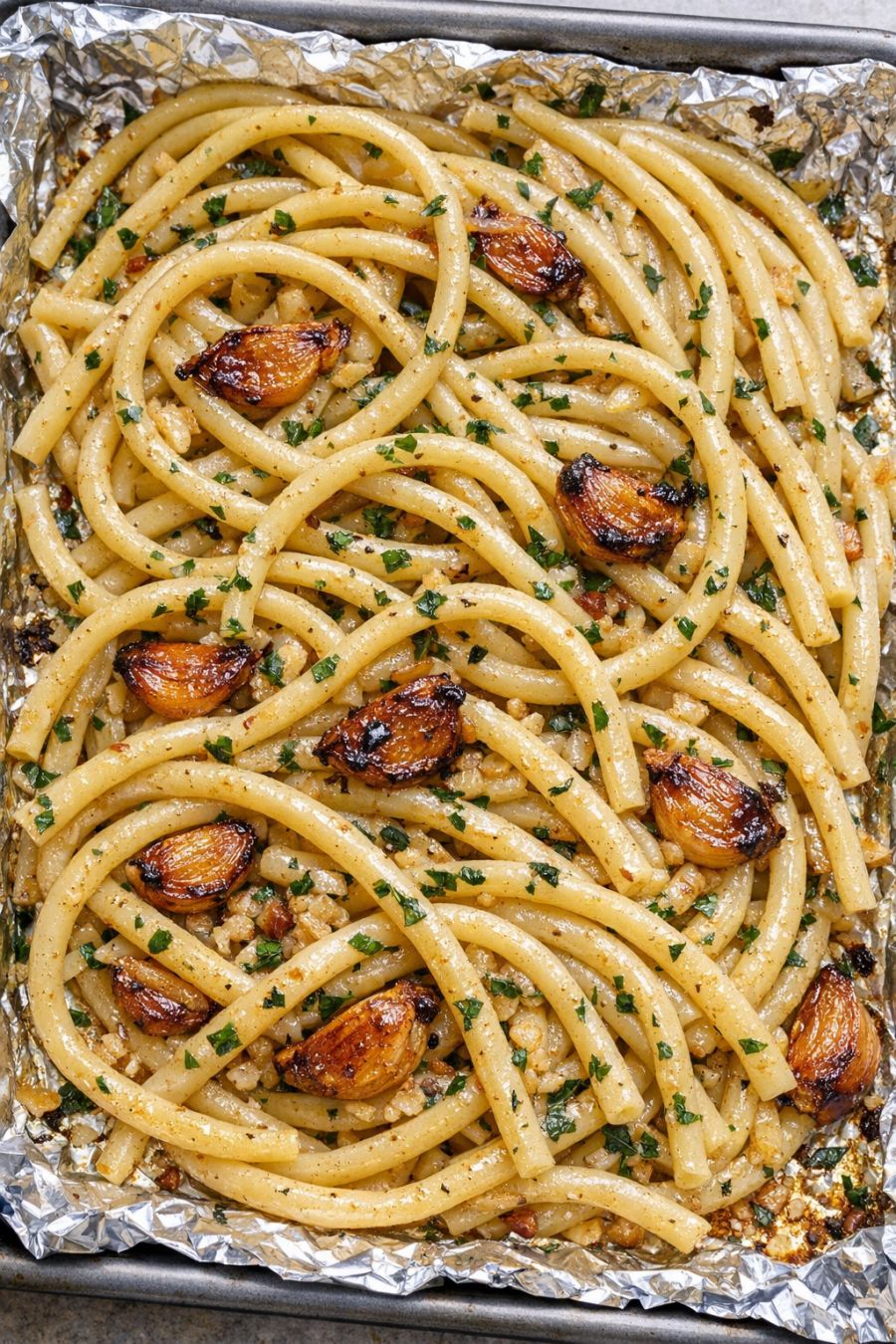
This oven baked 4-ingredient sheet pan roasted garlic bucatini is straight out of my Italian grandfather’s playbook. He believed in keeping pasta simple: a good noodle, plenty of garlic, real olive oil, and a salty cheese to pull it all together. Everything roasts together on a foil-lined pan until the garlic turns deeply caramelized and sweet, then the hot pasta is tossed right on the sheet so it soaks up every last bit of garlicky oil. It’s the kind of weeknight recipe that feels like a little secret—minimal effort, almost no cleanup, and big, old-world flavor.
Serve this roasted garlic bucatini with a crisp green salad dressed simply with lemon and olive oil, and a side of crusty bread to swipe through any garlicky oil left on the pan. A light Italian red like Chianti or a chilled Pinot Grigio pairs nicely with the richness of the pasta. For a heartier meal, add a plate of roasted seasonal vegetables or a simple grilled chicken breast on the side, keeping the flavors clean so the roasted garlic and cheese remain the star.
Sheet Pan Roasted Garlic BucatiniServings: 4
Ingredients
1 pound bucatini pasta, dried
2 large heads garlic, whole
1/3 cup extra-virgin olive oil, plus more as needed
1 generous cup finely grated Pecorino Romano or Parmesan cheese, divided
Kosher salt, to taste
Freshly ground black pepper, to taste
Small handful fresh herbs (such as flat-leaf parsley or basil), chopped, for garnish (optional but recommended)
Directions
Preheat the oven to 400°F (200°C). Line a large rimmed sheet pan completely with aluminum foil, letting it come up the sides to catch all the oil and juices.
Prepare the garlic: Slice about 1/4 inch off the top of each garlic head to expose the cloves. Place the garlic heads, cut side up, in the center of the foil-lined sheet pan. Drizzle with 2 to 3 tablespoons of the olive oil, letting it seep down into the cloves. Sprinkle lightly with salt and pepper.
Roast the garlic: Place the sheet pan in the oven and roast for 30 to 40 minutes, or until the cloves are deeply golden brown, very soft, and caramelized. If any spots seem to darken too quickly, tent loosely with a small piece of foil. The oil around the garlic should be fragrant and lightly bubbling.
While the garlic roasts, cook the bucatini: Bring a large pot of well-salted water to a boil. Add the bucatini and cook until just shy of al dente according to package directions (usually 1 to 2 minutes less than suggested). Reserve about 1 1/2 cups of the starchy pasta cooking water, then drain the pasta.
Finish the sheet pan: When the garlic is roasted, carefully remove the pan from the oven and let it cool just enough to handle. Squeeze or scoop the soft, caramelized cloves out of their papery skins directly onto the foil-lined pan, discarding the skins. Use a fork to gently mash the cloves into the garlicky oil on the pan, creating a loose paste. Add the remaining olive oil (about 1/4 cup) to the pan and stir it into the garlic paste.
Toss the pasta on the pan: Add the hot, drained bucatini straight onto the foil-lined sheet pan with the roasted garlic and oil. Using tongs, toss thoroughly so every strand is coated, scraping up all the golden bits from the foil. Sprinkle in about 3/4 cup of the grated Pecorino Romano or Parmesan and a generous splash (about 1/2 cup) of the reserved pasta water.
Create a silky sauce: Toss the pasta vigorously on the sheet pan, adding more reserved pasta water a little at a time as needed, until the cheese melts and the garlic, oil, and water emulsify into a glossy, lightly creamy sauce that clings to the bucatini. Taste and season with additional salt and plenty of black pepper.
Finish and serve: Scatter the remaining cheese over the top and, if using, sprinkle with chopped fresh herbs for color and freshness. Serve the bucatini straight from the sheet pan for a rustic presentation, or twirl into warm bowls, making sure to spoon any remaining roasted garlic and oil over each portion.
Variations & Tips
To keep the spirit of the 4-ingredient secret, think of add-ins as optional accents rather than core elements. For a bit of heat, add a pinch of red pepper flakes to the sheet pan when you mash the roasted garlic. If you prefer a milder garlic flavor, roast an extra head and only mash in part of it, saving the rest to spread on bread. You can swap Pecorino Romano for Parmesan or use a mix of both; Pecorino gives a saltier, sharper kick, while Parmesan is nuttier and slightly sweeter. If you don’t have bucatini, spaghetti or linguine work well, though you’ll lose that pleasantly chewy, hollow center that bucatini is known for. For a lighter feel, add a handful of arugula or baby spinach to the hot pasta on the sheet pan and toss until just wilted. Food safety tips: Let the roasted garlic cool slightly before handling to avoid burns, as the cloves and oil hold heat. Refrigerate leftovers within 2 hours in a shallow container; reheat gently on the stovetop with a splash of water or olive oil to loosen the sauce. Discard any garlic or oil that has sat at room temperature for more than 2 hours to reduce the risk of bacterial growth. Always cook pasta in well-salted boiling water and avoid undercooking it excessively, as undercooked pasta can be harder to digest for some people.