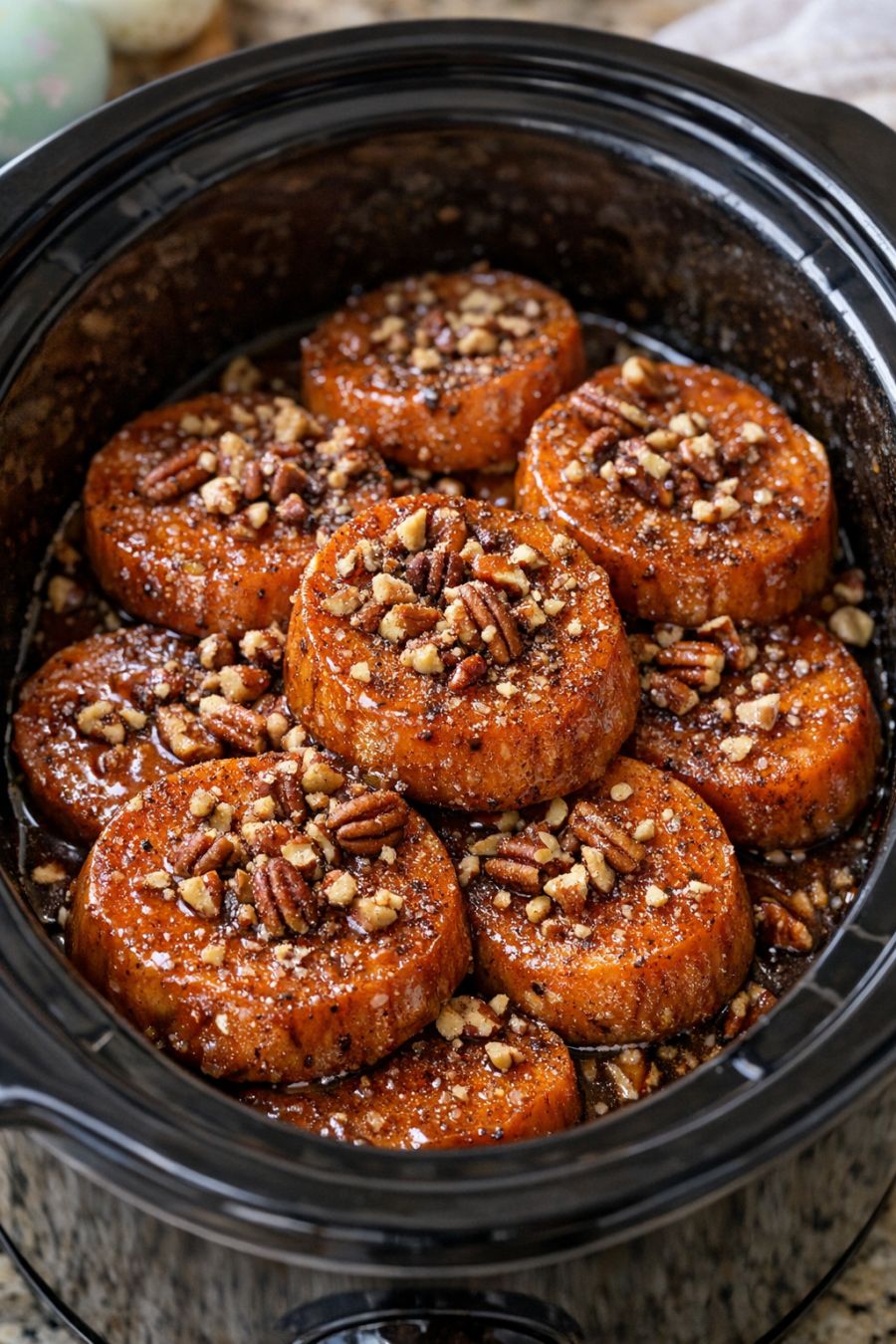
This 3-ingredient slow cooker glazed sweet potato round recipe is the kind of Easter brunch dish you set before sunrise service and come home to find so tender it practically melts when you touch it with a fork. Using thick-cut sweet potato rounds, a simple pantry-friendly glaze, and the gentle heat of the slow cooker, you get that deep caramelized flavor without babysitting the oven. It’s a cozy, small-town kind of recipe: easy to throw together before the house wakes up, and special enough to share with family gathered around the table after church.
Serve these glazed sweet potato rounds straight from the slow cooker onto a rustic platter, letting the extra glaze pool around them. They’re lovely alongside an egg bake, ham or sausage, and a simple fruit salad for Easter brunch. A sprinkle of chopped pecans or walnuts just before serving adds a little crunch if your crew likes texture. For something lighter, pair them with yogurt and granola, letting the sweet potatoes act almost like a warm, caramelized fruit. A cup of hot coffee or tea and some buttered toast or biscuits round out the meal and make the whole plate feel comforting and complete.
3-Ingredient Slow Cooker Glazed Sweet Potato RoundsServings: 6
Ingredients
3 large sweet potatoes, peeled and sliced into 1-inch-thick rounds
1/2 cup salted butter, melted
1/2 cup packed light brown sugar
Directions
Lightly grease the insert of a 4- to 6-quart slow cooker with a little butter or nonstick spray to help prevent sticking and make cleanup easier.
Peel the sweet potatoes and slice them into thick 1-inch rounds. Keeping them thick is important for that ultra-tender, almost melting texture without falling apart completely.
In a small bowl, whisk together the melted butter and brown sugar until the mixture looks smooth and glossy. This simple blend will turn into a rich, caramel-like glaze as it slow cooks.
Lay a single, slightly overlapping layer of sweet potato rounds in the bottom of the slow cooker. Spoon a little of the butter-brown sugar mixture over this first layer, making sure each round gets a bit of glaze.
Continue layering the remaining sweet potato rounds on top, pouring more of the butter-brown sugar mixture over each layer as you go. Try to use all of the glaze, scraping the bowl so none of that sweetness is wasted.
Cover the slow cooker with the lid and cook on LOW for 5 to 6 hours. The timing can vary by slow cooker, but you’re looking for the sweet potatoes to be deeply tender when pierced with a fork and surrounded by a thick, glossy glaze.
Once the sweet potatoes are fork-tender and almost melting, gently spoon some of the glaze from the bottom of the slow cooker over the top rounds. If you’d like the tops to look a little more caramelized for serving, you can carefully transfer the rounds to a baking sheet and broil them on high for 2 to 3 minutes, watching closely, then return them to a serving platter and drizzle with the glaze.
Serve the sweet potato rounds warm, spooning extra glaze over each portion. They should be so soft that a fork slides in easily, just like something you’d come home to after sunrise service, filling the whole kitchen with a cozy, sweet, buttery aroma.
Variations & Tips
For a cinnamon twist, whisk 1 teaspoon ground cinnamon into the butter and brown sugar mixture before pouring it over the sweet potatoes. If your family likes a little brightness, add 1 teaspoon vanilla extract and the finely grated zest of 1 orange to the glaze for a gentle citrus note that feels extra special for Easter. For a more dessert-like version, scatter 1/2 cup mini marshmallows over the top during the last 10 minutes of cooking (or after broiling) and let them melt and toast slightly. To make the dish dairy-free, swap the butter for coconut oil or a dairy-free buttery spread; the flavor will be a bit different but still rich and sweet. Picky eaters sometimes prefer less glaze, so you can reduce the brown sugar to 1/3 cup and serve extra melted butter on the side. If you’re feeding a crowd, this recipe doubles easily—just use a larger slow cooker and add about an hour to the cooking time, checking for tenderness. Leftovers reheat well in the microwave or oven and can even be mashed with a fork and stirred into oatmeal or yogurt for an easy, kid-friendly breakfast the next day.