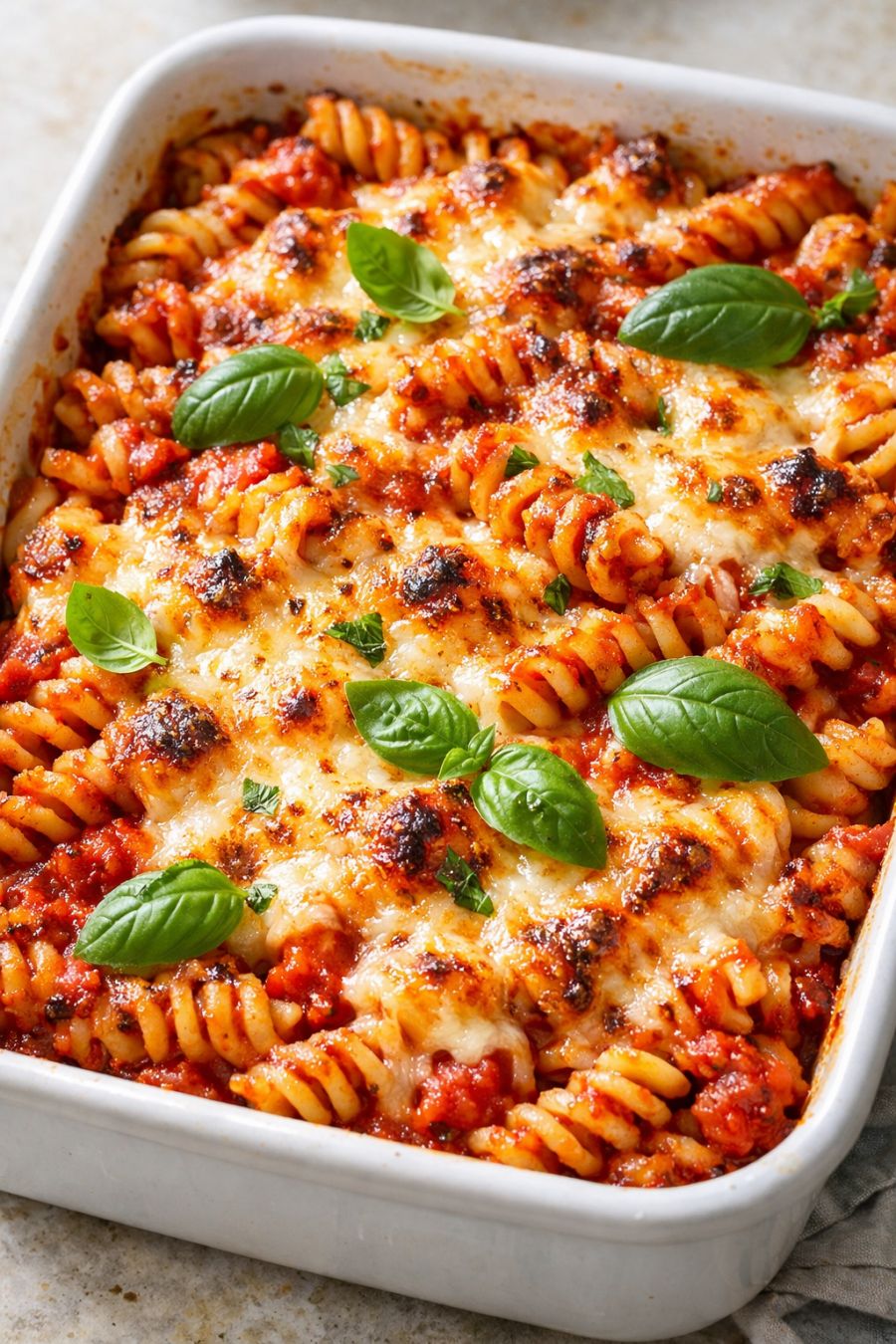
This 6-ingredient oven corkscrew pasta is the sort of weeknight trick I lean on when the day gets away from me. Dry cavatappi goes straight onto a high-sided baking sheet, then bakes in a simple mix of marinara, water, cream, mozzarella, and Parmesan—five things many of us keep in the fridge or pantry. The method borrows from the Italian-American baked pasta tradition, but streamlines it so there’s no boiling, no separate sauce pan, and minimal cleanup. Everything happens in one pan in the oven, and the result is a deeply comforting, saucy pasta that tastes like it took far more effort than it actually did.
Serve this baked cavatappi with a crisp green salad dressed in a tangy vinaigrette to balance the richness, and add warm garlic bread or a crusty baguette to swipe through the extra sauce. A side of simply roasted vegetables—broccoli, green beans, or Brussels sprouts—works beautifully and can roast on the rack below the pasta. For a fuller spread, pair with a light Italian red wine such as Chianti or a chilled glass of Pinot Grigio, and finish with fresh berries for dessert to keep the meal feeling easy but complete.
6-Ingredient Oven Cavatappi BakeServings: 4
Ingredients
12 ounces dry cavatappi pasta
2 cups marinara sauce (from a jar or homemade)
2 cups water
1 cup heavy cream (or half-and-half)
2 cups shredded low-moisture mozzarella cheese, divided
1/2 cup finely grated Parmesan cheese
Directions
Preheat the oven to 400°F (200°C) with a rack in the center. Lightly grease a high-sided metal baking sheet (about 10x15 inches) with a thin film of oil or nonstick spray to help prevent sticking.
Spread the dry cavatappi pasta evenly over the baking sheet in a single layer as much as possible. This even layer helps the pasta cook uniformly and soak up the liquid.
In a large measuring cup or bowl, whisk together the marinara sauce, water, and heavy cream until smooth and fully combined. Taste the mixture; if your marinara is very tangy, you can add a pinch of sugar, but it’s optional.
Slowly pour the sauce mixture evenly over the dry pasta, tilting the pan gently to help the liquid settle into all the nooks and crannies. Use a spatula or spoon to nudge any very dry patches of pasta so they’re coated in liquid.
Sprinkle 1 cup of the shredded mozzarella evenly over the sauced pasta. This first layer melts into the sauce as it bakes, helping it thicken slightly and cling to the corkscrews.
Cover the baking sheet tightly with foil, tenting it slightly so it doesn’t press down into the cheese. Seal the edges well to trap steam, which is what cooks the pasta without pre-boiling.
Bake, covered, for 25–30 minutes, until the pasta is mostly tender when you poke a piece with a fork. Carefully remove the foil, watching for steam.
Stir the pasta gently right in the baking sheet to redistribute the sauce and ensure any edges aren’t drying out. If it looks a bit tight or dry, drizzle in 1/4 cup more water and stir again; the mixture should look loose and saucy at this stage.
Sprinkle the remaining 1 cup mozzarella and all of the grated Parmesan evenly over the top of the pasta. Return the baking sheet to the oven, uncovered.
Bake for another 10–15 minutes, until the cheese is melted, bubbling, and lightly golden in spots, and the pasta is fully tender but not mushy. If you like a deeper browned top, you can broil for 1–2 minutes at the end, watching closely.
Remove from the oven and let the pasta rest on the counter for 5–10 minutes. This short rest allows the sauce to thicken slightly and cling to the curls of cavatappi, making it easier to serve.
Scoop the pasta into shallow bowls or plates, making sure to get both the saucy bottom and the cheesy top in each portion. Serve hot, with extra Parmesan at the table if you like.
Variations & Tips
For a meatier version, scatter 1–1 1/2 cups cooked Italian sausage, rotisserie chicken, or crumbled cooked ground beef over the dry pasta before adding the sauce mixture; it will warm through as the pasta bakes. To sneak in more vegetables, tuck in 1–2 cups of quick-cooking veg—baby spinach, thinly sliced bell peppers, or small broccoli florets—on top of the dry pasta, then pour the sauce over everything. For a spicier bake, stir 1/2–1 teaspoon red pepper flakes into the sauce mixture. If you prefer a lighter dish, swap the heavy cream for half-and-half or whole milk; just know the sauce will be a bit less rich, and you may want to add an extra handful of cheese to help it thicken. You can also play with flavor by using a roasted garlic or spicy arrabbiata marinara. If your baking sheet is on the smaller side or very shallow, use a 9x13-inch metal baking pan instead to avoid overflow while still keeping the same no-boil, oven-only method.