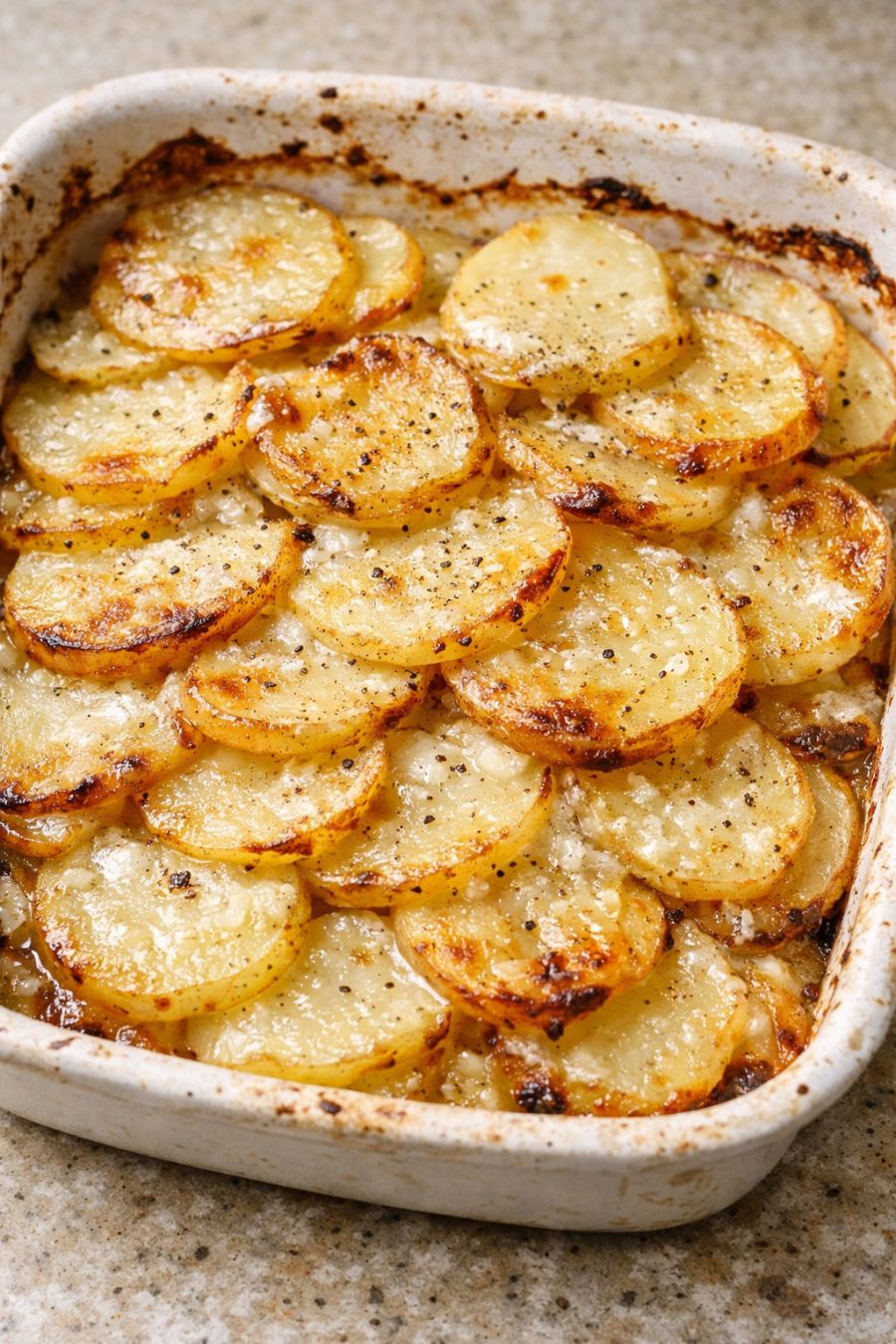
This is the kind of humble, 5-ingredient potato dish my mother leaned on during the lean years, when Easter week still called for something special even if the pantry was bare. You simply dump raw sliced potatoes into a clear glass casserole dish, add four more everyday ingredients, and let the oven do the rest. It’s pure Depression-era practicality: no fuss, no fancy gadgets, just honest food that comes out bubbling, golden at the edges, and so comforting your family will scrape the dish clean and ask for more.
Serve these sliced potatoes hot right out of the oven, when the edges are browned and the creamy broth has thickened. They’re perfect alongside baked ham, roast chicken, or a simple meatloaf, and they soak up pan juices beautifully. Add a bright green vegetable—peas, green beans, or a tossed salad—to balance the richness. Leftovers reheat well in a skillet with a pat of butter and a fried egg on top for a hearty next-day breakfast.
5-Ingredient Oven Depression Era Sliced PotatoesServings: 4–6
Ingredients
2 1/2 pounds russet or Yukon Gold potatoes, washed and thinly sliced (about 1/8–1/4 inch thick)
3 tablespoons unsalted butter, cut into small pieces
1 1/2 teaspoons salt
1/2 teaspoon black pepper
2 cups whole milk
Directions
Preheat your oven to 375°F (190°C). Lightly grease a clear glass 9x13-inch casserole dish with a bit of butter or a swipe of oil so the potatoes don’t stick.
Slice the potatoes into thin rounds, about 1/8–1/4 inch thick. You can leave the skins on if they’re clean and thin—that’s how many farmwives did it to save time and waste less.
Spread the raw sliced potatoes evenly in the bottom of the clear glass casserole dish, arranging them in overlapping layers so the bottom of the dish is completely covered and you see a full layer of pale slices from the top view.
Dot the top of the potatoes with the 3 tablespoons of butter, scattering the small pieces as evenly as you can so every corner gets some richness.
Sprinkle the salt and black pepper evenly over the potatoes and butter. In the old days, this simple seasoning was often all that was available, and it still brings out the best in the potatoes.
Pour the milk slowly over the potatoes, letting it seep down through the layers. The liquid should come just about level with the top layer of potatoes but not completely cover them; the very top will brown while the rest turns tender and creamy.
Cover the dish tightly with foil to trap the steam, then place it on the middle rack of the preheated oven. Bake covered for 45 minutes, until the potatoes are starting to soften when pierced with a knife.
Remove the foil and continue baking for another 25–35 minutes, or until the potatoes are very tender, the milk has thickened into a light sauce, and the top is lightly browned around the edges.
Let the casserole rest for 10–15 minutes before serving. This short rest helps the sauce settle and makes it easier to scoop neat portions. Serve straight from the glass dish at the table, just like folks did generations ago.
Variations & Tips
For a little extra flavor while staying true to the spirit of the Depression era, you can rub a cut clove of garlic around the inside of the glass dish before adding the potatoes, or finely chop a small onion and scatter it between the layers. If you have only 2% or skim milk, add an extra tablespoon of butter to keep things from tasting too thin. To stretch the dish for a larger family, add one more potato and splash in another 1/2 cup milk; baking time may increase by 5–10 minutes. A dusting of paprika on top before baking gives a bit of color without adding more ingredients. If you prefer a slightly firmer top, move the dish to the upper rack for the last 5–10 minutes. Leftovers can be reheated covered in the oven at 325°F or crisped in a skillet with a touch of butter; in true farmhouse fashion, they make a fine base for creamed eggs or leftover ham the next day.