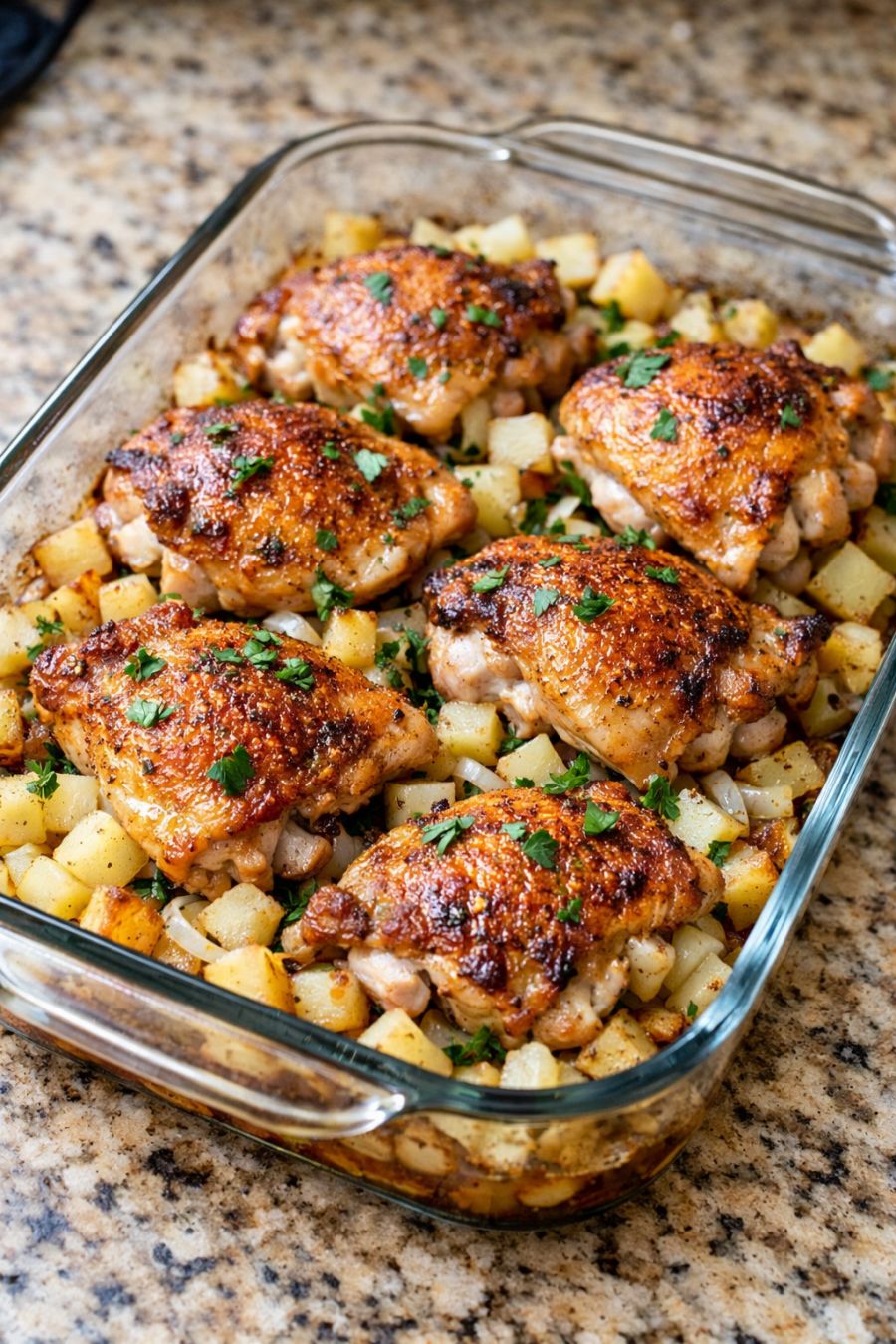
This 4-ingredient depression era oven chicken using raw bone-in thighs is exactly the kind of no-fuss, budget-friendly meal I lean on during busy weeks and holidays like Easter. It’s inspired by the simple, resourceful cooking our grandparents relied on: a glass casserole dish, a few pantry staples, and inexpensive chicken thighs that turn tender and flavorful in the oven. You literally toss everything together in the same dish—no marinating, no searing, no fancy gear—and let the oven do the work while you handle the rest of life. It’s cozy, homey, and so surprisingly good that my family always asks for seconds.
Serve these juicy baked chicken thighs straight from the glass casserole dish with simple sides that match the thrifty, old-fashioned vibe. Mashed potatoes, buttered egg noodles, or plain white rice are perfect for soaking up the savory juices. Add a budget-friendly veggie like frozen peas, roasted carrots, or canned green beans warmed with a little butter and salt. For Easter or Sunday dinner, pair it with a basic green salad and some store-bought rolls, and you’ve got a complete, comforting meal that feels special without blowing your grocery budget.
4-Ingredient Depression Era Oven Chicken Using Raw Bone-In ThighsServings: 4
Ingredients
2 pounds bone-in, skin-on chicken thighs (about 4–6 pieces)
4 medium russet potatoes, scrubbed and diced into 1/2-inch cubes
1 medium onion, diced
3 tablespoons vegetable oil (or any neutral cooking oil)
1 1/2 teaspoons salt
1 teaspoon black pepper
1 teaspoon dried garlic powder (optional but recommended)
1 teaspoon dried paprika (optional, for color and flavor)
Directions
Preheat your oven to 400°F (200°C). Grab a well-worn 9x13-inch glass casserole dish; no need to grease it since the oil and chicken fat will keep everything from sticking.
Add the diced potatoes and diced onion directly into the glass casserole dish. Drizzle the vegetable oil evenly over the vegetables, then sprinkle with the salt, black pepper, garlic powder, and paprika (if using). Toss everything together with clean hands or a spoon until the potatoes and onions are well coated and spread them into an even layer.
Pat the raw bone-in, skin-on chicken thighs dry with a paper towel to help them brown better. Place the thighs on top of the potatoes and onions in the glass casserole dish, skin side up, spacing them out so they’re not completely overlapping.
Sprinkle a pinch of extra salt and pepper over the tops of the chicken thighs if you like. The seasoning from the vegetables will mingle with the chicken as it cooks, creating a simple, savory pan juice that flavors everything.
Slide the glass casserole dish into the preheated oven and bake, uncovered, for 45–55 minutes, or until the chicken skin is golden and crispy, the potatoes are tender, and the internal temperature of the chicken reaches 165°F (74°C) when checked with a meat thermometer in the thickest part (not touching the bone).
If the chicken is done but you want deeper browning, turn the oven to broil for 2–3 minutes, watching closely so it doesn’t burn. The top should be nicely browned and the potatoes lightly caramelized around the edges of the dish.
Remove the casserole dish from the oven and let the chicken rest for about 5 minutes. Spoon some of the flavorful juices from the bottom of the dish over the chicken and potatoes before serving. Serve straight from the glass dish for that cozy, depression-era, family-style feel.
Variations & Tips
To stay true to the 4-ingredient depression-era spirit, think in terms of swapping, not adding a dozen extras. You can trade the potatoes for other budget-friendly vegetables you already have: diced carrots, cabbage wedges, or chunks of turnip or parsnip work well and will soak up the juices. If you’re out of fresh onion, use 1–2 teaspoons of dried minced onion instead. For a slightly richer dish, replace part of the oil with a spoonful of melted butter or bacon drippings. If you’re feeding a crowd for Easter, double the recipe and use a larger glass casserole dish or two smaller ones; just keep the chicken in a single layer so it roasts instead of steams. For a lighter version, remove the skin after baking (you still get all the flavor from cooking it with the skin on). You can also season this base recipe with whatever dried herbs you have—Italian seasoning, dried thyme, or rosemary all fit the depression-era pantry vibe without adding cost if they’re already in your cupboard.