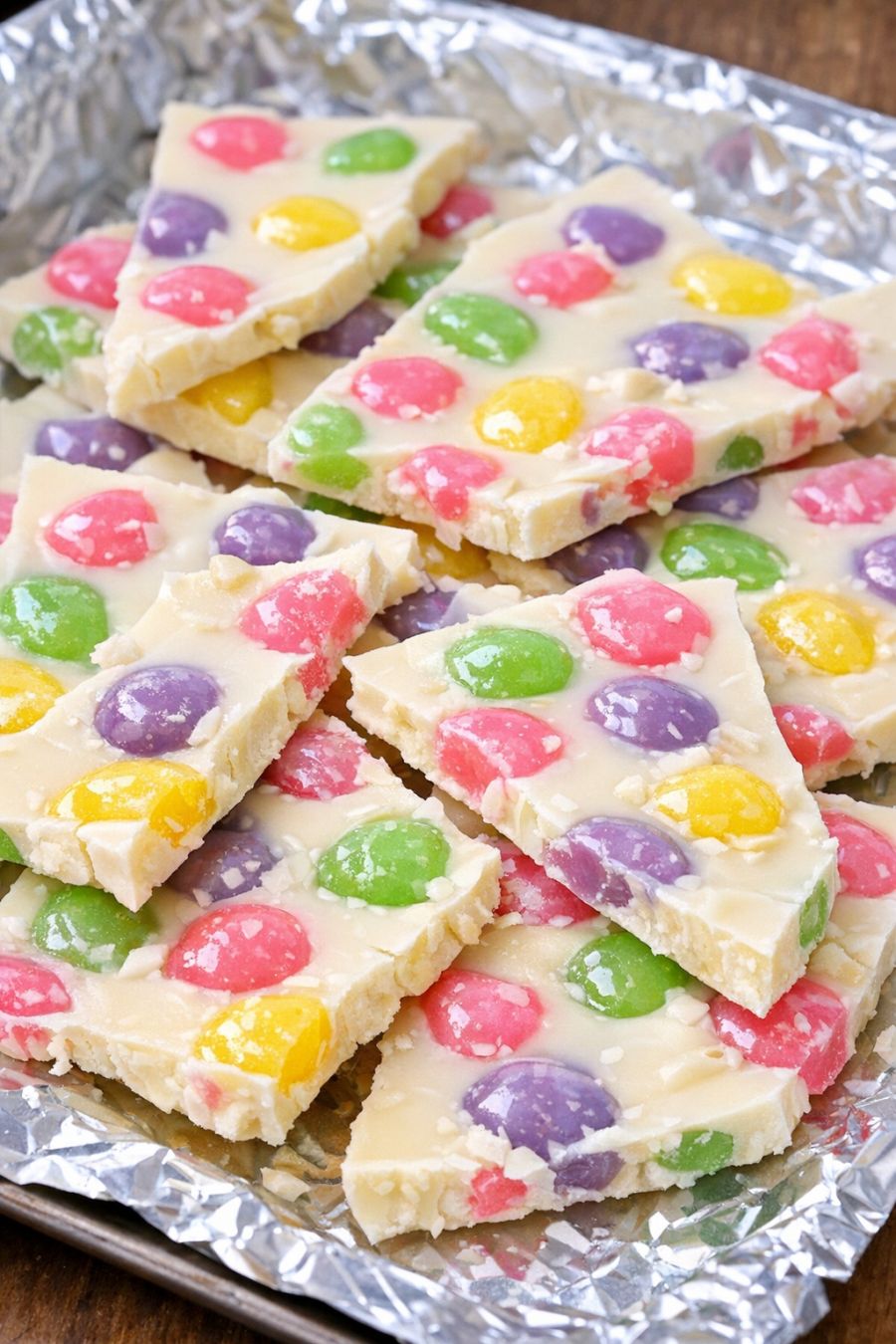
Every spring, right around the time the robins start hopping in the yard and the wind finally loses its bite, my grandmother would pull out her old slow cooker and a bag of pastel candies. This 3-ingredient pastel candy bark was her way of welcoming the season—simple, cheerful, and just fussy enough to feel special without taking all afternoon. The white chocolate melts low and slow until it’s silky, then gets showered with bright, chewy pastel candies before being broken into jagged shards. It’s the kind of colorful holiday treat you can make with grandkids at your elbow, or on your own when you want something pretty on the table without turning on the oven.
Pile the broken bark into a tin or on a pretty plate lined with parchment and set it out after a simple spring supper—ham, scalloped potatoes, and green beans all feel right at home beside it. It also tucks nicely into small cellophane bags or little tins for church bake sales, Easter baskets, or porch drop-offs for neighbors. Serve with coffee, hot tea, or a glass of cold milk; the creamy white chocolate and chewy pastel candies are sweet enough that a plain, unsweetened drink makes a good partner.
Slow Cooker 3-Ingredient Pastel Candy BarkServings: 10-12
Ingredients
2 pounds white chocolate chips or white baking wafers
2 tablespoons neutral-flavored vegetable oil (such as canola or sunflower)
2 cups assorted pastel chewy candies (such as pastel jelly beans or similar), roughly chopped if large
Directions
Line a rimmed baking sheet with aluminum foil, smoothing it out so there are no big wrinkles. Set aside on a flat surface where it can rest undisturbed while the bark sets.
Pour the white chocolate chips or wafers into the bowl of a slow cooker. Drizzle the vegetable oil over the top to help the chocolate melt smoothly and slice cleanly once set.
Cover the slow cooker and set it on LOW. Let the chocolate warm for 45 to 60 minutes, stirring gently with a rubber spatula every 15 minutes. The chocolate is ready when it is completely smooth and glossy with no solid pieces remaining.
While the chocolate melts, place the pastel chewy candies on a cutting board. If they are larger than a marble, roughly chop them into halves or thirds so they stud the bark more evenly. Keep the colors mixed together for a confetti effect.
Once the white chocolate is fully melted and smooth, turn off the slow cooker and unplug it. Stir the chocolate one more time to be sure it is evenly melted and silky.
Carefully pour the warm melted white chocolate onto the foil-lined baking sheet. Use an offset spatula or the back of a spoon to spread it into an even layer about 1/4-inch thick. It does not need to reach the very edges of the pan; rustic edges are part of the charm.
Immediately sprinkle the chopped pastel chewy candies evenly over the warm chocolate, covering as much of the surface as you can so every shard looks colorful from edge to edge. Gently press the candies down with clean hands or the flat of your spatula so they sink slightly into the chocolate but are still visible on top.
Let the bark cool at room temperature until completely firm, 2 to 3 hours depending on your kitchen temperature. If your kitchen is very warm, you can transfer the baking sheet to the refrigerator after the top has lost its shine, and chill for about 30 minutes more to finish setting.
Once firm, lift the bark from the pan by the edges of the foil and place it on a cutting board. Use your hands to break the slab into rustic, jagged shards, or use a sharp knife to cut it into rough squares. The broken pieces will show a smooth, creamy white chocolate base with bright pastel candies studding every surface.
Store the pastel candy bark in an airtight container at cool room temperature for up to one week, or in the refrigerator if your kitchen runs warm. Layer with wax paper or parchment to keep the pieces from sticking together.
Variations & Tips
For a softer chew, choose jelly beans or similar pastel candies with a tender center; for more texture, mix in a handful of pastel candy-coated chocolates along with the chewy candies while still keeping the total candy amount to about 2 cups. If you prefer a slightly less sweet bark, replace 1/2 pound of the white chocolate with milk or semisweet chocolate and swirl them together gently in the pan before adding the candies, taking care not to overmix so the marbling stays pretty. To echo old-fashioned Midwestern church suppers, you can stir in 1/2 cup of lightly salted peanuts or chopped toasted almonds right into the melted chocolate before spreading it, though that does tip you over the three-ingredient mark, so consider it a special occasion tweak rather than the base recipe. A pinch of fine salt or a few drops of vanilla in the melted chocolate can deepen the flavor without changing the look. If you don’t have a slow cooker, you can melt the chocolate in a heatproof bowl set over a pan of barely simmering water, or in the microwave at 50% power in short bursts, stirring between each, then proceed with the same spreading and candy-sprinkling steps. For gifting, tuck the jagged shards into small tins lined with tissue paper or mason jars with ribbon; this bark keeps well and travels easily, just keep it out of direct sun so the glossy edges stay smooth and pretty.